The End Cont. 3
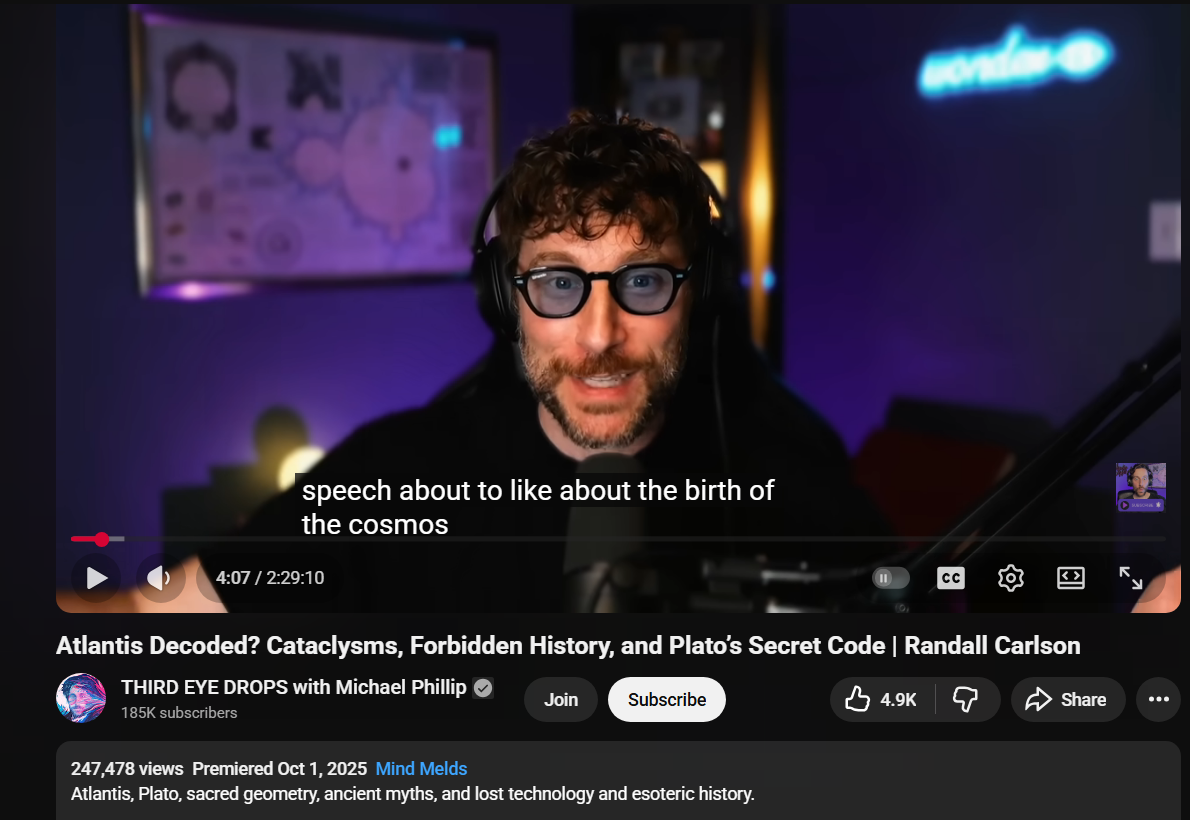
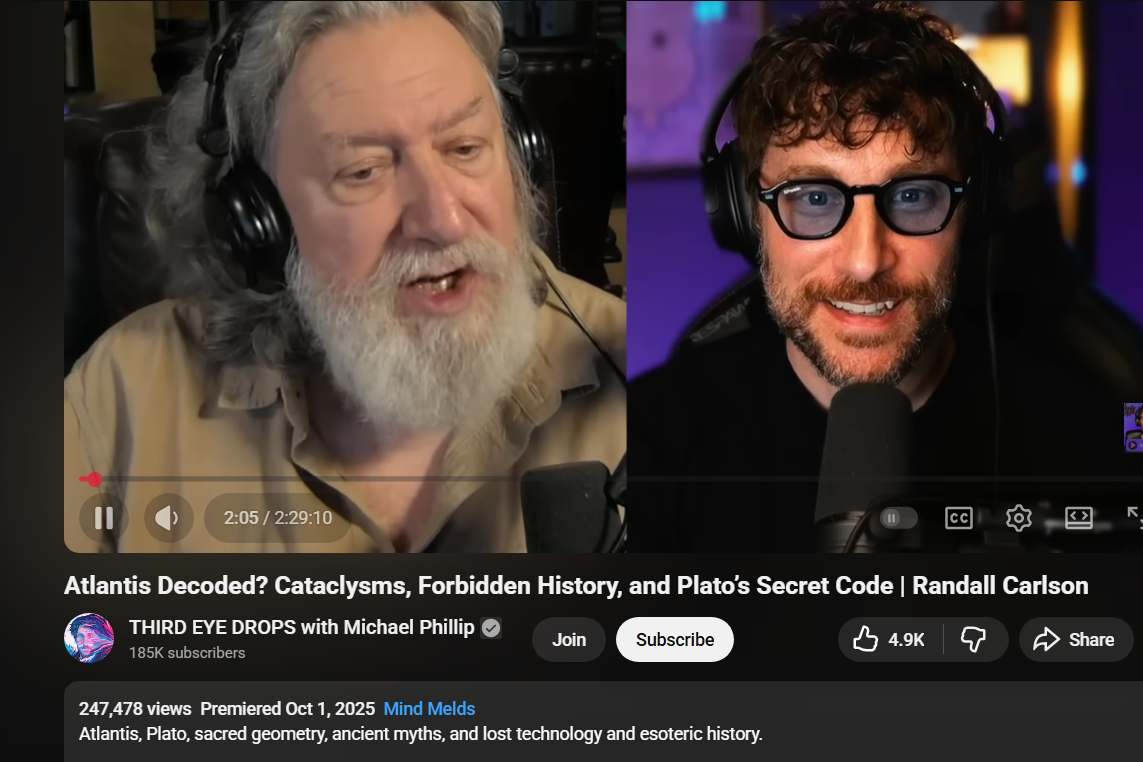
The origin of the Atlantis story comes to us from Plato in his Criteas-Timaeus dialogue - written around 355BCE. The Critias is a fragment which breaks off in the middle of a sentence, seemingly unfinished, a dialogue that is paired together with its predecessor, the Timaeus. It was designed to be the second part of a trilogy, and to be paired up with a third dialogue, known as the Hermocrates, creating a full trifecta. Unfortunately... Plato was just playing. The name of Timaeus is derived from the Greek word τιμάω, timaō, meaning to pay honor to; while the name of Critias is derived from the word κρίσις, krisis, meaning judgment; and the name of Hermocrates, is an infusion of Hermes(Ἑρμῆς), with the word Κράτος, kratos, meaning power/strength(the power/strength of Hermes).
Atlantis's origins are ultimately the result of a long game of telephone. Socrates, Timaeus, and Hermocrates are all receiving this knowledge as rain water flowing down from the mountains of antiquity(Critias). It's finally his time to speak, a message which is critical. The first book Timaeus hints at Atlantis for just a brief second, the fun stuff, before going on this whole side tangent about the creation of the universe, its structure, and how it sustains itself. He dangles a little teaser about a mythical land, and then takes that opportunity to speak of other topics, like vegetables before dessert. It is a bit complicated looking into the order of things, but what we discover is that Plato is second cousins with Critias (the younger). LittleC,Sir, was a generation or so ahead of him in the aristocratic family tree,fir, and had originally heard the tale from further up the branch, his father, Critias the E,lder. Plato acts as a sort of screenwriter and director, not actually appearing in the dialogue itself, although the other characters are all based on real people(except for Timaeus who was entirely fictional). Socrates was his teacher, Critias an actual relative of sorts, and there was also a real man known as Hermocrates whom was a general from the city of Syracuse, Sicily, Italy(that died in the year 407 BC). Critias the Elder got the scoop from his Dad, Dropides, Critias the super-elder, who originally heard things (through the Dionysian grapevine) from his Athenian statesman friend, a stud named Solon. Solange Knowles all this intel from Egyptian Priests, who at the time of Plato, were so long(gone). It goes..
(Egyptian priests → Solon → Dropides → Critias the Elder → Critias the Younger → Plato → You)
Now for a side tangent, Aristotle (EVERYTHING'S A ROUGH DRAFT) informed me on a little bit of interesting information that I had never heard before. Believe it or not, Harem's in 369 BCE hated Plato because his teachings were too Thot-provoking. I am sure if he was aware of this ripple effect he would have changed the wording. What... does this guy want us all to just be platonic pals or something? That, and... well, apparently some people believe that Socrates was not a real person. Fake news, a character invented by Plato to take part in his dialogues. Just a figment of the ol' imagination. However, there is another individual by the name
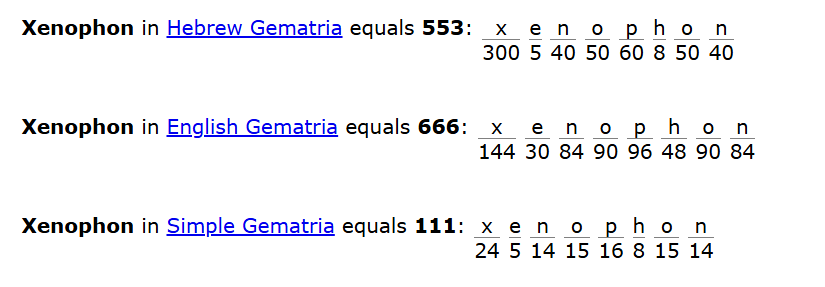
of Athens that was a student and admirer of Socrates as-well. He wrote about his teachings and, it seems, even took a trip out to the ol'
under his advisement. This prophetic peruse stemmed from indecision on whether he was to accompany 10,000 mercenary Greek soldiers on an expedition to overthrow the king of Persia or not. When Xenophon returns back and talks to Socrates, he gets a little scolding. The lad went and questioned the divine chanel about which of the gods he should sacrifice and pray to in order that he may most successfully perform the journey ahead and come back home safely, diverting from the original intention. He did not propose the question from a place of indecision, inquiring whether it were better for him to go or to stay, but instead, decided for himself that he was to go... and then asked the god what was the best way of going. Due to this order of operations, Socrates posits... now you gotta go. There is reflection on this in the text


Xenophon has another piece of writing, so well written its hard to forget, Memorabilia - a collection of Socratic dialogues. He was looking to capture the teachings and reflections of Socrates, to present his character as a standup model of virtue and wisdom. In later years, the guy underwent a profound amount of criticism, leading to a trial that decided whether or not he would continue to live in 399BCE. Socrates was accused of denying the recognized gods of Athens and corrupting the youth. These charges stemmed from his philosophical questioning, which some Athenians viewed as undermining the state's religious and political foundations, especially sensitive after Athens' defeat in the Peloponnesian War. Modern scholar Matt Gatton, in his 2024 book "The Shadows of Socrates," also claims that a lot of this upset came from Socratical scrutiny towards Athens’ most revered religious ritual - the Mysteries of Eleusis. If this is true, the subject matter seems to be of importance... that is, if it Elucidated such a mysterious response from the Athenian Government.
Sooo... what was it?
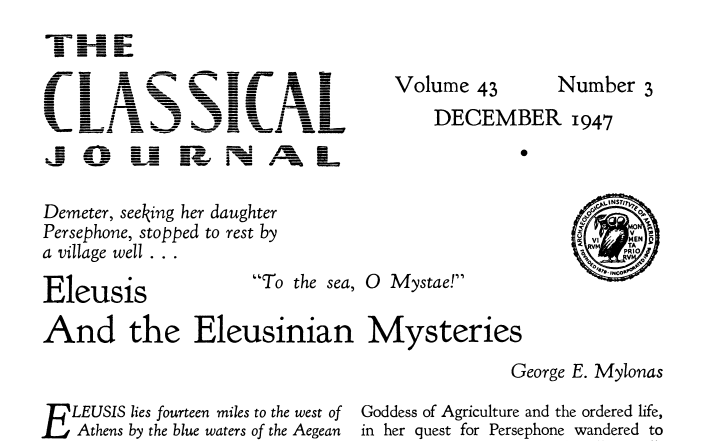
This ceremony, held late September/early October, was a (~)9 day festival which took place every year. Archaeological evidence suggests that this procession has been occurring since the Mycenaean period, around 1600 BCE. It continued for nearly two millennia, with the final festivals occurring (before being suppressed by the rise of Pagan opposing Christian emperors) around 392 CE. The sanctuary at Eleusis was subsequently annihilated by invading Goths just a few years later. The event was filled with Ancient initiation rituals held in honor of the goddesses Kore/Persephone and Demeter (who in the myth spent nine days searching for her daughter). Demeter was Greek goddess of the harvest; fertility, and agriculture, the goddess who had gifted humans with the knowledge of growing crops, and mother of Kore/Persephone. She was "the seed of the fruit of the fields," abducted and brought into the underworld to be married with Hades, swallowed up into the Earth while picking a Narcissus flower. The first day, known as "Assembly," or "Gathering," the madness got going.... with everyone doing things like... washing their hands(in consecrated water). The next day Initiates went to the sea, each taking a piglet to ritually bathe and purify, both themselves and the animal. Day 3 they were restricted from any sort of pleasure whatsoever,
even innocent ones,
and they fasted until nightfall,
where they ate,
drank wine,
and sacrificed the little piglets.

Due to the fact that these rituals took place over a long period of time, different things were added throughout its continuation. At a certain point in history, on the fourth day, there were sacrifices to Asclepius, the god of medicine. A nearby city, Epidaurus, held a temple in dedication to this God of Healing. The sanctuary housed many non-venomous snakes, (with one of those, at-least) now known as the Aesculapian snake (Zamenis longissimus), which were considered very sacred. Reptiles were free to roam rooms, and Patients would journey all the way here just to lay down, hoping that one of the slithery creatures will crawl over them at some point and grant a bit of healing. They were considered the living incarnation of Asclepius, and if a snake licked a patient’s wound, it was interpreted as the god himself performing a miracle. Dogs lived here as-well and served a similar function. Ancient inscriptions at Epidaurus record numerous instances of these sorts of things occurring, such as a malignant toe that was cured after a snake licked it. From Inscriptiones Graecae IV², 1, 121-122 https://topostext.org/work/648
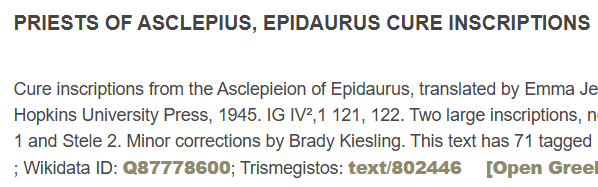
§ 17 A man had his toe healed by a serpent. He, suffering dreadfully from a malignant sore in his toe, during the daytime was taken outside by the servants of the sanctuary and set upon a seat. When sleep came upon him, then a snake issued from the Abaton and healed the toe with its tongue, and thereafter went back again to the Abaton. When the patient woke up and was healed he said that he had seen a vision: it seemed to him that a youth with a beautiful appearance had put a drug upon his toe.
There were also many accounts of blindness being cured.
§ 9 A man came as a suppliant to the god. He was so blind that of one of his eyes he had only the eyelids left — within them was nothing, but they were entirely empty. Some of those in the sanctuary laughed at his silliness to think that he could recover his sight when one of his eyes had not even a trace of the ball, but only the socket. As he slept a vision appeared to him. It seemed to him that the god prepared some drug, then, opening his eyelids, poured it into them. When day came he departed with the sight of both eyes restored.
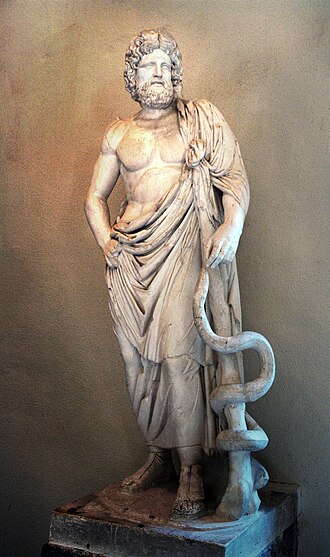
§ 20 Lyson of Hermione, a blind boy. While wide-awake he had his eyes cured by one of the dogs in the sanctuary and went away healed.
§ 4 Ambrosia of Athens, blind of one eye. She came as a suppliant to the god. As she walked about in the sanctuary she laughed at some of the cures as incredible and impossible, that the lame and the blind should be healed by merely seeing a dream. In her sleep she had a vision. It seemed to her that the god stood by her and said that he would cure her, but that in payment he would ask her to dedicate to the sanctuary a silver pig as a memorial of her ignorance. After saying this, he cut the diseased eyeball and poured in some drug. When day came she walked out sound.

§ 22 Hermon of Thasos. His blindness was cured by Asclepius. But, since afterwards he did not bring the thank-offerings, the god made him blind again. When he came back and slept again in the sanctuary, he made him well.
I won't paste them here, but there were two women whom both had quite extensive pregnancies, one lasting 5 years, and another 3, that supposedly gave birth after visiting the temple as-well. That is where it gets a little bit iffy. You had me with the curing blindness thing, but I'm sure for many, backed up babies being birthed will beat already brittle bets on building a budding belief. Strong's index number 4723(an index of every word in the Bible), is steira (στείρα)(stay-Ra), and refers to a woman that cannot conceive. The earliest archaeological evidence for the cult of Asclepius comes from this city, Epidaurus. You may think that word sounds like epididymitis, and it does, some sort of groinal trauma thesaurus, good catch, and because you caught that, I should let you know that in 74 BC, Marcus Antonius Creticus, the father of Mark Antony, installed a military post in this city, causing a lack of grain, a grain pain.
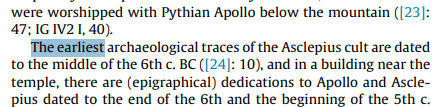
The official introduction of the Asclepius cult to Athens occurred in 420BC. This happened in tandem with the regular occurrences of the Eleusinian Mysteries, under the initiative of a wealthy private citizen named Telemachos, who brought the culture over "kata chresmon" (κατὰ χρησμὸν) "according to an oracle." We could assume this action may be motivated by a sympathy for lingering trauma from the Plague of Athens in 430 BC, but I did see one scholar claim a secret political agenda(recent peace treaty present). Could have just been a nice guy. It is not entirely clear as to whether he brought with himself a holy snake, or a statue of Asclepius, but a serpent of some sort was transported back via ship to the port of Zea. From here it was hauled on a type of chariot and brought into the city of Athens, eventually to have a sanctuary built in reverence, known as the Asclepieion.
_01.jpg)

Telemachos does not fail to have it stressed he paid for everything out of his own pocket, "he established the entire precinct, at his own expense." (IG II3 4 666). This whole journey became part of the Eleusinian mysteries, including the detail about how Telemachos showed up late to the party. "The Day of Asklepios," known as Epidauria, begins with a tale that the healing god Asklepios left his sanctuary in Epidaurus to be initiated into the Mysteries. The god arrived late to proceedings, but priests permitted him to perform the Elasis (pilgrimage to the sea) and necessary ritual sacrifice to continue. Thereupon, after the original event, there was a special day reserved for any incoming mystai who arrived late and missed the events of the previous days. This also acted symbolically, declaring that Asclepius was a friend and guest of the Eleusinian goddesses - Demeter and Kore.

(came to talk about Atlantis, why is the voice in my head guiding me down a spiral that has nothing to do with the original topic?)

https://www.atticinscriptions.com/inscription/IGII34/665
Following that, at some point forward, participants eventually go on a march all the way from Athens, to Eleusis, which is just 14 miles away(according to this source below), termed the "Sacred Way." Reenacting the myth of Demeter's search for her daughter, Kore, thousands of initiates would walk this pilgrimage. This was an all day event, initiates stopping to smell the flowers and observe a few sights while headed there. They would carry unlit torches until the final leg of the journey, the most glorious point of the day, arriving around the time of sunset to their destination. Here they got down, with kernophoria occurring, a dance by women balancing kernos (a clay vessel containing offerings such as seeds, fruits, and grain) on their heads. Kernel pop-drop and loc-korn, the concept of movie theater popcorn has its roots way back when.

One of the interesting things about this whole ordeal is that the people of Eleusis were known to mock initiates (γεφυρισμός, gephyrismos) as they passed over the bridge at the River Kephissos. That fancy Greek word I just used to look smart stems from the word bridge, and became a term that meant 'bridgery,' sorta like mockery. This chastising may have served as a form of symbolic humility and catharsis, preparing the journeyers for spiritual revelations soon to come. The first lesson - haters are going to γεφυρισμός. Sink into the place where none of it matters...

Every insult thrown is ultimately love, extended from the detached place of

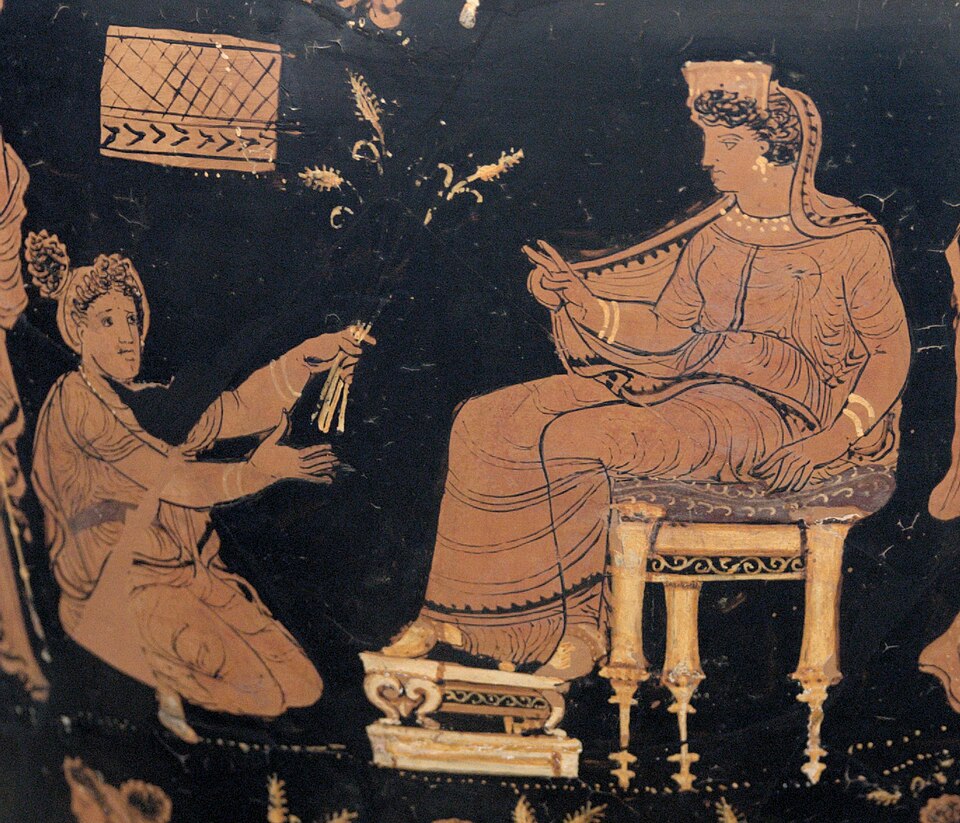
After basket weavers work their magic to celebrate the long march to another city, while fasted, they all get some sleep. The next day everyone continues their fasting, which is preparatory for the latter evening, when initiates are served a drink called kykeon. This was a mixture that contained mostly barley, but perhaps other ingredients, what some have interpreted to be a sort of psychedelic substance. There was a pivotal book written on this titled "The Road to Eleusis: Unveiling the Secret of the Mysteries," released in 1978. Despite the timeline this was not curated by hippie folk who got hysteric and historic(ally happy), it was insight derived from the minds of notable characters such as Albert Hoffmann(the guy who invented LSD and rode bicycles), R.Gordon Wasson (a banker at JP Morgan in New York turned mycologist, potentially the guy you could co-credit with introducing magic mushrooms to the Western world), and Carl A. P. Ruck(an expert on ancient Greek ethnobotany). These individuals got together and claimed to have solved the secret of the Eleusinian mysteries, bringing forth a theory that the life-changing experiences the initiate of the mysteries faced were the result of a visionary, altered state of consciousness induced by a psychoactive substance. Perhaps Hoffmann is to blame here, but the trio hypothesized that an extract of alkaloids derived from ergot, a fungus that grows on certain species of grain(containing LSD like alkaloids), including barley, was spiked into the drinks of initiates on the final day of their fast.
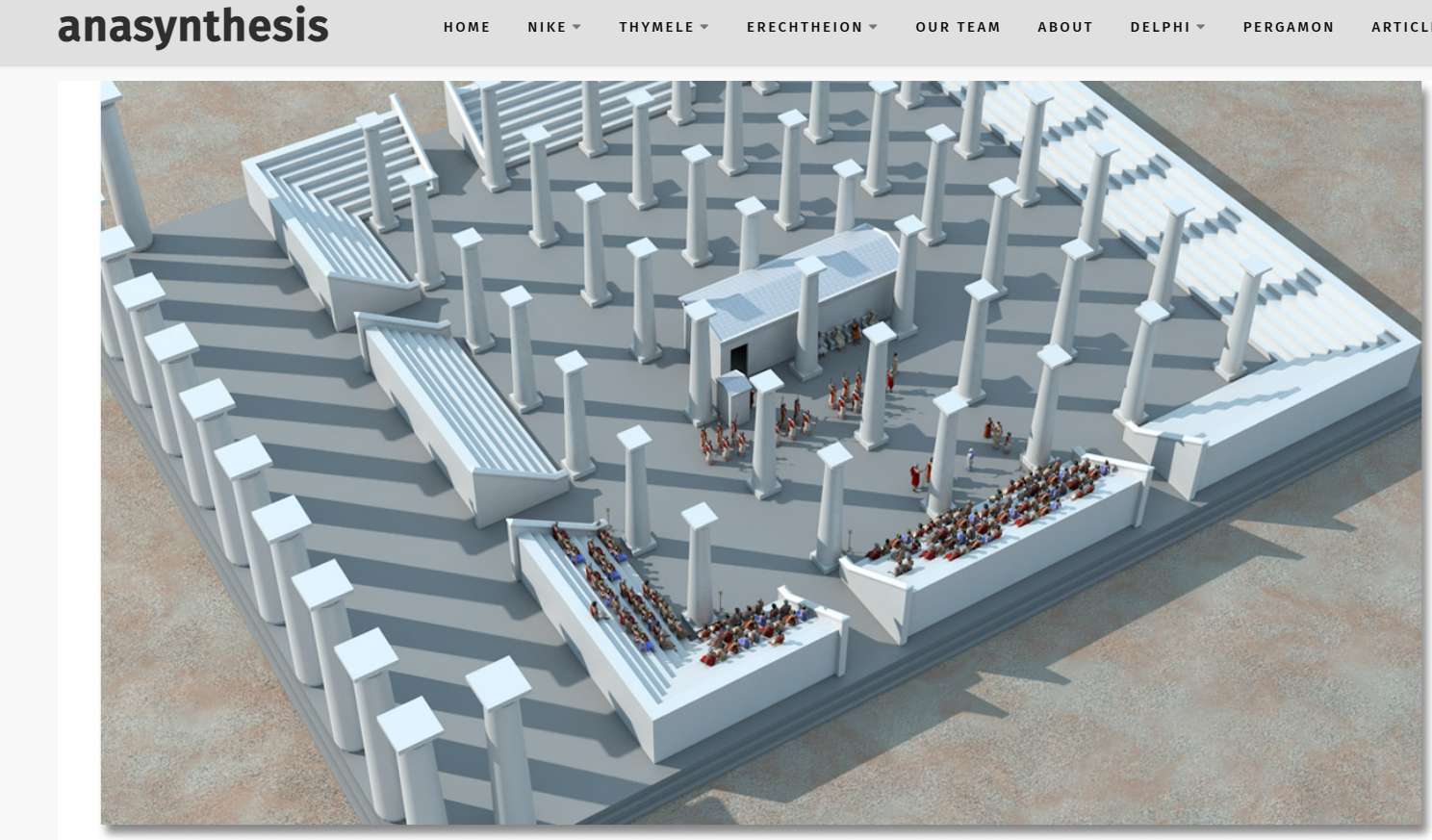
Once everyone started to 'come up' on the Kykeon, they would eventually move things into the main building at Eleusis, called the Telesterion (the Hall of Initiation). This was a massive, windowless hall, filled with a forest of columns, rows of seats around the perimeter, and designed to be completely pitch black. The Telesterion was a square building built to hold thousands of people, and inside of it, was a sort of parallel alternative to the holy of holies we hear about in the Jewish Temple. Called the Anaktoron, derived from the Greek anaktórĭos, “belonging to a king/lord," it meant Palace, Kings Palace, or Princes Palace. A small, rectangular stone room located inside the Telesterion, slightly off-center, and reserved for Hierophants(High-Priests) only. I will note one group of researchers trying to claim it as just another name for the Telestrion itself. At a certain point during the evening(probably towards the end of events), fire was kindled on top of, or within, the Anaktoron, dramatically illuminating the vast darkened Telesterion. Smoke from the fire was believed to escape through an opening or skylight in the center of the Telesterion's roof into the night sky, creating a powerful visual effect for the thousands of initiates gathered in the hall.



The first film concludes at the end of Day 474.... The dad, Lee Abbott (played by John Krasinski), dies, sacrificing himself by shouting to draw the monstrous creatures away from his wife and children so that they can escape. The second film immediately continues from that point, documenting Days 474-477. Towards the end of the first movie, they discover that the daughter's cochlear implant creates a high-frequency pitched noise that causes the 'aliens' to sorta freeze. It severely weakens the creatures, scrambling their senses and exposing the softer tissue inside their armored heads, making it possible to take them out. At the start of Part II, they already know how this works. The daughter begins to deliberately use her implant with portable speakers to stun creatures in close range. By the end, she reaches the island radio station and plugs her implant into the broadcasting equipment, sending that same high‑frequency signal over the radio so anyone tuned in can use it to weaken the monsters on a much larger scale, a finale full of hope.



Entrance to this building would unveil the next phase of the parade(albeit they are done marching by now), where there are, in a specific cascading sequence, dromena (“things done”), legomena (“things said”) and deiknumena (“things shown”). The 23rd of the month, celebrations came to a close. But which things? What was done? Something was shown? Who said what? We simply have no idea. There were NDA's signed at the start, an oath of secrecy that was well kept(under threat of violence), and the mystery has never truly been solved. The whole event was seemingly designed to induce a sort of artificial crisis in participants. Aristotle, in discussing the Eleusinian Mysteries, explains that initiates were not meant to learn, but “pathein,” which can mean either to suffer or to experience. The purpose of these hardships was to prepare initiates for the horror of overcoming death, and it was thus, that members were confident of receiving a blessed afterlife. Central to the worship of Demeter is the myth of the r@p& of her daughter Persephone. There are some scholars that speculate the “secrets” involved an actual murder or rape of a maiden to dramatize the abduction and r@p& of Persephone. There is no evidence for this, and certainly, fear could have been spiked into the punch-bowl by Christians(or baseless conspiracists) later down the line, but who knows what it is that truly happened. It holds potential to have been terrifying, but also, to have been like a giant Grateful Dead concert. What is pretty much commonly agreed upon, though, is that the drama of Demeter and Kore symbolized a spiritual death and rebirth. It gave initiates the confidence to face a world in which death was Omnipresent, integrated into their awareness of every moment, hovering.
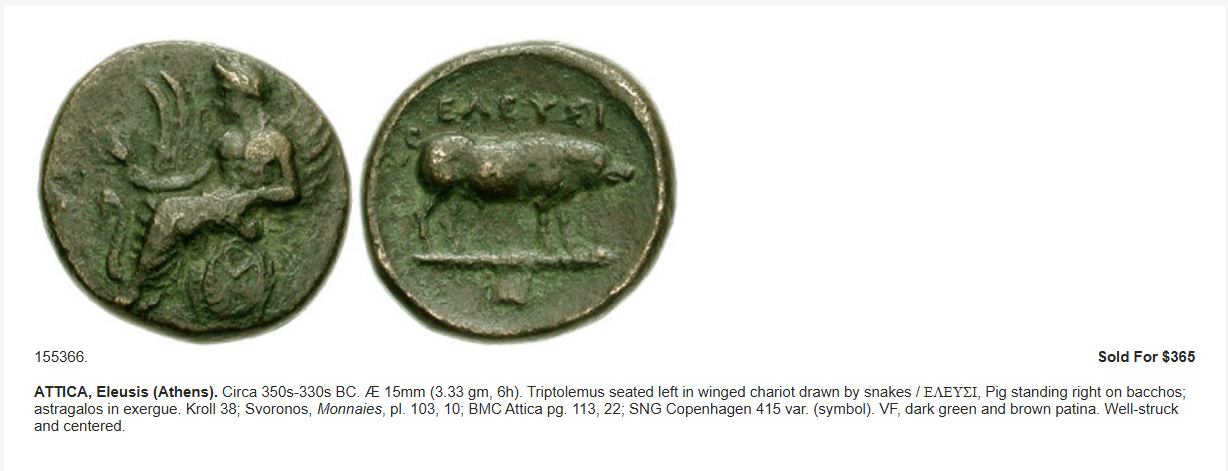
Triptolemos was the son of a king and while Demeter was trying to find Perspephone she camped out at his house pretending to be an old maid. She saw he was sick and frail and gave him a little breastmilk and then instantly he became a man. Things got weird after Demeter was caught trying to make his baby brother Demophon "killer of men" immortal by holding him over the fire at night. She made up for it though, teaching Triptolemos everything there was to know about agriculture, making him one of the first to be initiated in the Elusianian mysteries. He was also gifted a dragon drawn chariot, with multiple dragons included. From there the land of Greece learned to plant and reap crops, Triptolemos being the first to 'sow the seed', he flew around while throwing wheat all over the place, on a mission to educate the whole world in the art of agriculture. Socrates had him as one of the judges of the afterlife, as well, along with the 3 sons of Zeus.
His three commandments
- Honor your parents
- Honor the Gods with fruits
- Spare the animals
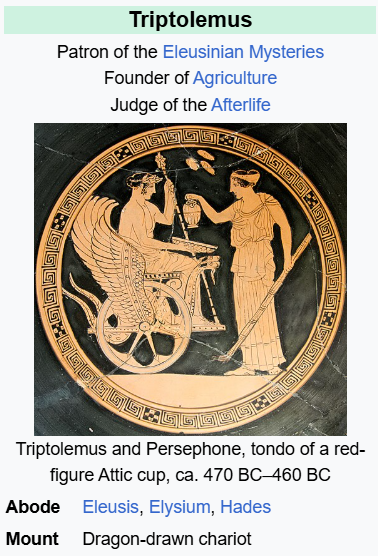
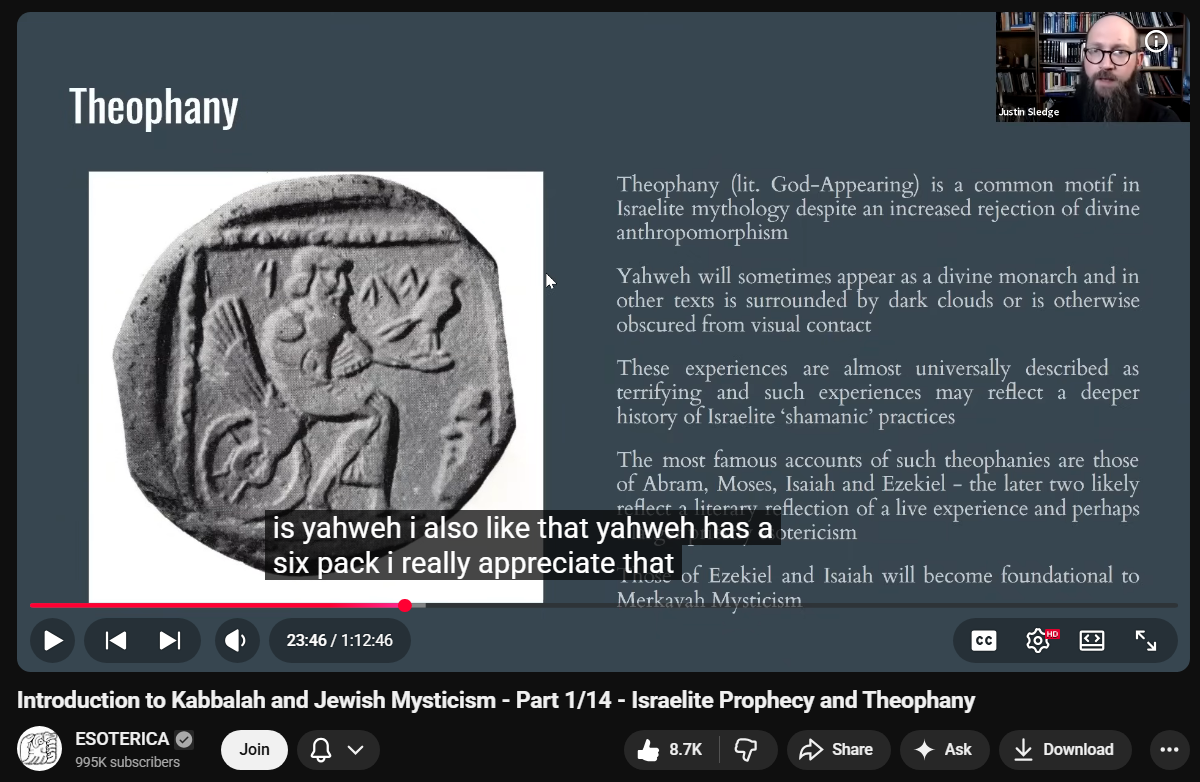
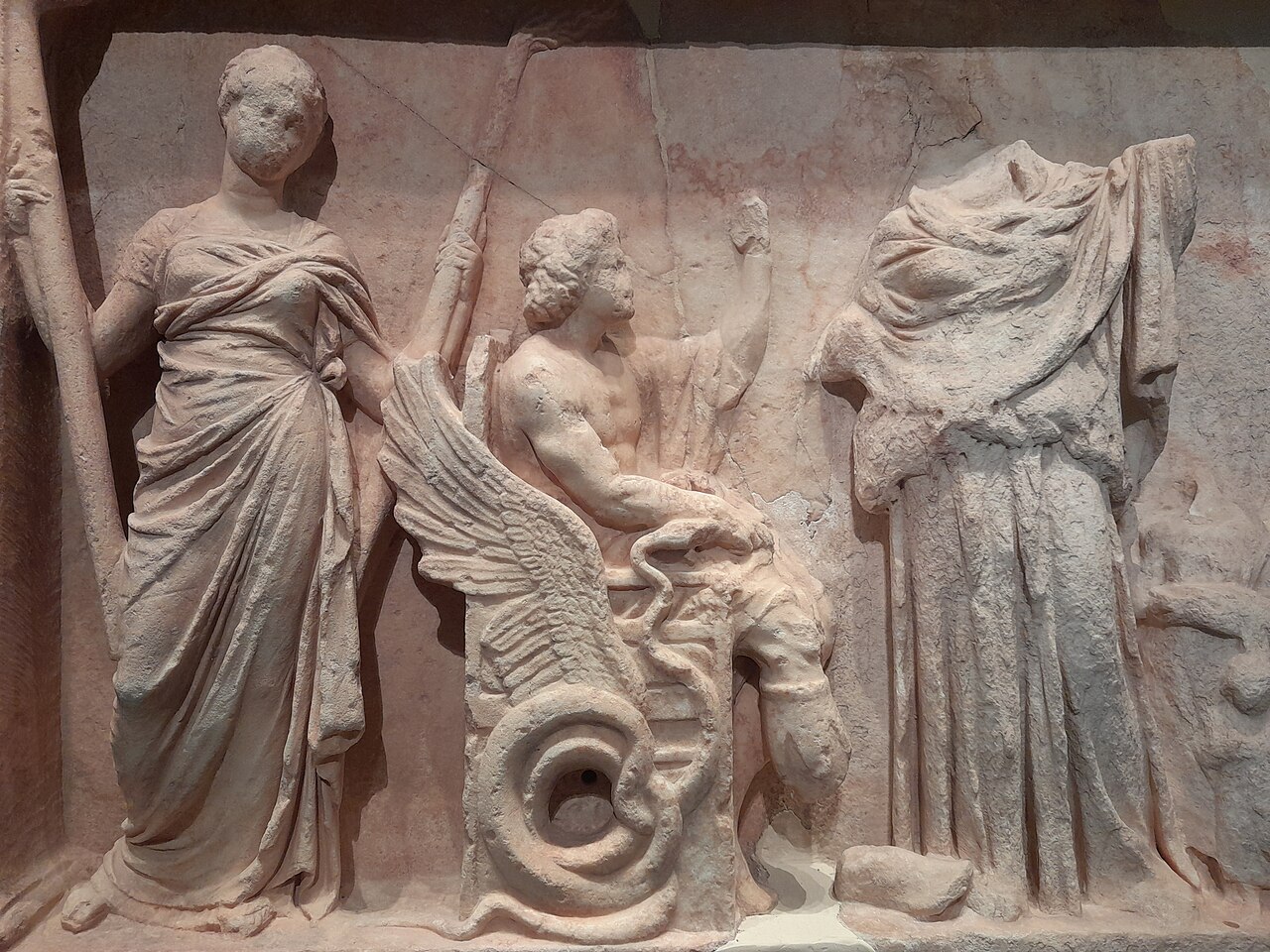
"And revealed to Triptolemos"
Homeric Hymn to Demeter, Line 474
"The holy things, which it is unlawful to transgress or find out,
Or speak of; for the great reverence of the gods checks their tongue.
Blessed is the earth-going human who has seen these rites!
But whoever has not carried out the holy rites, and has not shared in them,
Will never have the same portion when he or she dies and goes under the murky gloom."
Lines 478-82
This quote will make more sense once we get to Jeffrey
"The original foundation of the Mysteries has, however, never been established. Herodotus ascribed the institution of the Eleusinian Mysteries to Egyptian influences, while Pococke declares them to have been of Tartar origin, and to have combined Brahmanical and Buddhistic ideas. Others are equally of opinion that their origin must be sought for in Persia, while at least one writer—and who, in these days, will declare the theory to be fanciful?—ventures the opinion that it is not improbable that they were practiced among the Atlanteans."
From the Preface to, "The Eleusinian Mysteries and Rites," Dudley Wright, published 1919 by The Theosophical Publishing House, 94 pages

Weren't we talking about Socrates?
That's right.
Socrates may have been put to trial and forced to drink poison for questioning these Eleusinian rituals. Revealing the Mysteries was considered an act of impiety punishable by death. Questioning them, as-well, it seems, may have led one to a similar fate.
470 BC. - 399 BC.
It is widely argued that Socrates was a scapegoat. The city was in a state of crisis, and the charges against him were seen by some as a way to find a communal culprit and restore order, even if they were vague or the penalty too harsh for alleged crimes. Xenophon questions the validity of these accusations in his Memoribilia, detailing Socrates' pious nature and dedication to the improvement of others. Plato, as-well, wrote something in defense of his teacher, known as The Apology of Socrates. He was present at both trial and execution, and the text was written as a reenactment of Socrates defense. Plato wanted to defend his reputation and philosophical way of life, while criticizing the Athenian democracy for unjustly executing the "justest person" he had ever known. It should be noted that these two separate accounts of defense for the problem philosopher likely have a bit of bias to them, because they were both students of his - perhaps graciously leaving out some of the more critical aspects of the allegations. However, the fact that Xenophon wrote something, shows that Socrates wasn't all a Plato play-time production.
He was a real man, just like Aristotle, the one I have met in real life. Aristotle was Plato's student at the Academy for 20 years, and while they had mutual respect, their philosophical disagreements led to significant differences in their later ideas. One such disagreement... Aristotle didn't believe in Atlantis. Those that followed his teachings didn't really either. Too much fairy tale on you Platover there... Some Neopythagorists seemed to be onboard though. Could he have been incorrect about this? Let's get back to that now.

But just quickly,
Plato's real name was actually Aristocles.
He got the nickname we know him by from a wrestling coach.
Broad shoulders on that guy
We should, however, not confuse him with another philosopher sharing that same first name.
https://topostext.org/people/15083
Atlantis.
So it goes
(Egyptian priests → Solon → Dropides → Critias the Elder → Critias the Younger → Plato → You)
Solon first got the information about Atlantis during a decade-long, self-imposed exile(vacation) in Egypt. This was a journey he decided was necessary after ushering in some very noteworthy reforms. He wasn't inappropriately satisfying a deep intrinsic desire for wanderlust as the most powerful man of Athens just for fun, but to remove himself from political fray. Solon had just given to the world perhaps their first vision of what a truly free society would be, and since some refer to him as the "Godfather of Democracy," I think we could consider this a sort of well deserved paternity leave. It was done with a specific understanding of, not only his own psychology, but that of the people, to prevent either the wealthy, or the poor, from pressuring him to reinterpret, bend, or undo the new laws he had established. When Solon got into office Athens was in a strange place. He was praised for solving a dispute by getting two men to simply agree to a trial, if that gives sense to the sort of disorder present. It was during this time that they had to make important the idea of sacred buildings, because people were “disturbed with superstitious fears and strange appearances.” This also sought to make them more submissive to justice, and “inclined to harmony”(from Plutarchs writings). These are the conditions of the city that Solon was tasked to figure out what the best laws would be. The first thing he dealt with was the problem of indebtedness. Prior to Solon, you could take a loan out with your enslavement as the collateral. If you default, you are your creditors slave. Solon forgave all debts and took a risk by getting rid of this, and everyone hated him. The rich of course were angry for their money, the fact that there weren’t real securities for loans anymore, while the poor were mad Solon didn’t just divide all land and make everyone equal(you can never win). Some were also angry that they couldn’t offer their enslavement for a loan, they wanted that money, they wanted to be a slave, but Solon had seen too many horror tales. There were men that had drifted so far away from home they forgot their native language and were functionally disabled. Eventually the people came around, “becoming sensible of the good that was done they laid by their grudges.” When Solon rose to prominence, Athens was strained under deep social conflict, crushing debt, and the legacy of earlier legislation - particularly the severe and unforgiving laws of Draco. This was the next thing on the agenda, a reformation of the laws he instated.

Rest in Peace to Drakeo the Ruler from LA, born 12-1 '93 - who died at only 28 on Dec. 19th 2021
Draco was the first legislator of Athens in Ancient Greece, according to tradition. He arrived at a time where there were no written laws, and created what was termed the 'Draconian constitution,' or 'Draco's code.' The people of Athens commissioned this act as a response to the unjust interpretation and modifications of the oral law aristocrats were enforcing(like the police before body cams). The rich were essentially so powerful that they could bend everything to their own will, wielding a growing power over the poor that was causing concern(also present again in Solons time). So, Draco steps up to the plate around 621 BCE and is elected by some sort of authority to work a few ideas and set things in stone. Well, actually, he set them in wood. He inscribed his constitution onto massive four-sided wooden beams called axones. These things were set on pivots so they could be rotated, allowing for anyone walking by to - literally spin the block - and read the rules.
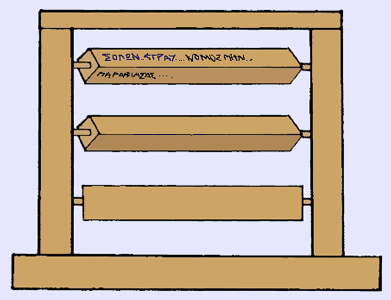
The rules here were... intense. We are talking about the death penalty for stealing a head of cabbage. Something as simple as 'idleness,' was cause for cessation. He claimed that for minor crimes they deserved it, and for the serious ones, he couldn't think of a more severe punishment. Draco enlisted a sort of "one size fits all" solution to criminal activity, "written in blood, rather than ink." It was the first time Athens had a constitution that you could actually look at, but nobody liked looking at it. This system was so severe that it actually caused a lot of issues. Firstly, when it comes to thievery, for example, if you were to be caught, you are going to be killed, so, you might as-well murder all of your victims along the way and leave no witnesses. Further severity is incentivized. The second problem arising was the fact that nobody was going to report small crimes anymore, because death was always the answer.

Do you really want to have the man that took a few carrots from you at the farmers market put to death? You can tell that Thomas Jefferson had heard of the drama with Draco when he said, while forming America, "if the punishment were only proportioned to the injury, men would feel it their inclination as well as their duty to see the laws observed." The years that went by after these draconian rules were put into place did not seem to improve the situation of Athens, and he eventually seems to have found himself somewhat disliked. However, it is here that the most interesting part of the story takes place, where Draco meets his own demise. You see, it seems that the man had actually drowned under a massive swathe of cloaks and hats on a visit to Aegina. At a theater, perhaps after some sort of speech, he was supposedly showered with gifts from citizens until he drowned in drip. Cloak and dagger without any dagger. It is likely that the story was fabricated so his death was seen with a kind of poetic justice, but we should take into account the show 1,000 Ways to Die. Draco, who had imposed such harsh and suffocating laws on the Athenian people, was now suffocated by the symbols of respect and honor that were being given to him as a lawmaker. For such a severe executioner, he had a soft and elegant death, killed with cloths of kindness.
(Diplo will be 47 until November)
These laws instituted by Draco were the first major overhaul to ruling regulations abided by Athenian aristocrats since the cities inception, in the year 1555/6BC. Solon got rid of all his punishments except for the one that had to do with homicide.

"...the Athenians themselves were called Cecropians, from King Cecrops."
The Birds, Aristophanes, 1470
According to Greek mythology, Cecrops was the one who founded (what would come to be known as) Athens at that time(1556/1555BC), becoming its first king, and instituting the rules followed ever since. This was quite a legendary figure, supposedly an autochthon(αὐτόχθων), a Greek word derived from αὐτο- (auto-, “self”), and χθών (khthṓn, “earth, soil”), meaning "sprung from the land itself." What a title, such a moniker meant that Cecrops was ultimately born from the Earth, he was 'one with the elements,' you could say. In myth, the first Athenians didn't migrate from somewhere else - they simply sprouted directly out of the ground, like plants, giving a sense of pride to the land that no other Greeks would be privy to. To get technical, Cecrops was actually not the first ruler of the land, he succeeded another autochthon known as King Actaeus, whose daughter, Aglauros, he married. There were people there, it was a place called Acte(or Actica), but without much of a culture or community. Actaeus was ruler of the dirt. Cecrops came in and divided this dirt up into 12 different communities, what was eventually combined into the unitary Athens. Cecropia, the capital, so to speak, is where the famous Acropolis of Athens is today. The only reason it was named after Athena was because Cecrops chose her as victor in a battle against Poseidon for patronage of the city. Poseidon did some fancy work with the trident, making a well that would.... well.... only produce salty water. Useless. Athena however, she planted an olive tree, which grows Olives. 🏆🏆🏆. There's another myth that takes a bit of gender bias - the guys throw their vote towards Poseidon, while the ladies, who outnumbered the male population by 1, voted for Athena. Tough luck sea-man. Well, Poseidon said, after thrashing the city with massive waves from the nearby sea(still salty), women can't vote anymore. And so it was, women could no longer vote.
"Cecrops first settled the multitude in twelve cities, the names of which were Cecropia, Tetrapolis, Epacria, Deceleia, Eleusis, Aphidna (also called Aphidnae, in the plural), Thoricus, Brauron, Cytherus, Sphettus, Cephisia. And at a later time Theseus is said to have united the twelve into one city, that of to‑day."
(Strabo, Geography § 9.1.20)
Psst Strabo, you only listed 11
Cecrops was known for doing things like: inventing writing, getting rid of human sacrifice, and even updating burial practices. He replaced the older, more barbaric customs, with something that emphasized a bit of reverence for the dead. Speaking of replacing barbaric customs, Cecrops was also the one to introduce the concept of marriage - to a place that was, perhaps, getting a little too freaky for their own well-being. Wild promiscuity, sacrificing babies, it was a damn mess. Most significantly, he taught the Athenians how to worship the gods properly, helping to harmonize ritual with morality, paving the way for societal progress. Likewise, he was the first who built altars and statues of the gods, deifying Zeus as the supreme deity.
"For Cecrops was the first to name Zeus Hypatos (highest), and refused to sacrifice anything that had life in it, but burnt instead on the altar the national cakes which the Athenians still call pelanoi. But Lycaon brought a human baby to the altar of Lycaean Zeus, and sacrificed it, pouring out its blood upon the altar, and according to the legend immediately after the sacrifice he was changed from a man to a wolf (lykos)."
(Pausanias, Description of Greece, § 8.2.3)
Cecrops was known in other parts of Greece as a hero of the Pelasgian race, not quite the same as this original story. For example, "In Haliartus too there is the tomb of Lysander and a hero-shrine of Cecrops the son of Pandion." (Paus. ix. 33, § 1; Strab. ix. p. 407.) Tradition there called him a son of Pandion, and it is confusing, because Pausanias goes on to later describe Cecrops as the father of Pandion as-well. In Euboea, which also had a town named Athenae, Cecrops was thought to be son of Erechtheus and Praxithea, and a grandson of Pandion. The whole trail gets a bit tangled, like a bunch of wires, especially when you consider that in history, there is a Cecrops II, a descendant, who supposedly reigned from 1347 BC until 1307 BC. However, German expert on Greek studies (GG) Karl Müller remarks that the different mythical personages of this name in places like Boeotia and Euboea are only multiplications of the one original hero, whose name and story were transplanted from Attica to other places. He claims that Cecrops II was merely a duplication of the first character, invented so that they could fill in the gaps of kingly Athenian history. You might wonder ...... why is this Cecrops guy so special?
Well, you see, the first king of Athens, he was half snake. Serpent from the bottom half down. Like a centaur, but slithery, here to ascent-our world.
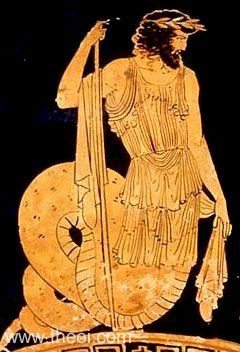
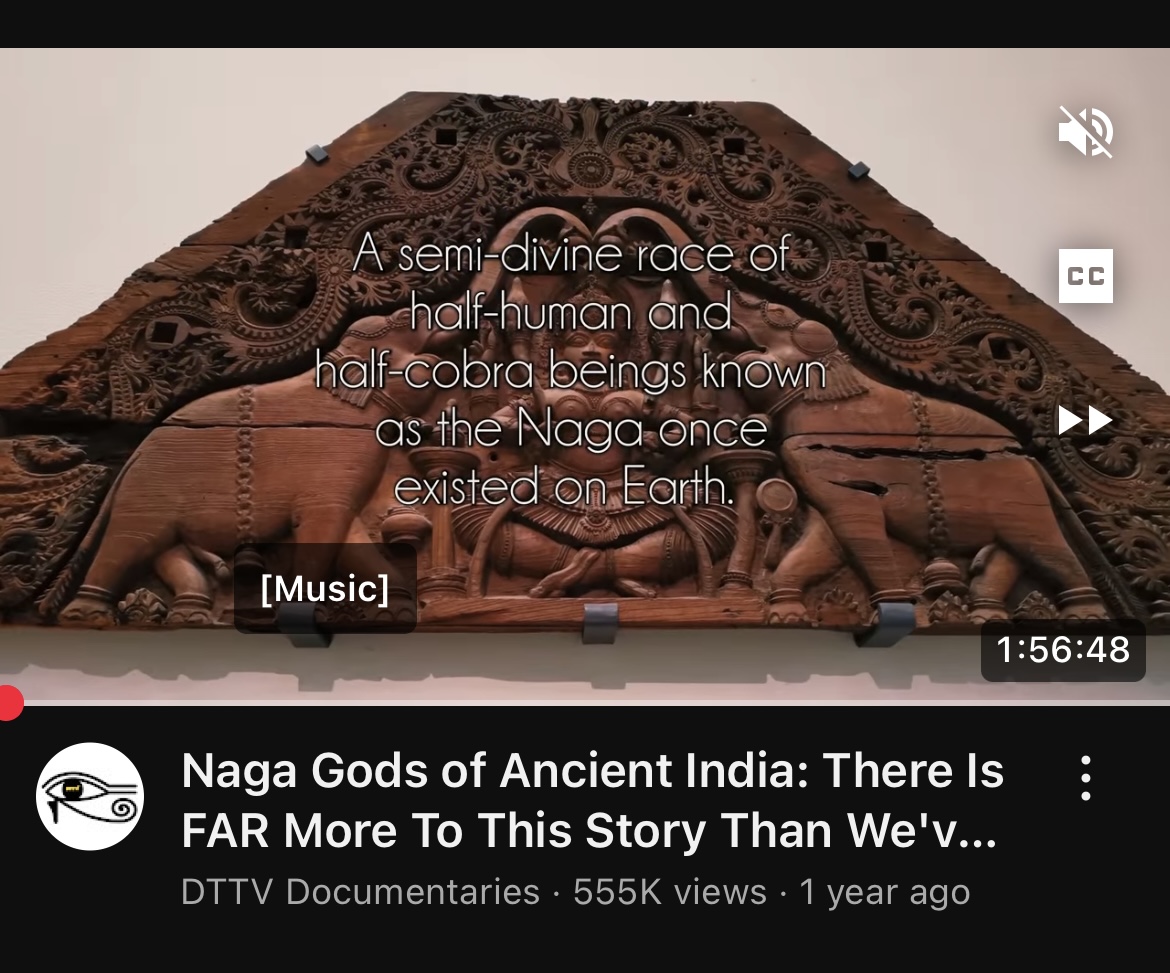
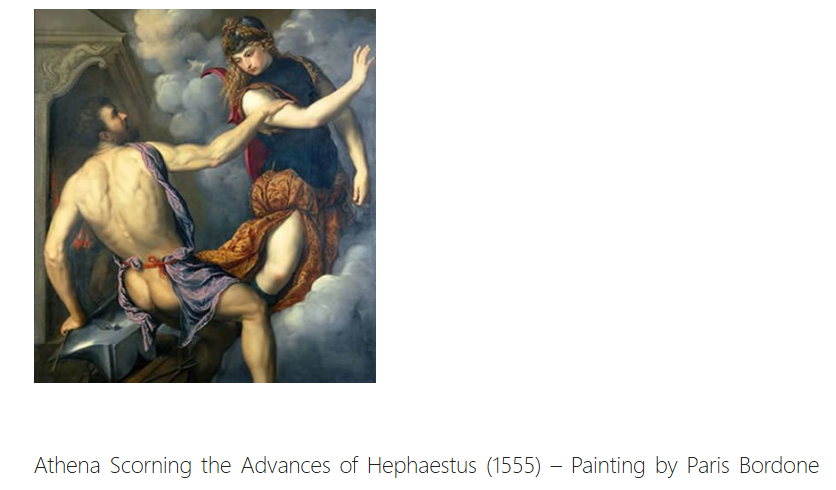
The final tale of Cecrops worthy of harvest would be the fact that he had three daughters: Herse, Pandrosus, and Aglaurus. Athena gave these three daughters a baby to watch over, Erichtonius. This little creature was also an autochthon, and the story of his birth is a bit strange. Hephaestus, the blacksmith making all sorts of Godly weaponry, was a sort of mythological incel (although married to the smoke-show Aphrodite at one point), and tried to force himself upon the Virgin Goddess Athena. Athena ends up resisting these efforts, pushing him off of her, but in that process, acquired a little bit of his 'seed' on her thigh. Absolutely disgusted, she wipes it with a piece of wool, and flicks it onto the ground, where from the Earth(χθών, chthôn), life springs forth. This is Erichtonius, whom, Athena decided to become the protector of and raise. However, she wanted to do this in secret, so she placed the infant in a little basket. When Athena had to be away, she would give this basket to the 3 daughters of Cecrops to babysit, orb(ask)et,sit... warning the girls that they were not to look inside.
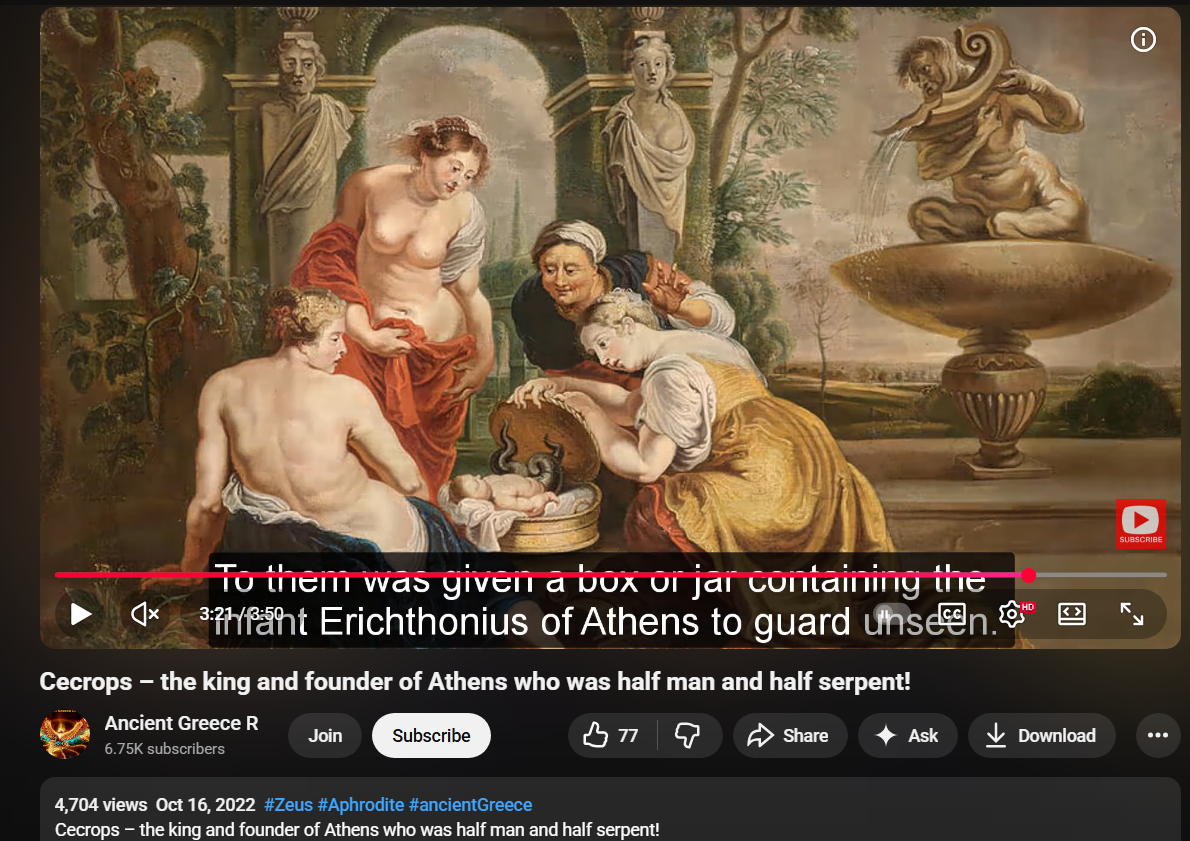
Two of them, Aglauros and Herse, one day, unable to resist the mysterious temptation to take just oooonnneeee peek, decided to open the basket. Pandrosus kept out of this, probably having heard of the whole Pandoras box incident. What they saw inside was the end of them. There are two different versions of what proceeds. In one, the baby is wrapped with a couple of snakes that Athena had placed inside as guardians. In another, the baby itself is in-fact a snake, a hybrid reptilian humanoid. The sight of the snakes (or the infant-snake) was so terrifying, that the sisters lost their minds instantly(what could have been metaphor for certain intense maddening divine secrets). They ran to the edge of the Acropolis and flung themselves off its steep cliff, dying on the rocks below. You would think that having a half snake father, they would be a bit more comfortable with serpents. Erichtonius went on to not take any of this personally, and grew up to be a great King of Athens. He introduced things like... the smelting of silver(which passed $47 for the first time in 14 years this September), the four horse chariot, and taught his people how to till the earth with a plough. For the product of such a messy conception, he seemed to blossom beautifully.


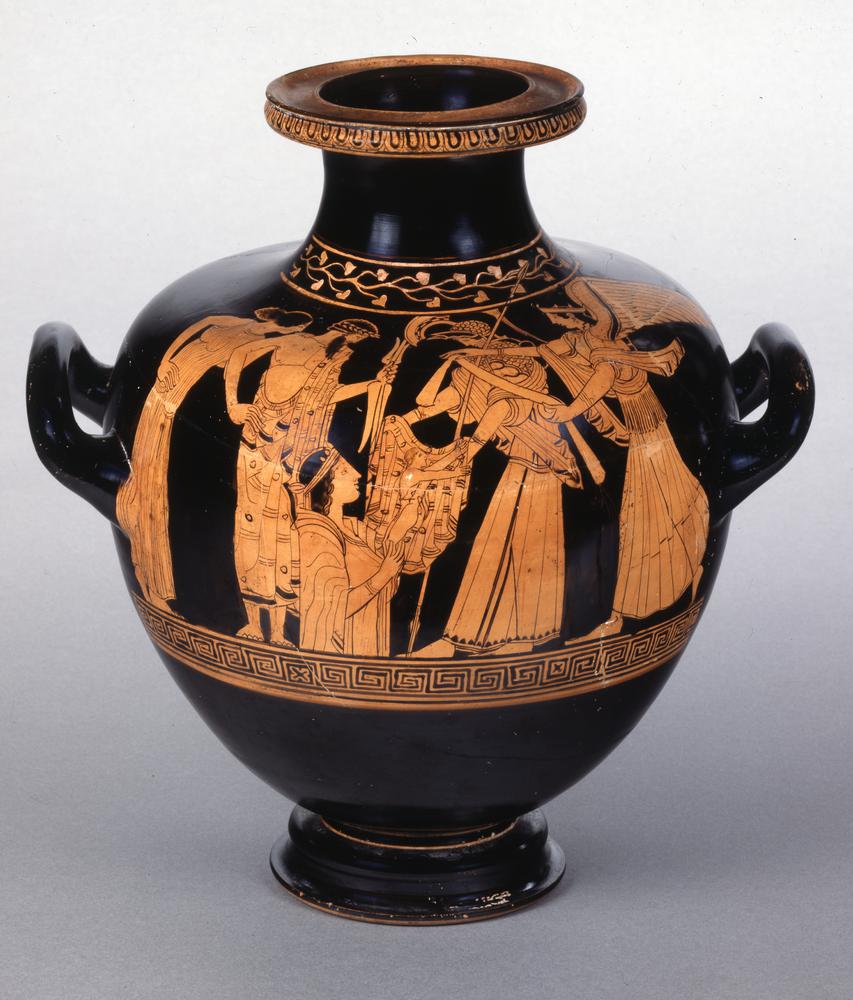
Hydria depicting the Birth of Erichthonios, dated to 470BC-460BC (Staatliche Antikensammlungen, Inv. 2413)
Some interpret the Hephaestus episode as occurring after his marriage to Aphrodite, reading the sexual assault on Athena as an expression of his frustration. It would make sense that such a dramatic violation of boundaries may have stemmed from a deep internal sense of humiliation in response to her infidelity. The ancient texts themselves do not directly make this connection, but come on, we all have a little bit of natural psychologist in us - maybe we can just embellish the story for fun. When Athena came to Hephaestus's shop for weapons, he projected his desire onto her, was rejected, and then probably couldn't handle a further blow to his sense of self esteem. It is the perfect recipe for this villainous behavior, and ejaculation onto Athena's thigh, his last failed shot at love(with his sister if you don't count the myth where he is born from Hera by herself). There is however one version of the tale where, although yes, earlier he was cheated on, Zeus actually hands over Athena to Hephaestus for marriage. You can see a continuation of Neptune/Poseidon's engulfing resentment towards Minerva/Athena for winning the battle of what came to be known as Athens, getting a little taste for his character, who is causing all sorts of chaos here by influencing Hephaestus to go ahead and make moves on Athena. "Hey big Heph..." Also, a different take on Cecrops's 3 daughter's, featuring a beautiful bird.
"Then he obtained freedom of choice from Jove, to gain whatever he sought from them. Therefore Neptune, because he was hostile to Minerva(Athena), urged Vulcan(Hephaestus) to ask for Minerva in marriage. This was granted, but Minerva, when he entered her chamber, defended her virginity with arms. As they struggled, some of his seed fell to earth, and from it a boy was born, the lower part of whose body was snake-formed. They named him Erichthonius, because eris in Greek means "strife", and khthon means "earth". When Minerva was secretly caring for him, she gave him in a chest to Aglaurus, Pandrosus, and Herse, daughters of Cecrops, to guard. A crow gave the secrete away when the girls opened the chest, and they, driven made by Minerva, threw themselves into the sea."
§ 166 Hyginus, Fabulae
The crow which gave the secret away is Corone, who was turned into the animal by Athena herself. A daughter of Coronaeus, not the 19, but King of Phocis, was walking along the seashore... picking seashells... before she became target of focus for the sea god Poseidon. She was known for being incredibly beautiful, but hard to get, rejecting the solicitations of many princes. He found her mesmerizing and proceeded to play his hand in the Art of Seduction(2001), was rejected, and then tried to force himself upon the princess. She ran away and made cries out for help, which sadly fell on deaf ears... to all, except for Athena.
"No mortal heard my voice, but the virgin goddess feels pity for a virgin and she helped me. I was stretching out my arms to the sky: those arms began to darken with soft plumage. I tried to lift my cloak from my shoulders but it had turned to feathers with roots deep in my skin. I tried to beat my naked breast with my hands but found I had neither hands nor naked breast. I ran, and now the sand did not clog my feet as before but I lifted from the ground, and soon sailed high into the air. So I became an innocent servant of Minerva."
Ovid. Metamorphoses. pp. 2.569–88
Athena saved the day and took Corone under her wing. This passage, however, is from a section in which Corone is reflecting on Athena's removal of protection - for tattling on the situation with the three daughters of Cecrops opening the basket. Athena was oddly upset by this, embracing a "snitches get stiches" mentality, even for reports on those who were disobeying her orders. She banished the creature from flying over the Acropolis, and placing the crow below the Owl - who became her new sacred bird. The bird with a rotationally remarkable neck is what Athena is typically associated with, but it seems for a while, at-least, that Athena held the crow with high esteem as her assistant, evident from Pausanias's records.
"The statue of Athena also on the acropolis is of bronze, and stands in the open air, holding a crow in her hand."
(Pausanias, Description of Greece, § 4.34.6)
This is why the raven rests on the bust of Pallas in the Edgar Allan Poe narrative “The Raven,” as Pallas is another name for Athena.
"Perched upon a bust of Pallas just above my chamber door—
Perched, and sat, and nothing more."

(latin for crow mystery)
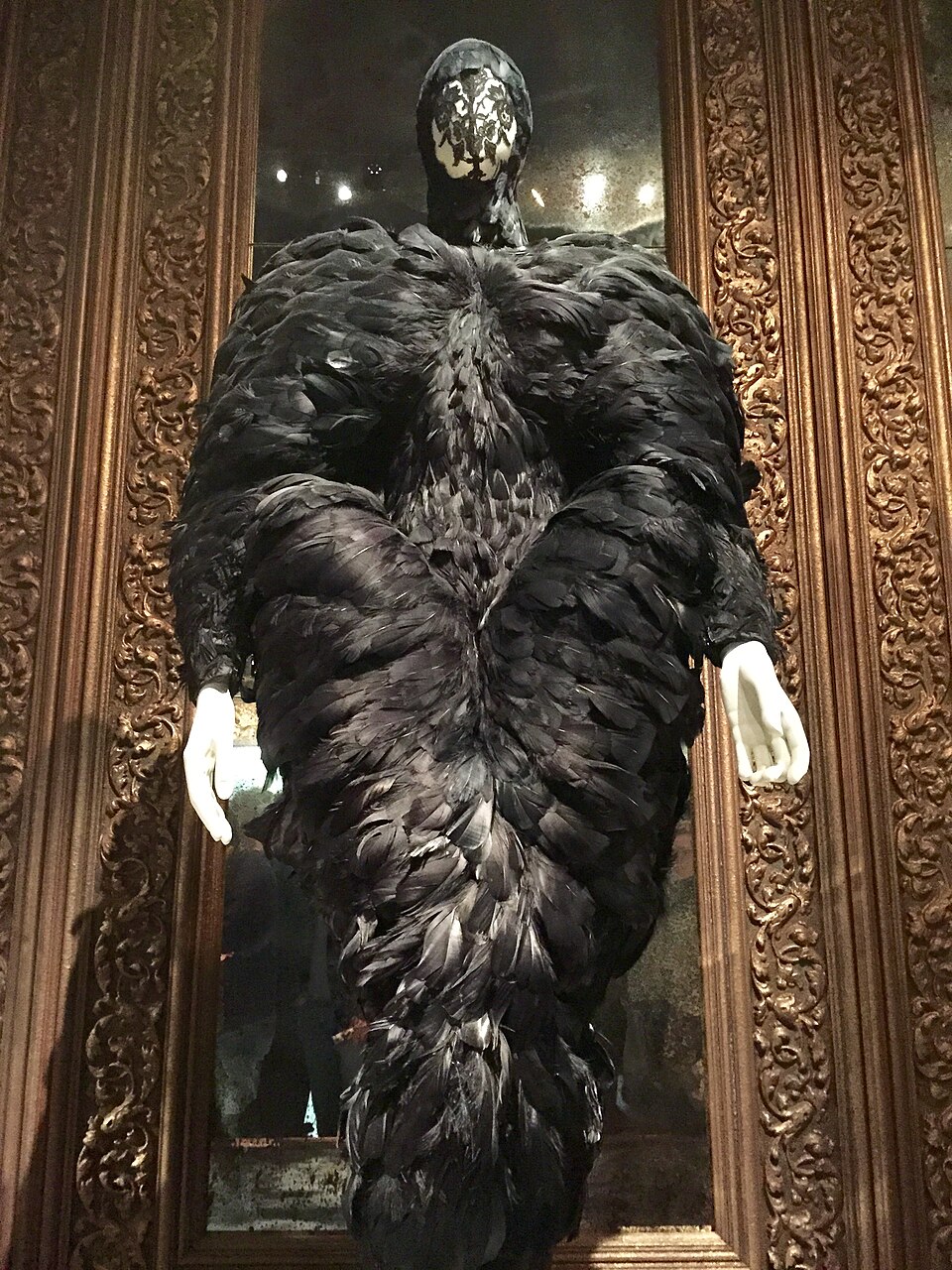
A final piece from Alexander McQueen's, "The Horn of Plenty". Alistair O'Neill hypothesized a meaning that came from Greek myths, where women often transformed into birds to escape trouble, connecting to McQueen's desire to transform women through clothing to protect and empower them.
January 28
5 yards forward

Crashout prod Wonder was a year ahead of me in high school ( I wondered how he did that )

A similar crow situation takes place with Apollo, who is typically the one more associated with the animal, and upset with the bird, as-well, throughout two different stories. One of these actually gives us background on the birth of Asclepius, the healing god we were describing above. In this story, Apollo is relationally entangled with the fine maiden Coronis (Korônis), however, something was up, she must have been acting suspicious(like Corona), because he sends a faithful crow to watch over her. His fears were right, and while pregnant with his own baby, she was off with a mortal man. As the god of prophecy, birds were especially important for Apollo(and the Greeks), as things were interpreted through their observation. The crow, who, following their duty, is witness to this adultery, goes back to Apollo and breaks the news. Upon hearing of what had happened, Apollo breaks the bird, shooting the messenger, claiming the creature should have intervened and stopped them from ravishing one another. Apollo proceeds to sear the crow, turning what was originally a divine white bird, black, cursing it.

He then goes and, in one version, kills her himself, and in another, has Artemis(his twin) pull the bowstring. Upon the death of Coronis, after the body had been set to fire during funeral processions, Apollo, but in some stories Hermes, felt bad about the unborn child. They swooped in, typically Apollo, to rescue the baby - performing a mythological cesarean(47) section over the fire. This is the god of healing, Asclepius(Ασκληπιος), who's name we don't have an exact meaning for. His powers of healing became so strong, after growing up raised by the leader of the centaurs(son of Chronos and immortal half-brother of Zeus, Chiron), that he acquired the ability to raise the dead back to life. This is why Zeus struck and killed him with a thunderbolt, his powers were a crime against the natural order of things. What a graduation present.
To quote the Apollo 13 mission, on the 13th of April 1970, "Ho(Ze)uston, we have a problem."
There were two major parts of the Apollo 13 ship: the Odyssey, the Command and Service Module that housed the crew for most of the mission, and the Aquarius, the Lunar Module originally meant to land on the Moon for a 33‑hour stay (with two scheduled moonwalks, HEE-HEE). It was instead, through the presence and intelligence of on-board astronauts, adaptively used as a “lifeboat” on the fly, after an oxygen tank explosion at 55:54:53 mission time. In space, you've

Michael Jackson began his career at the Apollo theater at age 9, the familial Jackson 5 group winning amateur night. In a roundabout manner, his final full concert, "Live at the Apollo 2002," was held there as-well, a charity event that raised millions. Shortly after his death a memorial took place again in this location.
This song was the solo that led the way for his debut 1972 album release, by the same name, that launched his career at the age of 13 as the most famous and influential musician ever, the "King of Pop."
55:55:04 into the flight, Mission Control’s data shows a sudden shift in the spacecraft’s High Gain Antenna (HGA) pointing plus a strange crackle breaking the normally clean radio signal.
55:55:19 Swigert: "Okay, Houston, we’ve had a problem here."

My mother would respond in this manner when I got smart and called her by the first name as a child

55:55:28 Lousma: "This is Houston. Say again, please."
55:55:42 Lovell: "Ah, Houston, we’ve had a problem here. We’ve had a Main B Bus undervolt"
In the return phase after the accident, Swigert and Mission Control had to verify and later reconfigure all 417 switches and circuit breakers in the Command Module Odyssey to make sure it could be safely powered back up for reentry. They made it home in one piece after going with the flow of things, but there was still one problem that remained...
Everyone in the world has been misquoting them ever since...


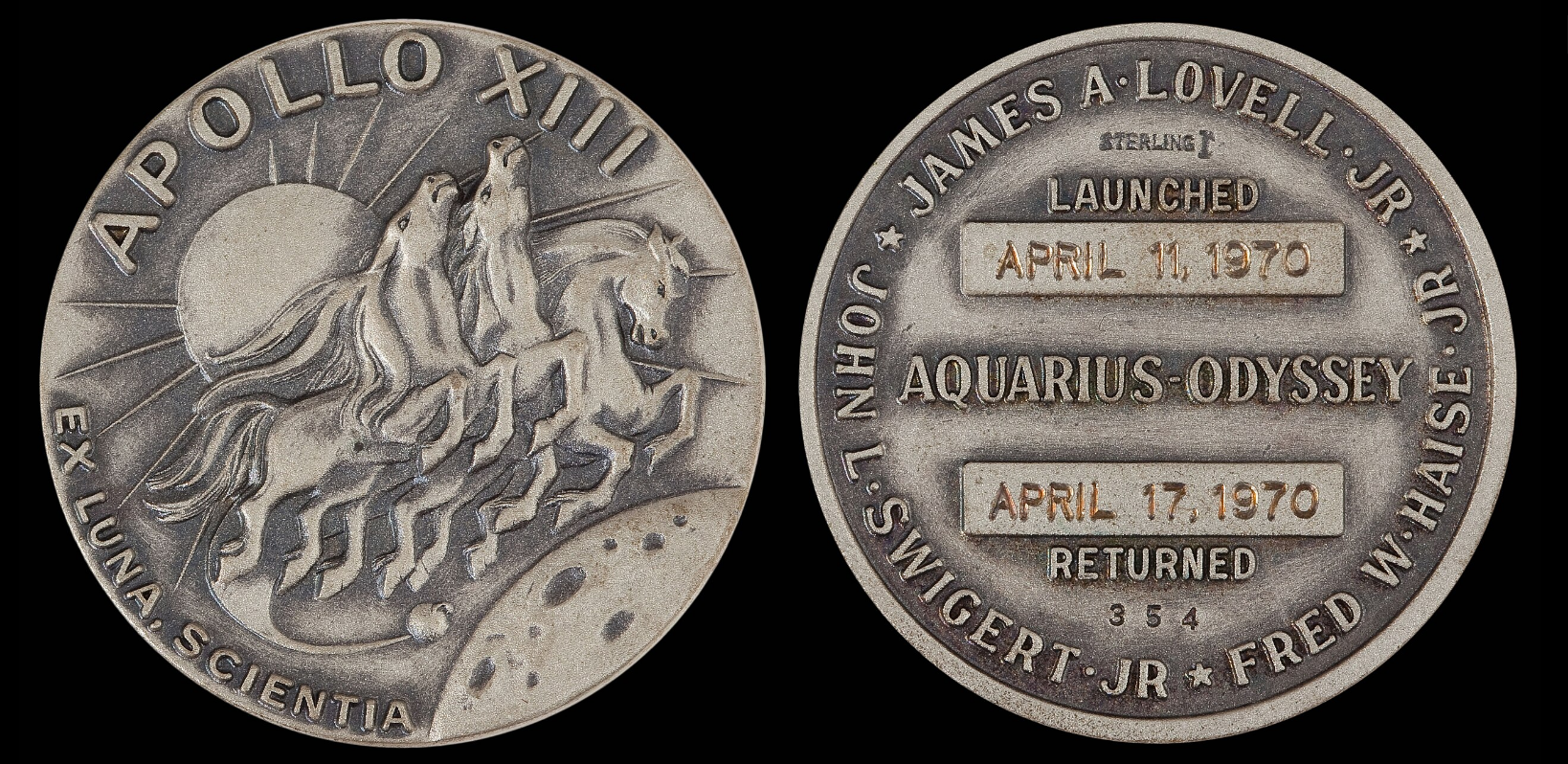

"Now that we have examined these matters we shall endeavour to set forth the facts concerning Asclepius and his descendants. This, then, is what the myths relate: Asclepius was the son of Apollo and Coronis, and since he excelled in natural ability and sagacity of mind, he devoted himself to the science of healing and made many discoveries which contribute to the health of mankind. And so far did he advance along the road of fame that, to the amazement of all, he healed many sick whose lives had been despaired of, and for this reason it was believed that he had brought back to life many who had died. 2 Consequently, the myth goes on to say, Hades brought accusation against Asclepius, charging him before Zeus of acting to the detriment of his own province, for, he said, the number of the dead was steadily diminishing, now that men were being healed by Asclepius."
Diodorus Siculus, Library 1-7 § 4.71.1
(Apollo was pissed by this and took out the Cyclops which made Zeus's thunderbolts)

The crow was sacred to Apollo because he turned into the animal to escape the titan Typhon in the war against the titans. He made the bird his partner from that point forward, and its original white color was seen as a reflection of his purity. There was an entire offshoot of the OTO order, the order Aleister Crowley was a highly influential member and leader of, by one of his magical students, called the Typhonian Ordo Templi Orientis (T.O.T.O.). Leader Kenneth Grant claimed themselves to be practicing what is known as the Typhonian or Draconian tradition of magic. This, he claimed, was not new, and had contributed to the tantra traditions of India. Thelema, which also fit the bill, was just a small resurgence of a much larger, older tradition. In 1973 Grant published an announcement declaring his order, and in that same year, dropped a book called "Aleister Crowley & the Hidden God." This contained a study of Aleister Crowley's system of sexual magick and its similarities with the ancient Tantric rites of Kali, the dark goddess of blood and dissolution represented in Crowley's Cult as the Scarlet Woman. It is one of the most well know Thelemic magical orders and contributed to the development of others like Dragon Rogue, based out of Sweden. From their website, "the Draconian Tradition is universalistic and claims that its roots are found in all the myths of mankind, where the forces of darkness give humanity access to illumination."
The other story of Apollo and the crow is what explains the order of some of our stars. Apollo was getting himself arranged for a sacrifice to Zeus, and found himself in need of water. He calls his crow companion, giving to it a cup, called the crater, to go and fetch him his necessary ritual materials. The crow makes its way to the nearby spring, but finds distraction in a fig tree. The figs on this tree were not quite ripe yet, but the raven, overcome by gluttony and impatience, decided to wait for them. He sat in the tree for days, ignoring his mission, waiting for the fruit to ripen. Eventually the figs matured, and the bird found itself satiated. Immediately the feathery frolicker came to and realized that Apollo was going to be livid when returning back to home base on Mount Olympus late. In desperation, the crow picks up a Hydra(water snake), and flew back to Apollo with tail between legs. Lying, the crow proclaims that the snake had prevented access to the water, but Apollo immediately saw through this(God of Truth and whatnot). And so, he turned the crow black, changing its voice to a harsh caw. Furthermore, he cursed the crow with eternal thirst and placed it in the sky, just out of reach from Crater the Cup, in a position where it would never able to drink from it, being dragged out of reach in the coils of the wronged Hydra the Watersnake.
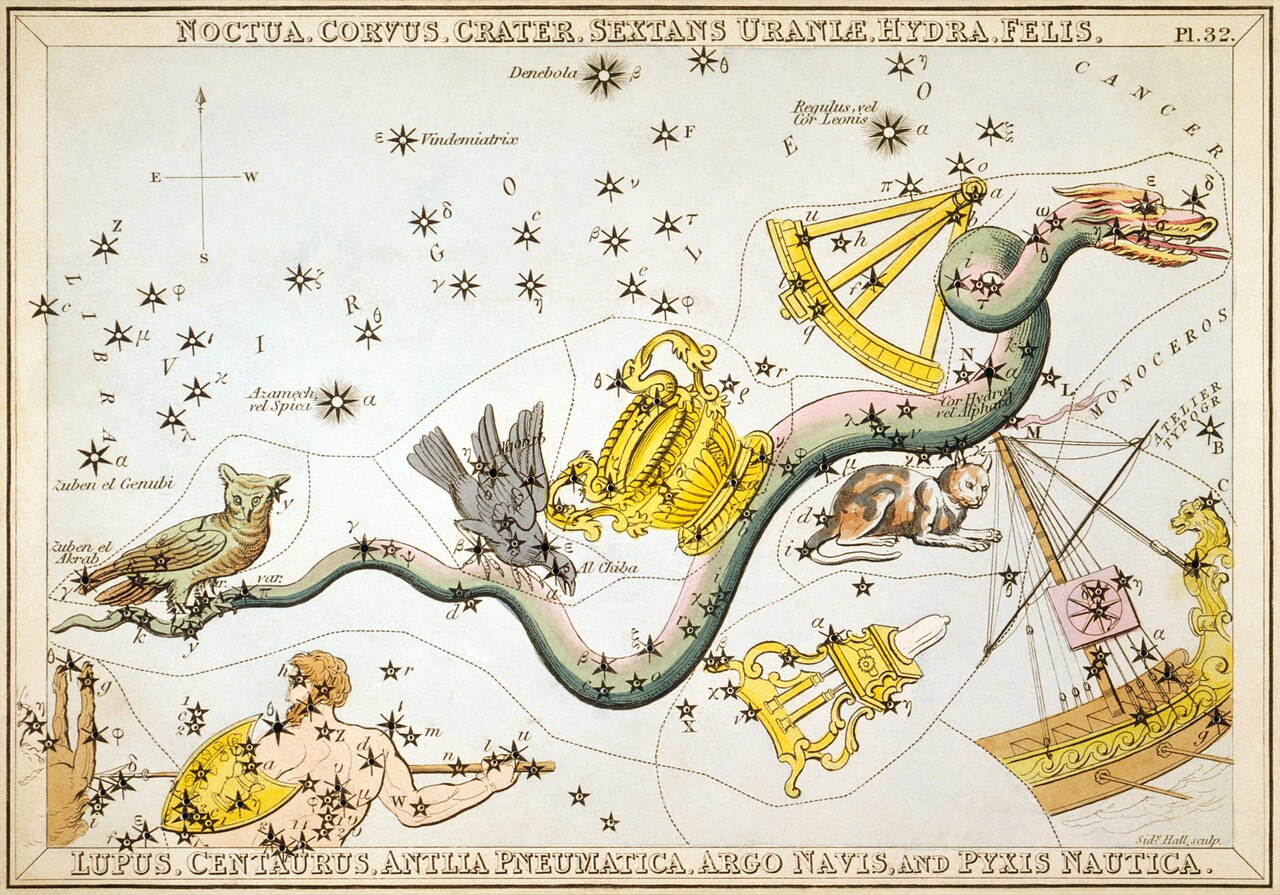
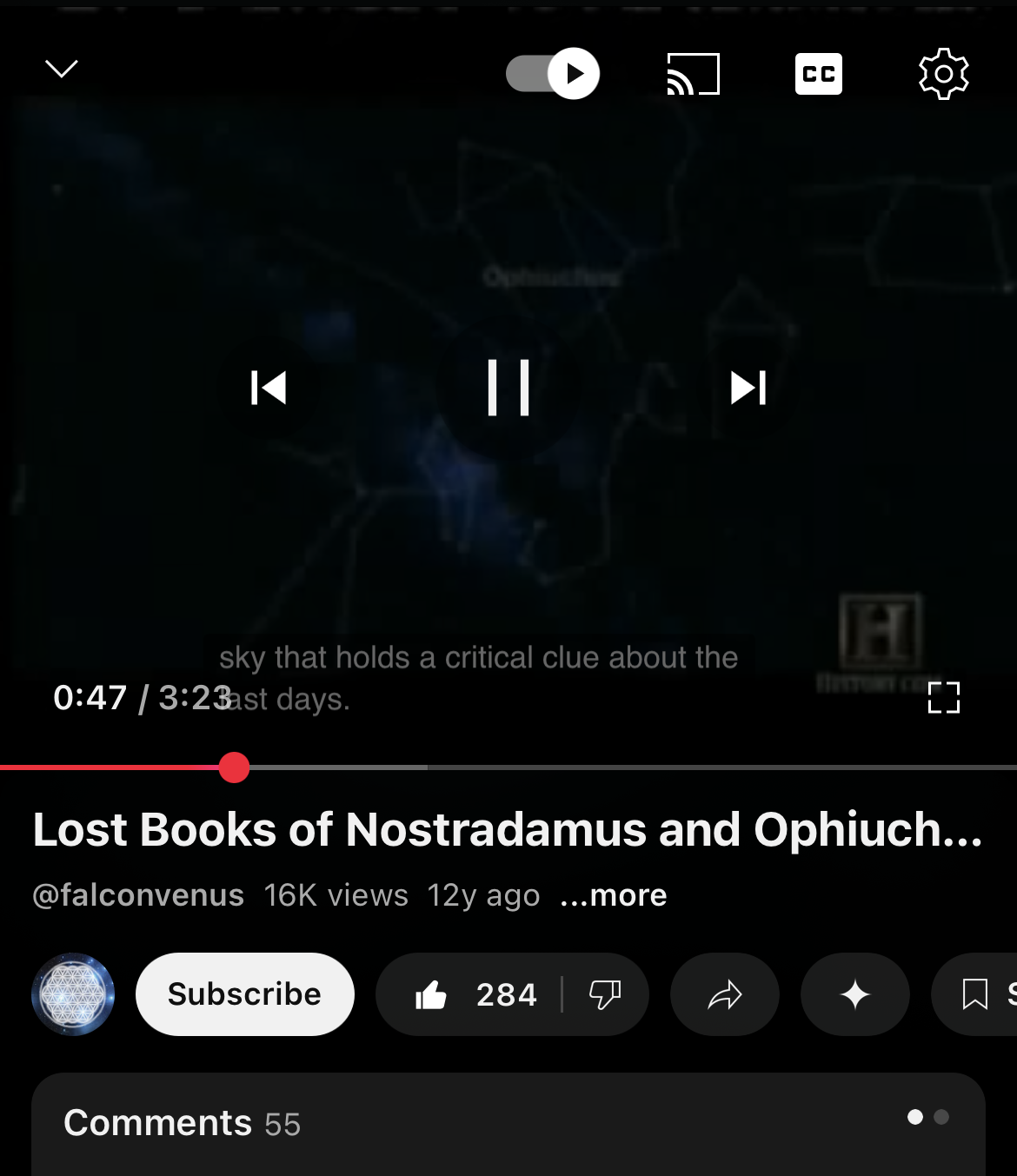
The Hydra is not the only serpent in the heavens, nor is it the only one with a connection to Apollo. If you look elsewhere along the ecliptic - the path the sun travels across the sky - you will find a much larger figure wrestling a different kind of snake. This constellation is Ophiuchus (ophioûkhos), which means "The Serpent Bearer," and represents Apollo's son, Asclepius. Son of the sun, a healer which could bring the dead to life, this constellation is part of Ptolemy's original collection of 48. Modern astrological signs that you are likely familiar with are based on the 12 major constellations (out of 88 recognized constellations in the modern day) that align with the suns path, and “rule” for about a month’s time every year. Each of these make up 30º of our the 360º rotation. There is an entire astrological sub-group that utilizes a 13th sign called Ophiuchus, which resides near our galactic center.
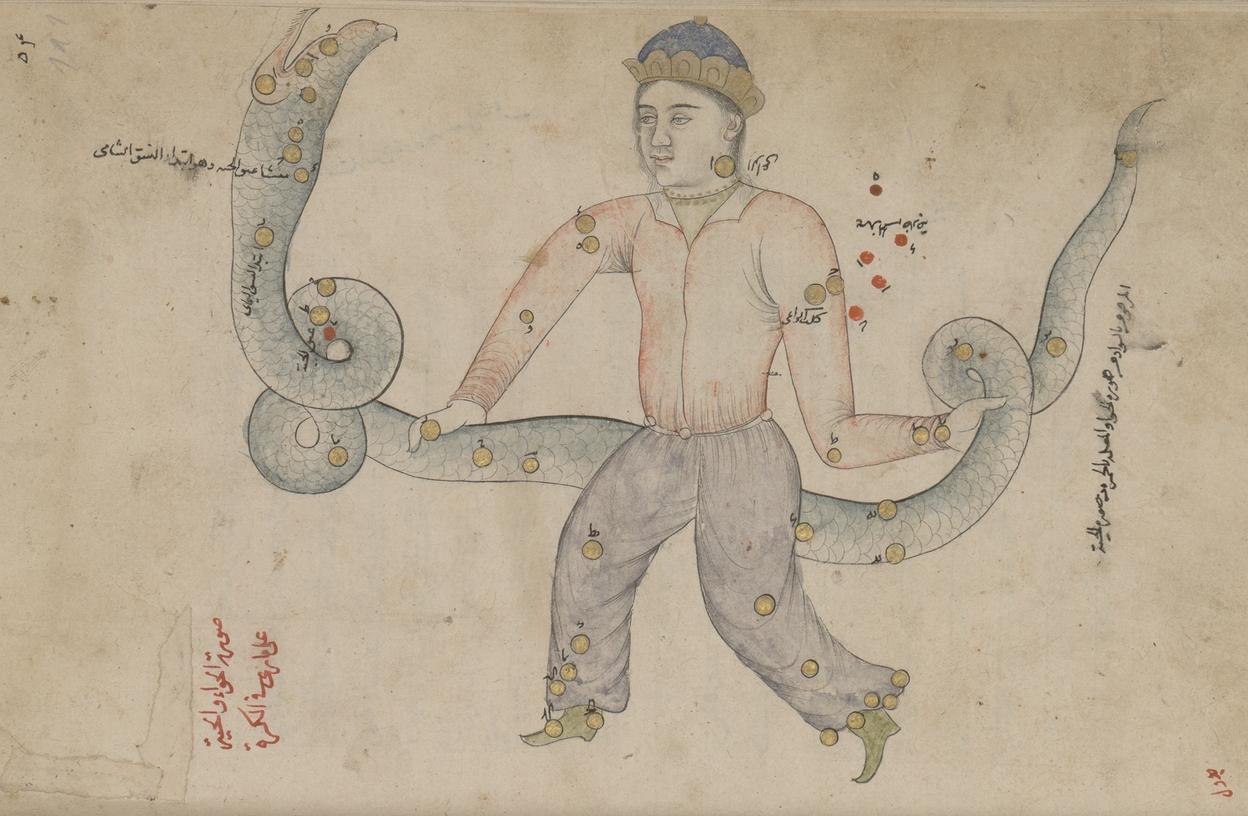
Ophiuchus in a copy of Azophi's Uranometry(10th century), a manuscript prepared for Ulugh Beg in 1417
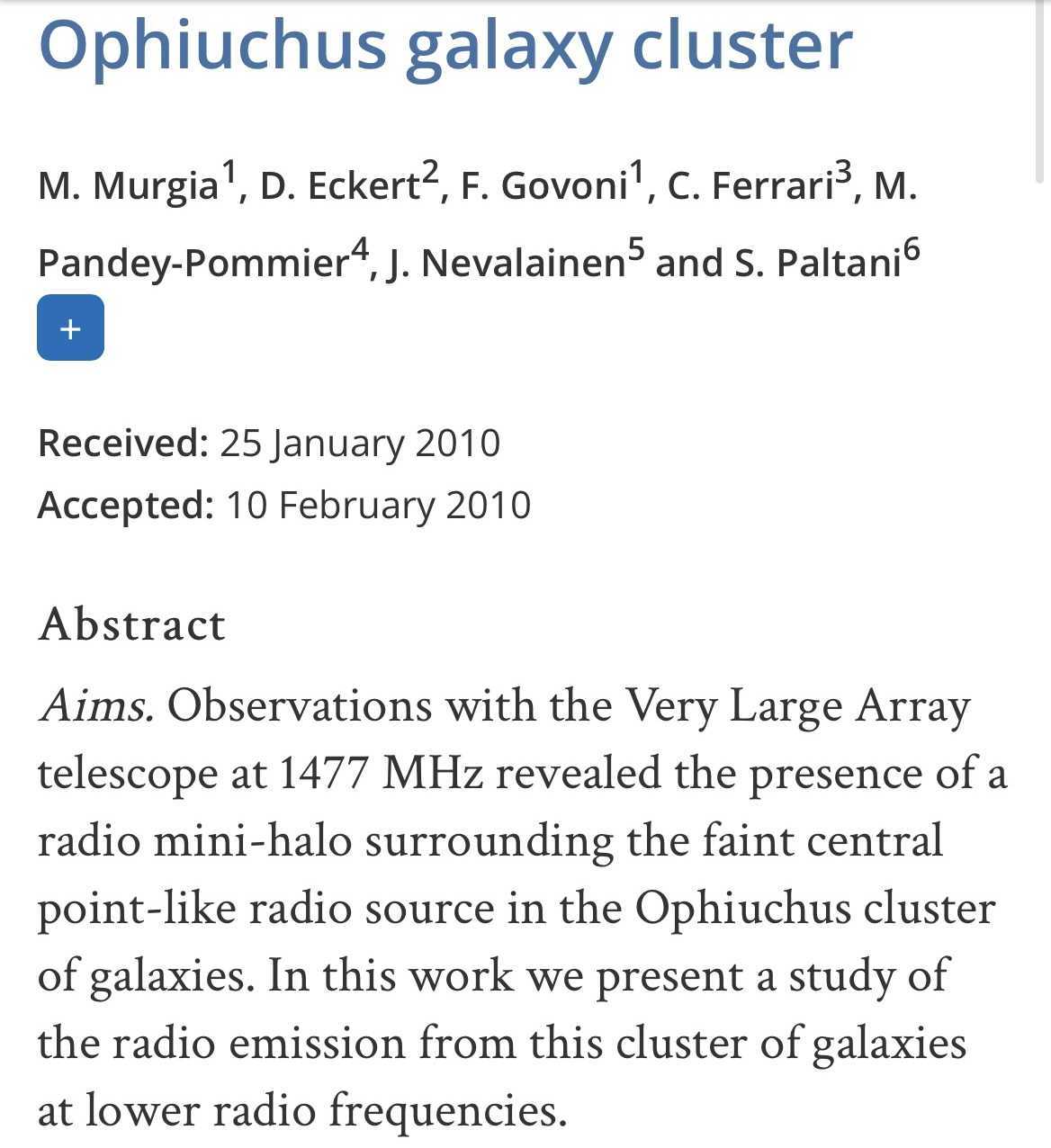
The word Ophiuchus is Greek, but has a Latin equivalent, which is Serpentarius. There is a bird whose scientific name is the Sagittarius serpentarius, with a third eyelid that sits beneath its upper and lower lids. This 3i is hinged at the inner side of the eye, and moves horizontally across the eyeball to keep it free of dust, wind and hazards(like venom from the snakes it snags) - giving them the nickname "nature's goggles."

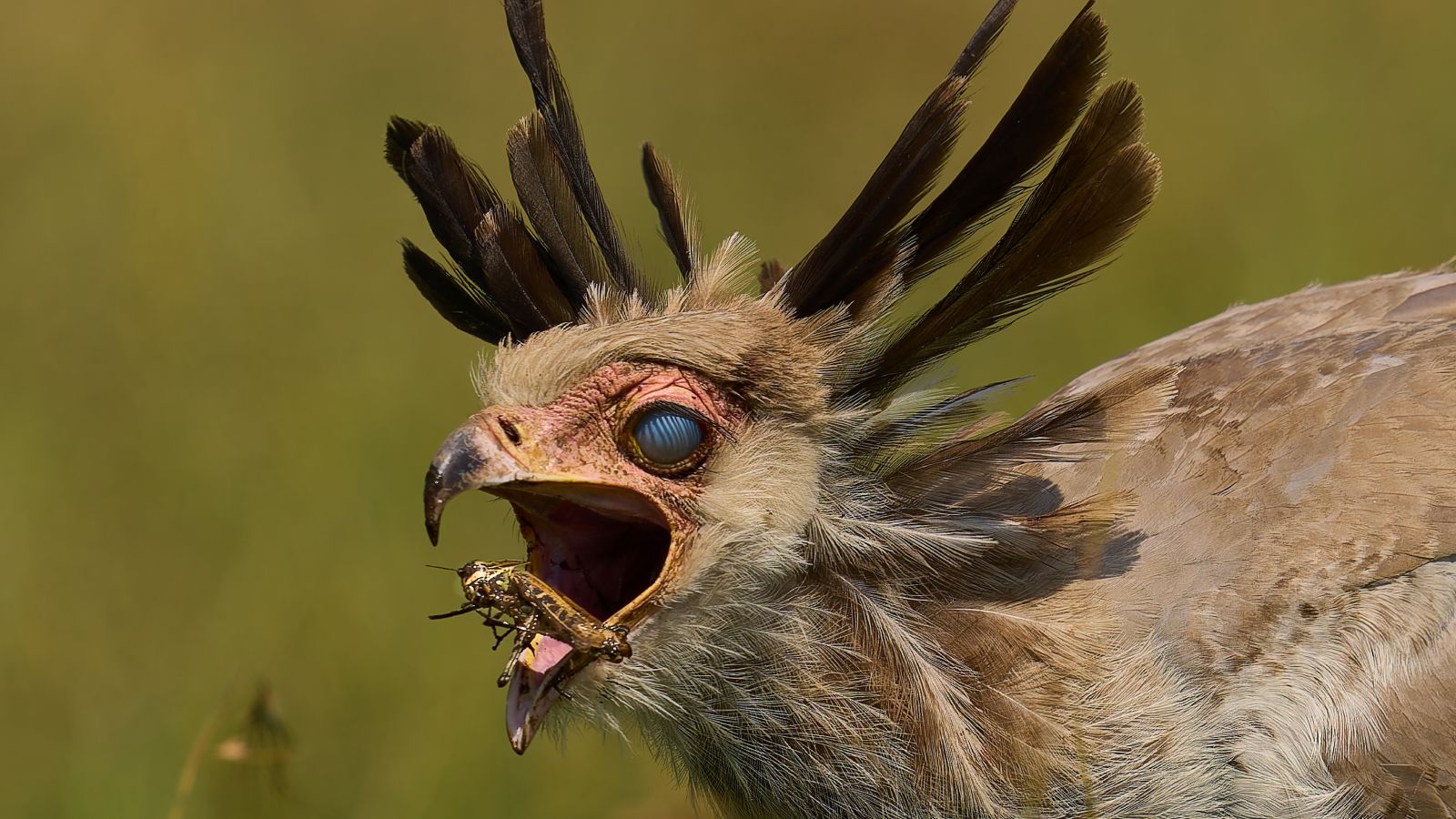
Peter Hudson/Royal Society Publishing Photography Competition 2024
Supposedly, Nostradamus used 13 signs in his astrology. Able to have visions and see into the future, he began making prophecies in 1547, first published his visions in a book entitled Centuries on May 4th, 1555.
2025-1555=470 years.
So exactly 470 years from the date that Nostradamus published his first book, is when 𓋹 The End 𓆙 started.
Thy late arrival, César Nostradamus my son, has made me bestow much time, through nightly vigils, to leave you in writing a memorial to refer to, after the corporal extinction of your progenitor, that might serve for the common profit of mankind, out of what the Divine Being has permitted me to learn from the revolution of the stars.
"Letter to Cesar," opening preface to Michel de Nostredame's first publication
'Les Propheties,' May 4, 1555
Some notably apocalyptic selections
II 62
Mabus puis tost alors mourra viendra,
De gens & bestes vne horrible deffaite,
Puis tout à coup la vengeance on verra,
Cent, main, soif, faim, quand courra la comette.
Mabus then will soon die, there will come
Of people and beasts a horrible rout:
Then suddenly one will see vengeance,
Hundred, hand, thirst, hunger when the comet will run.
X 50
La Meuse au iour terre de Luxembourg,
Descouurira Saturne & trois en lurne.
Montagne & plaine, ville, cité & bourg,
Lorrain deluge, trahison par grand hurne.
The Meuse by day in the land of Luxembourg,
It will find Saturn and three in the urn:
Mountain and plain, town, city and borough,
Flood in Lorraine, betrayed by the great urn.
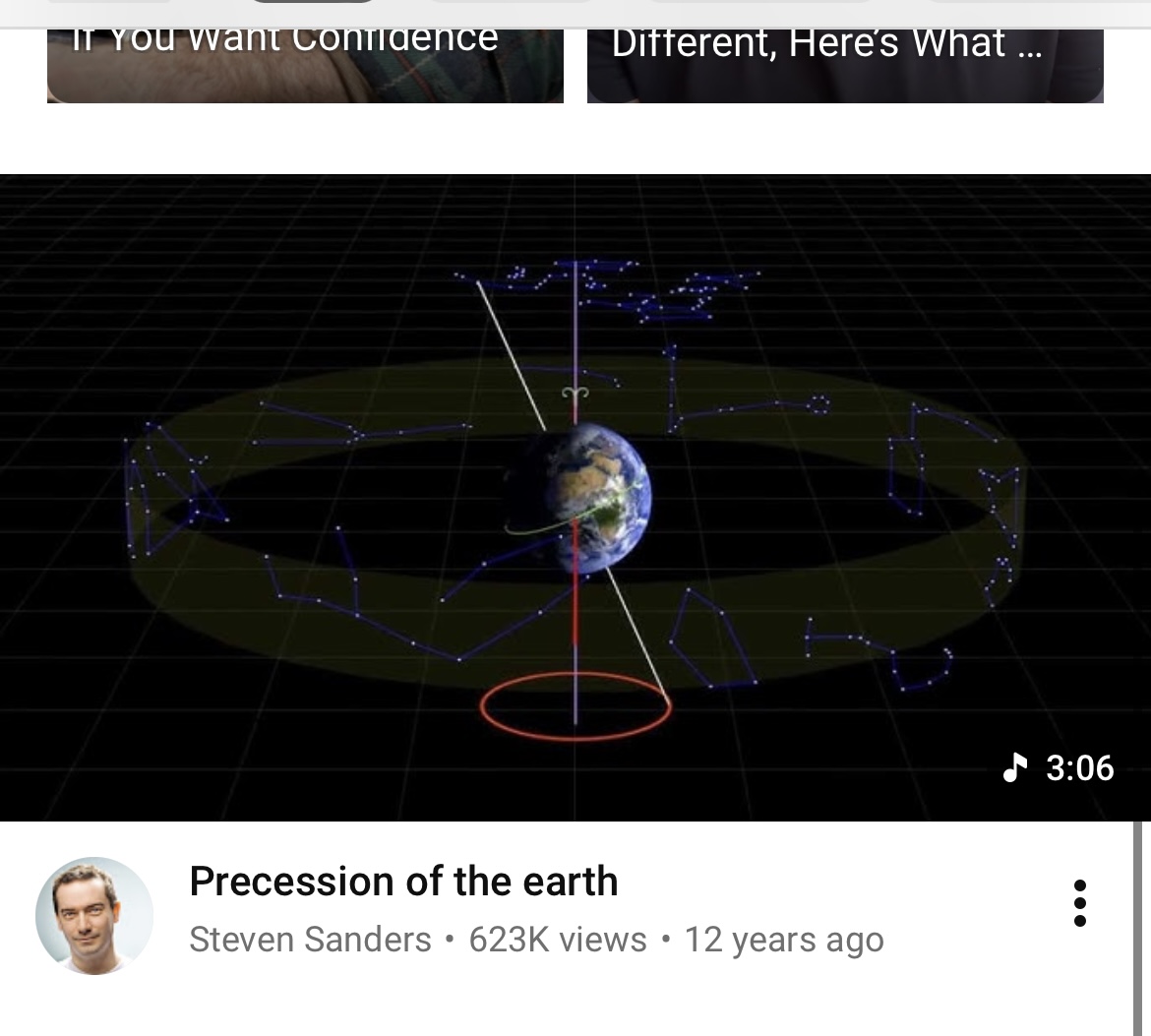
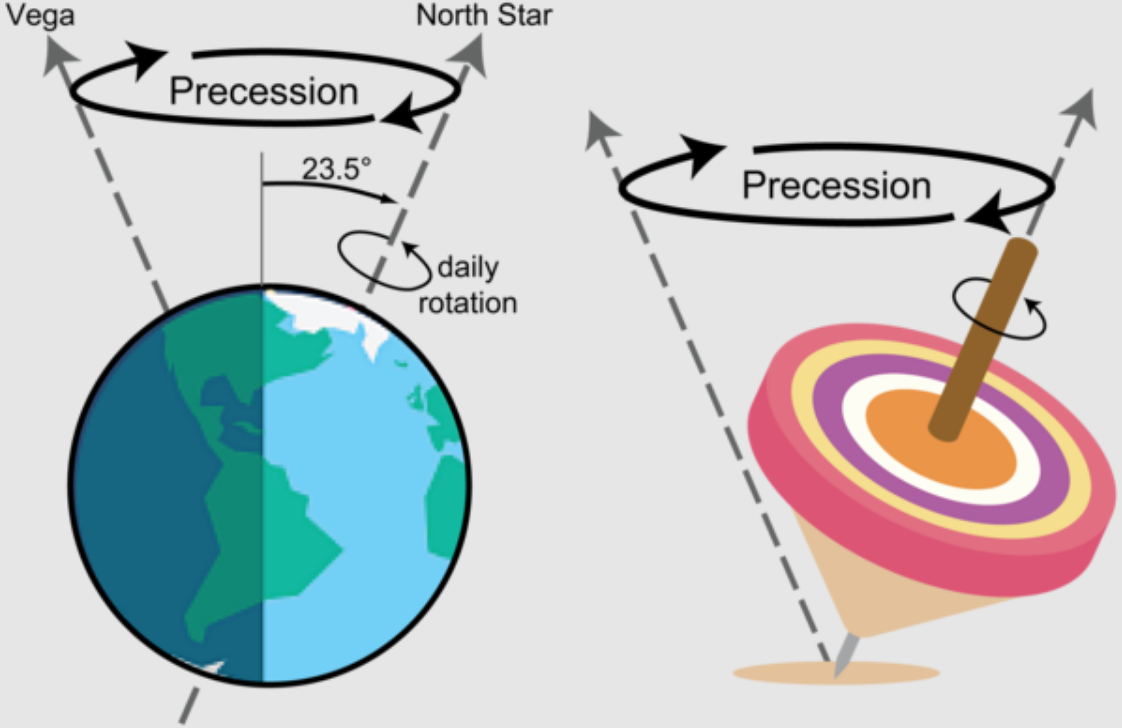
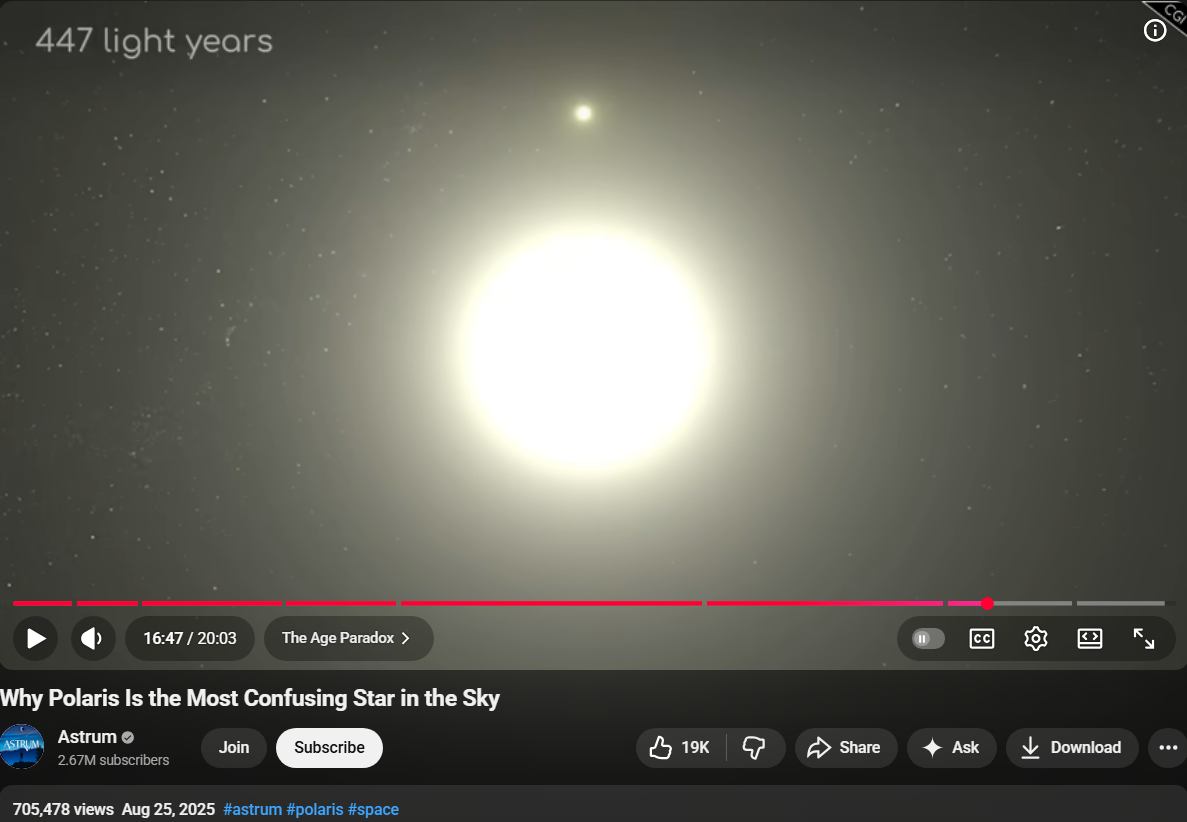
Our North Star, the point in the sky directly above Earth's rotational axis, is Polaris. 447 light years away from us, it is 46 times as wide as the sun and the 48th brightest star. Over time our north axis will no longer be aimed towards Polaris, but instead, will leave us without a ‘North Star’ until Earth’s north axis makes its way over to Vega. This is axial precession. If you could fast-forward time 13,000 years (halfway through the cycle), Earth's axis would point to the opposite. We would no longer point at Polaris; we would point near the bright star Vega, and our seasons would effectively flip (e.g., Northern Hemisphere winter would happen in June).
In 2012 they thought it was

but now they think it is closer to

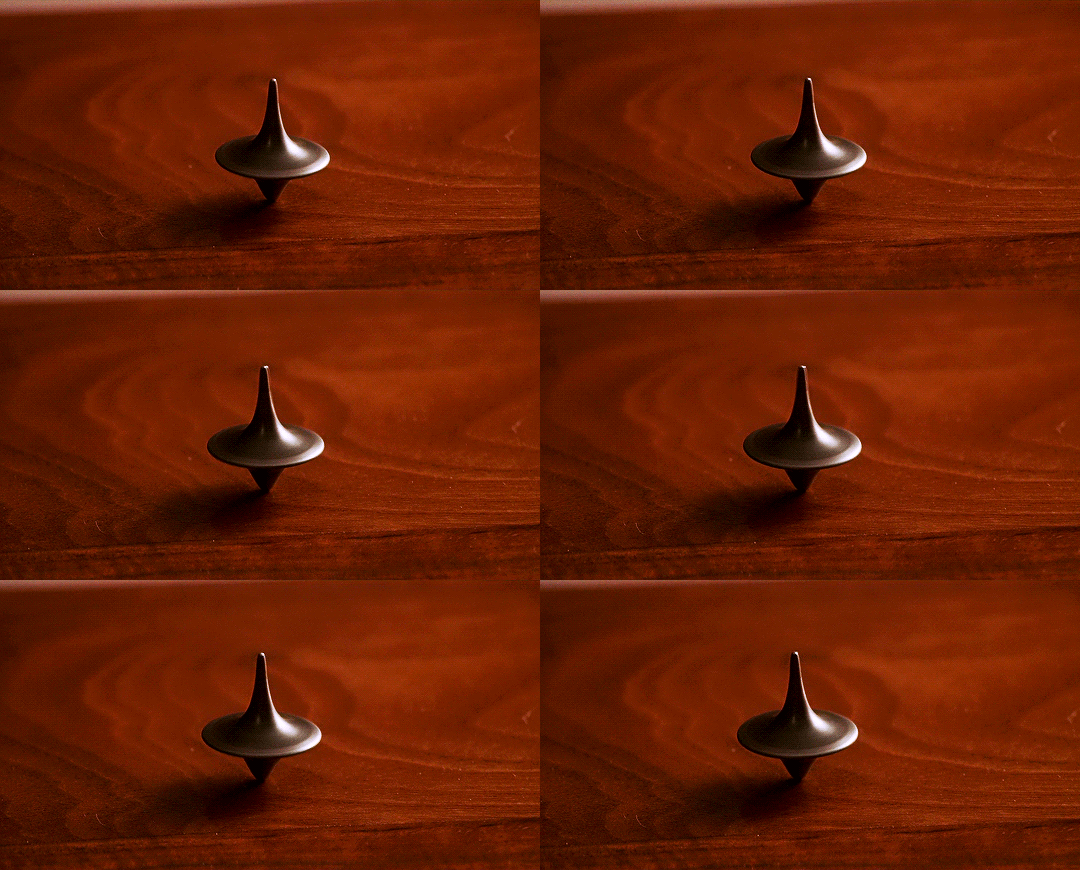
Gravity from the Sun and Moon pulls on Earth's equatorial bulge (Earth is wider at the equator aka its midpoint/bellybutton). This tug tries to "straighten" Earth up, but because Earth is spinning, it causes the axis to wobble instead. Because of this, a rotating object like the Earth tends to form a spheroid egg type shape rather than a perfect sphere. This is of course all theoretical, and only true if the Earth is not flat. It takes approximately 25,772 years (often rounded to 26,000) for the axis to complete one full circle. This is known as the "Great Year" or "Platonic Year." As Earth wobbles through that 26,000-year cycle, its axis draws a sort of cone shape in space. If you measure from the center of the cone to the edge, it is 23.5 degrees. If you measure the full wobble width (from one side of the circle to the opposite side), it gives you 47 degrees.
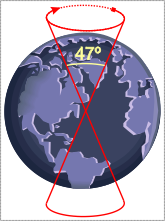
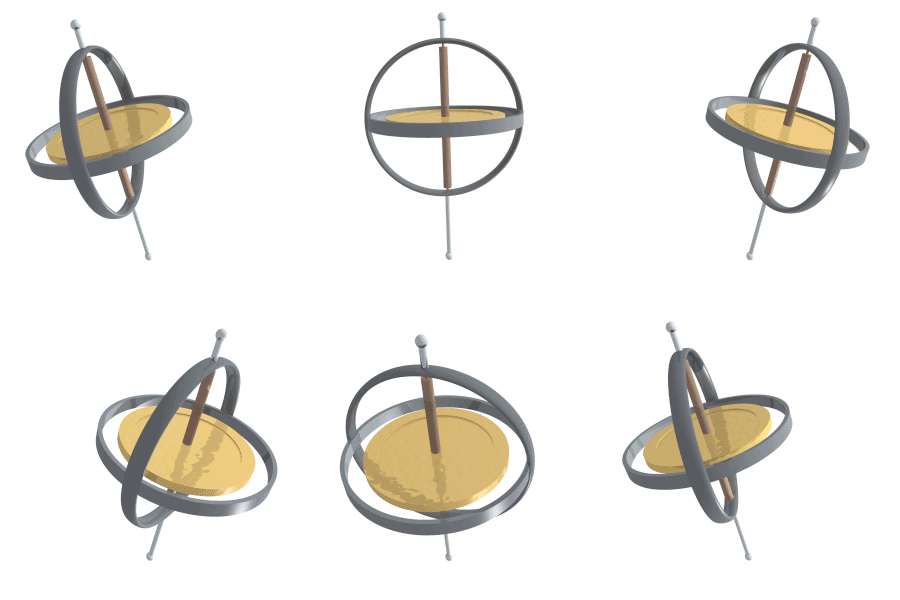

This all reminds me of maybe the only book I ever read in just a few days, when I was about 11 or 12. The Hunger Games. A bunch of kids in an arena all having to fight to the death. Was I going to grow up in a country that will look like this one day and need to prepare for it? Katniss Everdeen and her family lived in District 12, the poor coal‑mining district in the Appalachians(probably near where Kentucky or West Virginia is). She volunteers for the 74th Hunger Games as the female tribute from District 12 to save her little sister, only 12 years old, who pulled the short straw, and stood no chance.
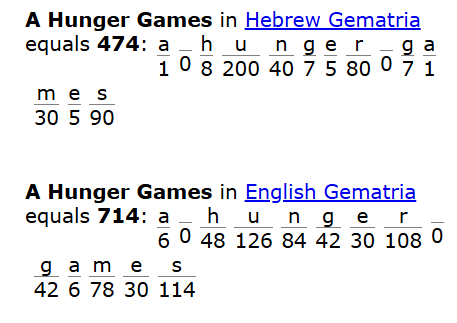
The Hunger Games takes place in a dystopian world, where originally there were 13 districts. All of them had their own different industrial work that contributed to the running of the country, and District 13 was related to nuclear weapons and graphite. During the "Dark Days," before the Hunger Games began, there was a 3 year civil war where all the districts sought to usurp the power of authority. 13 threatened the Capitol with nukes, pointing them their way. This unfortunately wasn't a perfect power play. They may have controlled the main nuclear arsenal, but the Capitol had a secondary stockpile in the west. This threw them into a bit of a Cold War. It was mutual assured destruction (MAD), and neither side could win without total annihilation.


In order to resolve the standoff, District 13 and The Capitol made a secret deal. All the citizens evacuated deep underground into bunkers while the Capitol bombed the surface with air raids. This is all recorded and broadcasted to the rest of the country, showing that they are not to be messed with. It looks like a nuclear wasteland. The other districts see the "victory" footage from the Capitol, surrender, and the 3-year 'Dark Days' war ends. This whole debacle is what kicks off the Hunger Games as an eternal punishment for the remaining 12 districts that rebelled alongside their now deleted brethren. For years, they all believe 13 is nothing but a wasteland of radioactive ash. Still existing underground, the district continues on-ward, in secrecy, in resistance, nukes still pointed at the Capitol.

Katniss goes on to win the 74th Hunger Games. Unfortunately this was right before the special 75th Hunger Games (called the Quarter Quell), where the rules were a little different. Making it a bit deadlier, they forced all the past victors, successful warriors, to compete once again. This is the basis of the second book, "Catching Fire." The cornucopia in the center had weapons only, with no food/supplies, forcing them all to fight or starve. As-well, the arena was like a perfect 12-spoke wheel, every hour holding a specific hazard that strikes predictably from the center. Lightning, blood rain, toxic fog, killer monkeys, tidal waves - it rotated like the hands of a calamitous clock. Tributes who crack the pattern persevere, positioning themselves strategically hour by hour to survive the rotating hazards. Those who do not pick up on this die according to schedule. After three full days of hell, Katniss ends up figuring out to tie a wire around one of her arrows and shoot it at the force-field surrounding the battlefield. Beetee, nicknamed Volts, a tech genius victor from District 3(who allied with Katniss's group), was beginning to engineer this destruction, but was found by Katniss stabbed. Improvising, in alignment with the midnight lightning strike, she uses her arrow, now connected to Volts setup, to revert the flow of electricity back into the arenas power system - causing a massive explosion that destroys its protective dome. She had to basically get hit by lightning to pull this off, and proceeds to lie there on the ground barely able to move while things collapse. Suddenly a ship begins to descend from the hole that was made in the firmament, coming to save her from a certain death. She wakes up on board this craft...
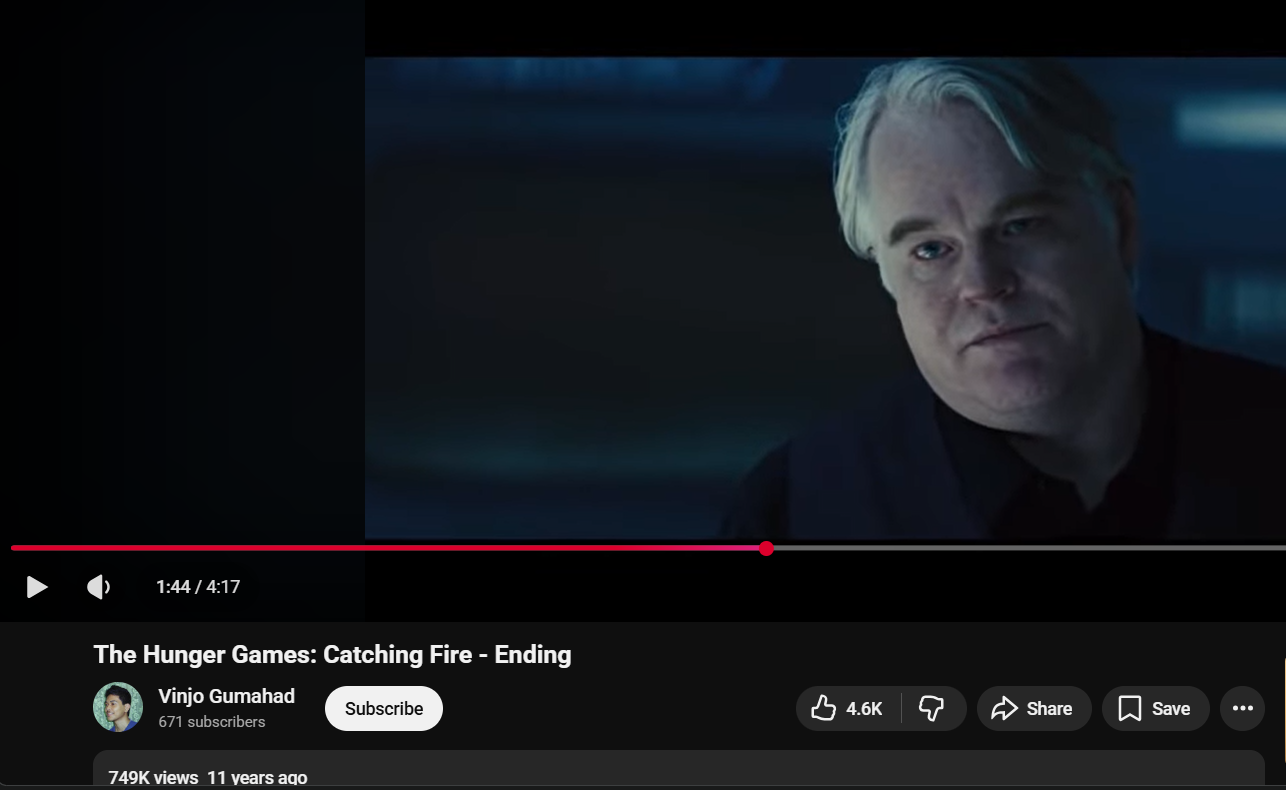
"Katniss, you have been our mission from the beginning. The plan was always to get you out. Half the tributes were in on it. This is the revolution, and you are the Mockingjay, and we're on our way to District 13 right now."
"13?"
"13. Yes."
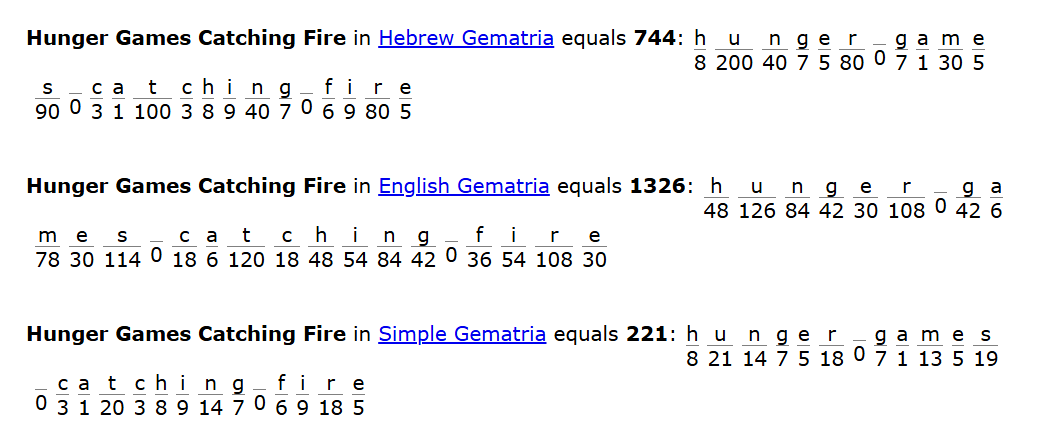


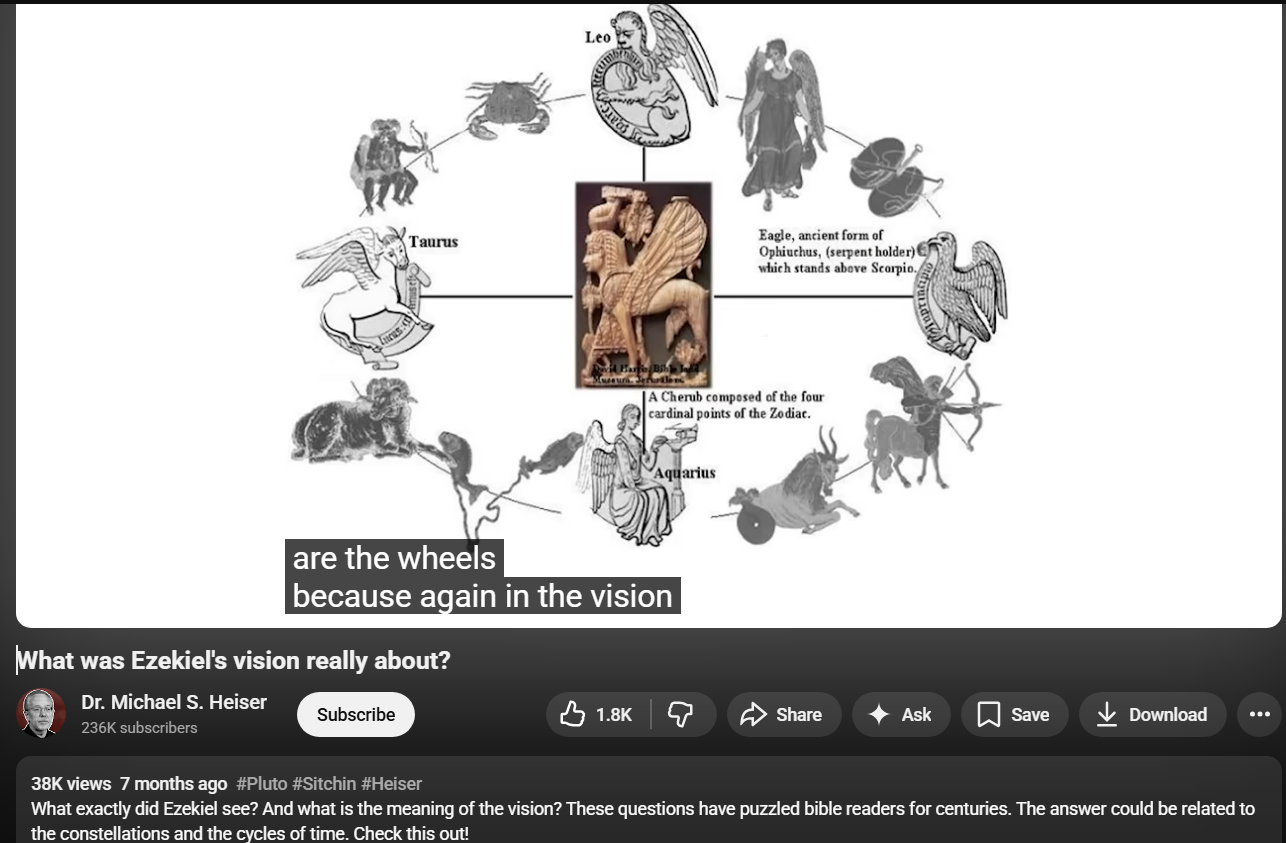
All the different ancient civilizations that we have had so much discission about in our society during recent times has roots in the Torah. You hear about the pyramids, how they got there, abandoned cities, theories about different structures found all over the world, stuff that points to some sort of advanced civilizations that science can't fully explain. There are theories about the younger dryas period, different cycles in humanities history, the ice age, etc.


In the Kabbalistic tradition, these cycles are referred to as the Cosmic Jubilee - what culminates into a 50,000 year cycle which resets it all. Rabbeinu Bechaye, an old Kabbalist from 1255-1340, wrote commentary on Leviticus 25 explaining the deeper meaning encoded in the verse. The original has Moses receiving knowledge from Yahweh up on Mt Sinai, a message for the Israelites.
"3 Six years you shall sow your field, and six years you shall prune your vineyard and gather in their yield, 4 but in the seventh year there shall be a Sabbath of complete rest for the land, a Sabbath for the Lord: you shall not sow your field or prune your vineyard. 5 You shall not reap the aftergrowth of your harvest or gather the grapes of your unpruned vine: it shall be a year of complete rest for the land."
Leviticus 25:3-5 (NRSVUE)
It then talks about how this whole thing is then repeated another 7 times.
8 “You shall count off seven weeks[a] of years, seven times seven years, so that the period of seven weeks of years gives forty-nine years. 9 Then you shall have the trumpet sounded loud; on the tenth day of the seventh month—on the Day of Atonement—you shall have the trumpet sounded throughout all your land. 10 And you shall hallow the fiftieth year, and you shall proclaim liberty throughout the land to all its inhabitants. It shall be a Jubilee for you: you shall return, every one of you, to your property and every one of you to your family. 11 That fiftieth year shall be a Jubilee for you: you shall not sow or reap the aftergrowth or harvest the unpruned vines.
Leviticus 25:8-11 (NRSVUE)
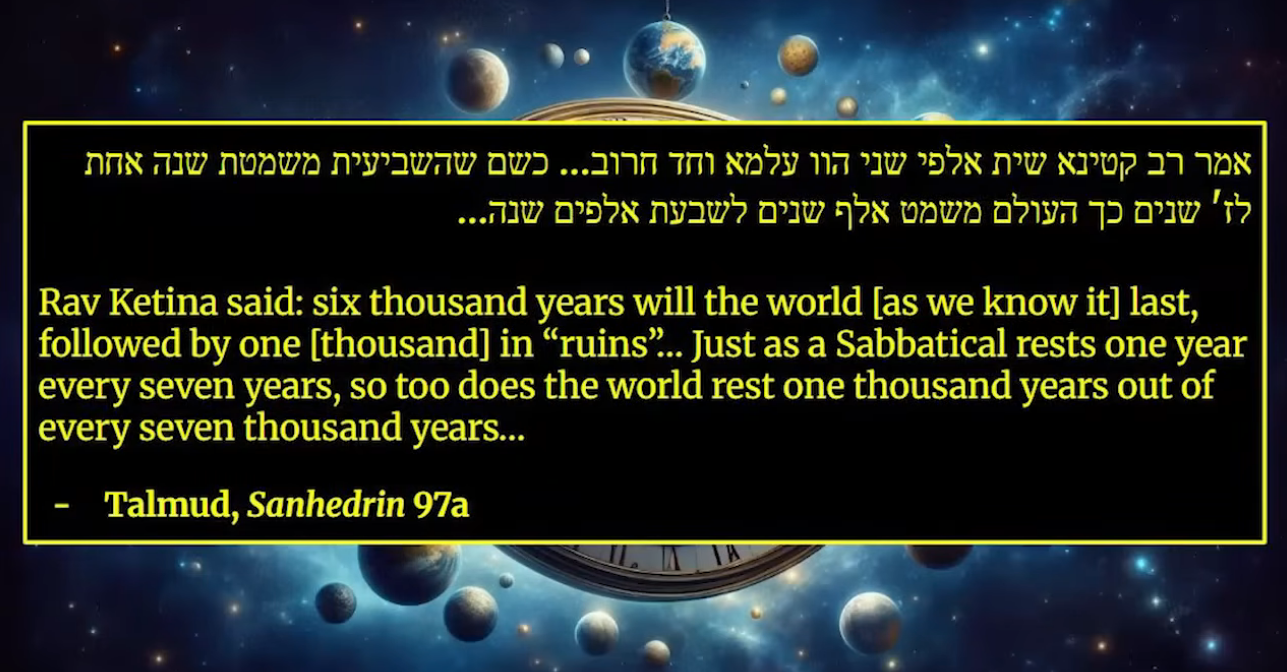
In the beginning of Israel, they apportioned things to the 12 different tribes. Every family got their own little portion of the pie, their own inheritance of the holy land. Anyone that was into the real estate game back then was basically only capable of leasing out their plot. At the end of one of these 50 year periods, everything was supposed to be returned to the original family/tribe that owned it. There was no permanent selling. On Yom Kippur, year 50, all the slaves go free, everyone goes back to their ancestral land, and it starts over like they were all coming into the holy land for the first time again. Rabbeine Bechaye interpreted all of this from a deeper perspective. The sages taught that there are 7,000 year cycles - 6,000 years of civilization as we know it, and then a 7th millennium which they refer to as a sort of "Sabbath of Desolation" (a good metal band name idea).

(I didn't retain anything and only put these on for the calming music in the beginning)

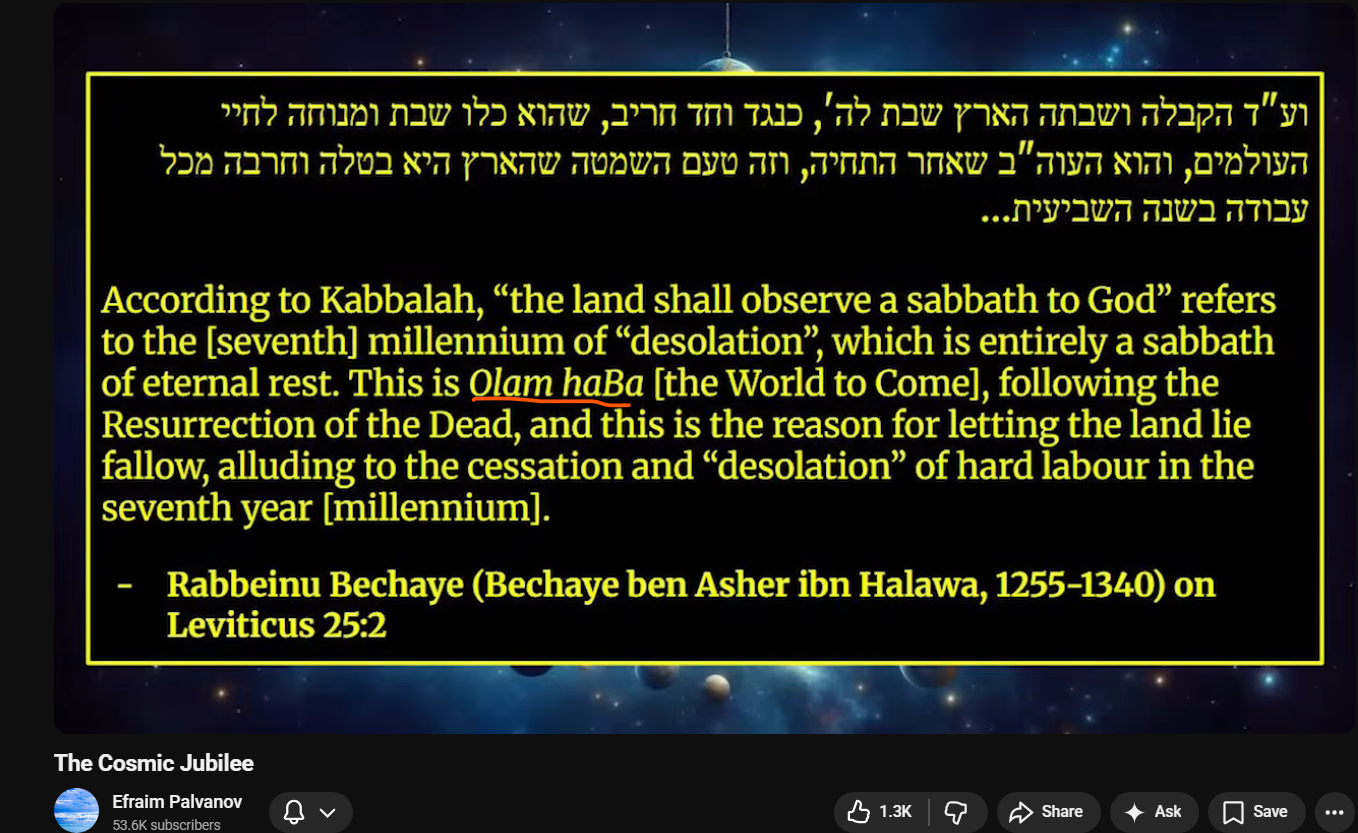
In this context, desolation is not a massive wipeout, but more so - what the sabbath represents. You have this 6,000 year period of great work, of great struggle, filled with many challenges, all to eventually arrive at this seventh millennium of reward. It is a sort of "perfect harmonious kingdom of Heaven on Earth" deal. The secret to Leviticus 25 is that it was referring to this secret teaching of the Jubilee cycles and this final Sabbath 7th millennium. "Olam Haba," in the quote above, is a (sorta paradise) world following "the resurrection of the dead," where all the righteous come back to life and enjoy a 1,000 year Sabbath of delight, harmony, pleasure, etc. It is a perfect balance between the physical and the spiritual - where presumably everyone gets this 1,000 year reward, maybe even living a full 1,000 years, similar to how Adam was originally supposed to live 1,000 years.
There are allusions to this Jubilee cycle given in the Kabbalistic concept of the 50 Gates of Understanding, "Nun Sha'arei Binah." These represent 50 spiritual channels, through which the divine light of understanding makes its way from the upper supernal realms to the lower realms. These gates could be seen as the basis of the Torah - even achieving just a few of the gates would make you a wise person. They correspond with the works of creation (Ma'aseh Bereshit, (watch your step)), the play of emanation, formation and action, creative evolution, all according to the will of the Supreme. Moses was given access to 49 of these gates, but was not able to gain clearance for the 50th.
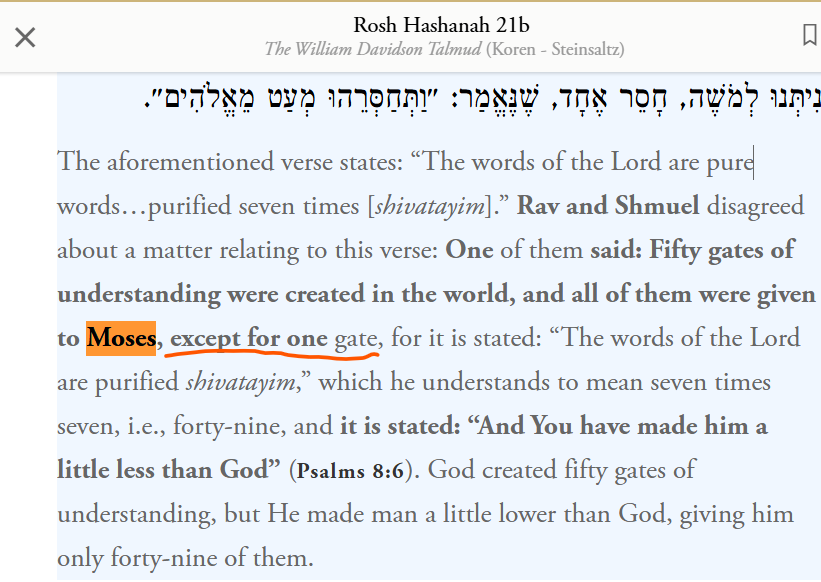
The fiftieth gate, according to some Christian kabbalistic/gnostic interpretations, corresponds with the Son of God, the Messiah, the Anointed One that enters into direct union with all the sephirot and is connected with the infinite and eternal light (Ain Soph Aur). From the bottom to the top, The Gates Foundation is associated with the cycles of development/evolution, and ascension, from the primordial chaos/void, through elemental, mineral, vegetable, animal, human, heavenly and angelic realms, into the supernal abode, aka the Palace of the Messiah. This is where the messiah is camped out, hidden for some period of time in a spiritual abode, what is referred to in Jewish mysticism as "The Birds Nest." Moses was not the messiah, and thus, was not able to open this 50th gate and experience full supernal/messianic consciousness. There are a few Christian integrations which take on the idea that Yeshua was able to open and enter this gate through complete self sacrifice on the cross, and that opened the way for us to access it through complete adherence to the path laid out by him, revealing the great natural perfection of the soul, its enlightenment and liberation. The Kabbalistic interpretation takes this on in a different light, and it is related to the Jubilee cycles.
.jpg)
Look 33 of The Birds by Alexander McQueen, which the Metropolitan Museum of Art acquired and later included in major exhibitions described as a “paragon of ominous sophistication,”
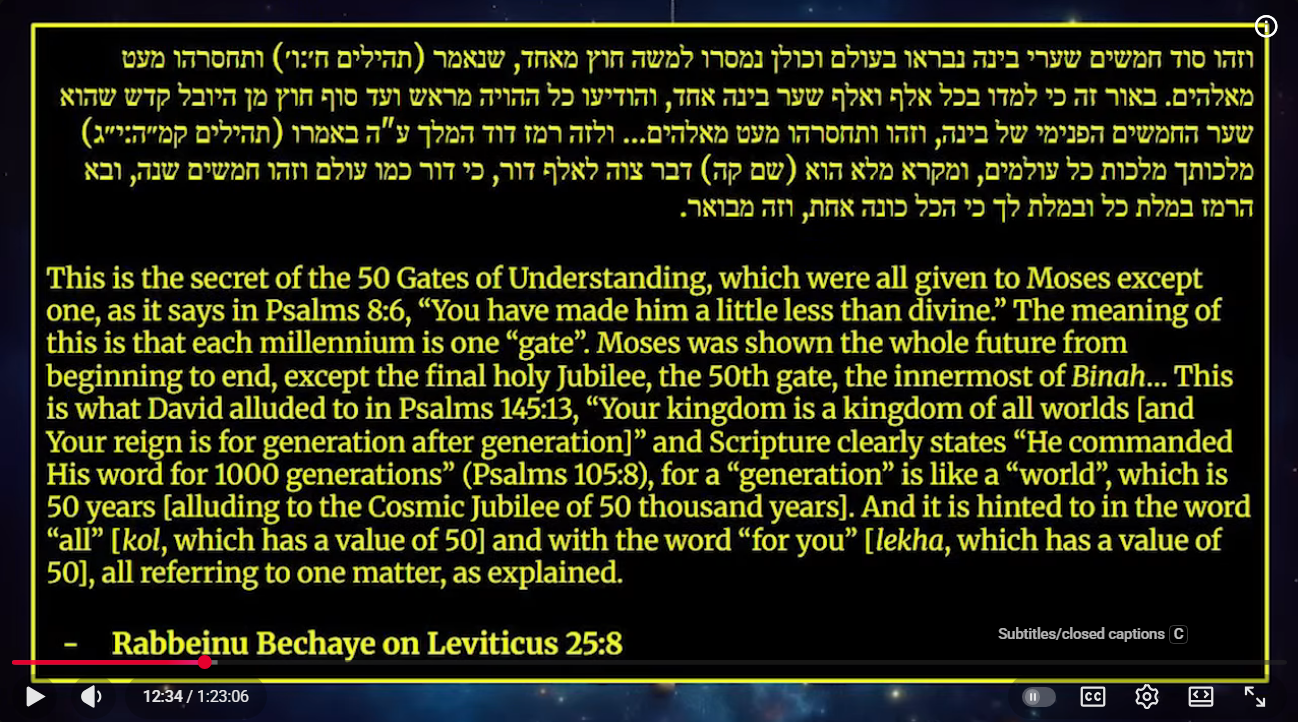
What does it actually mean that Moses was given access to 49 gates but not the fiftieth? These 7,000 year cycles are supposed to happen 7 times. Moses was given a vision of all 49,000 years of the grand cosmic cycle, all but the great 1,000 years at the end. Made "a little less than God," he was privy to all of history, the entire development of mankind, past present and future, except for just that last little cherry on top of the full cosmic cycle. That is what they claim to be the secret of the gates of understanding that Moses was given, the 49th millennium is where his knowledge was stopped.




Generations come and generations go,
but the earth remains forever.
Ecclesiastes 1:4
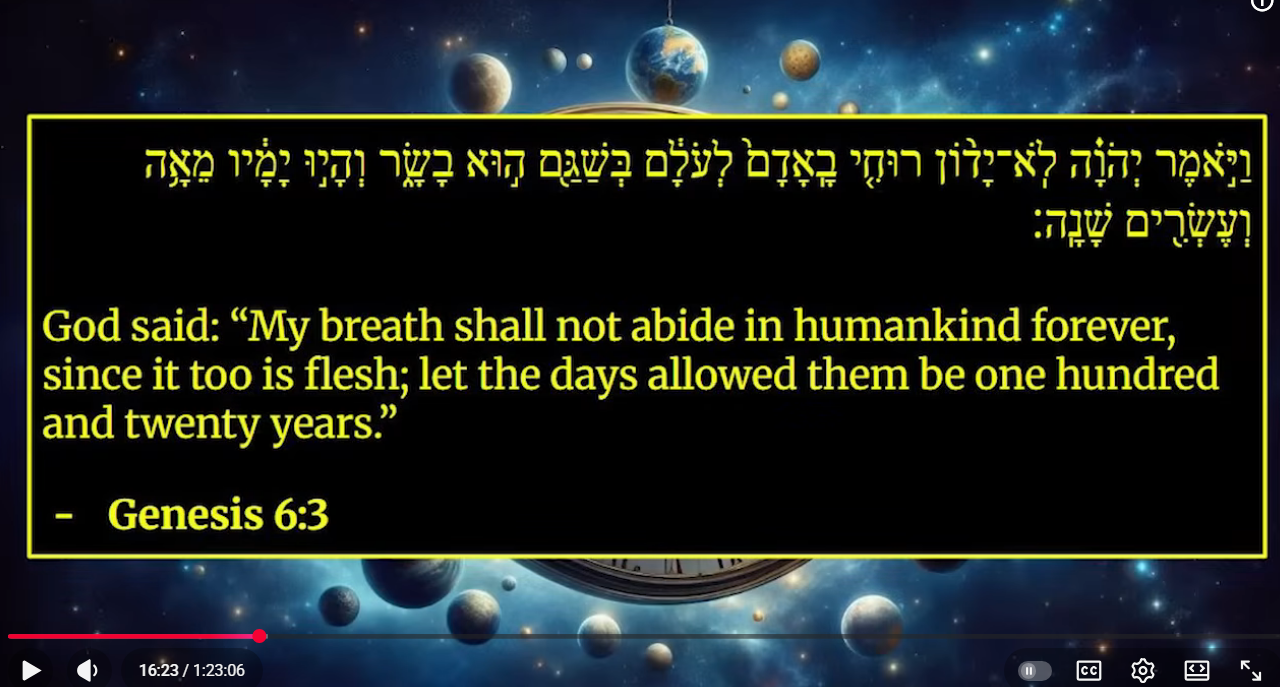
In this quote from Genesis, God is claiming that man will only be allowed to live one hundred and twenty years. However, this is then contradicted numerous times throughout the Bible, with all sorts of people pushing it past this point. Even in modern times, the oldest person we have record of, Jeanne Louise Calment, lived to be 122 years and 164 days old(passing away in 1997). Moses supposedly died at exactly 120, but even after him in the chronology, Jehoida lived to be 130 years. This was around the time the flood was decreed, some interpreting it as God saying "hey they got 120 years to shape up or ship out before I release the waters," but Efraim shares a unique interpretation. If you take 120 years, and you multiply that by 50, the amount of years in a Jubilee, you end up with 6,000 years. Could this have been God's way of saying - I will give them 120 Jubilees - culminating in a 6,000 year cycle - before it is time for the Sabbath of Desolation? 6,000 years of hard work before a period of deep rest.
Where does this word Jubilee even come from? No not the YouTube channel

There is some interpretation that it comes from the word 'yobel' (יוֹבֵל), meaning "ram's horn," signifying the horn that is blown on the 50th year of the Jubilee, but Rabbeinu Bechaye claims that the origin of the word comes from
7 Blessed are those who trust in the Lord,
whose trust is the Lord.
8 They shall be like a tree planted by water,
sending out its roots by the stream.
Jeremiah 17:7-8
by a stream, Yubal(יוּבַל). Why? All of these generations, all of these civilizations, they are flowing from one to the next. There is growth and rectification as things progress, the 2nd is better than the 1st, and the 3rd is better than the 2nd, all the way up to the 7th, which is where things are their most developed, all flowing to an end goal. That end goal is related to what directly proceeds Yubal, "its roots," to the first cause, meaning we then all go back to God. "In the beginning God created," everything comes from the infinite, and then in 𓋹 The End 𓆙, we all return back. Similar to how the Jubilee year for the original Israelites, where everyone returns back to their ancestral plot of land on the 50th year, it is alluding to the fact that we all return back to our original ancestral plot of land which is the infinite. We go back to, from Genesis 1:2, "Now the earth was formless and void," "tohu v'vohu." Everything came from the first cause and will return back to it, what we see in nearly all the different major religions, and hear from many prominent philosophers.

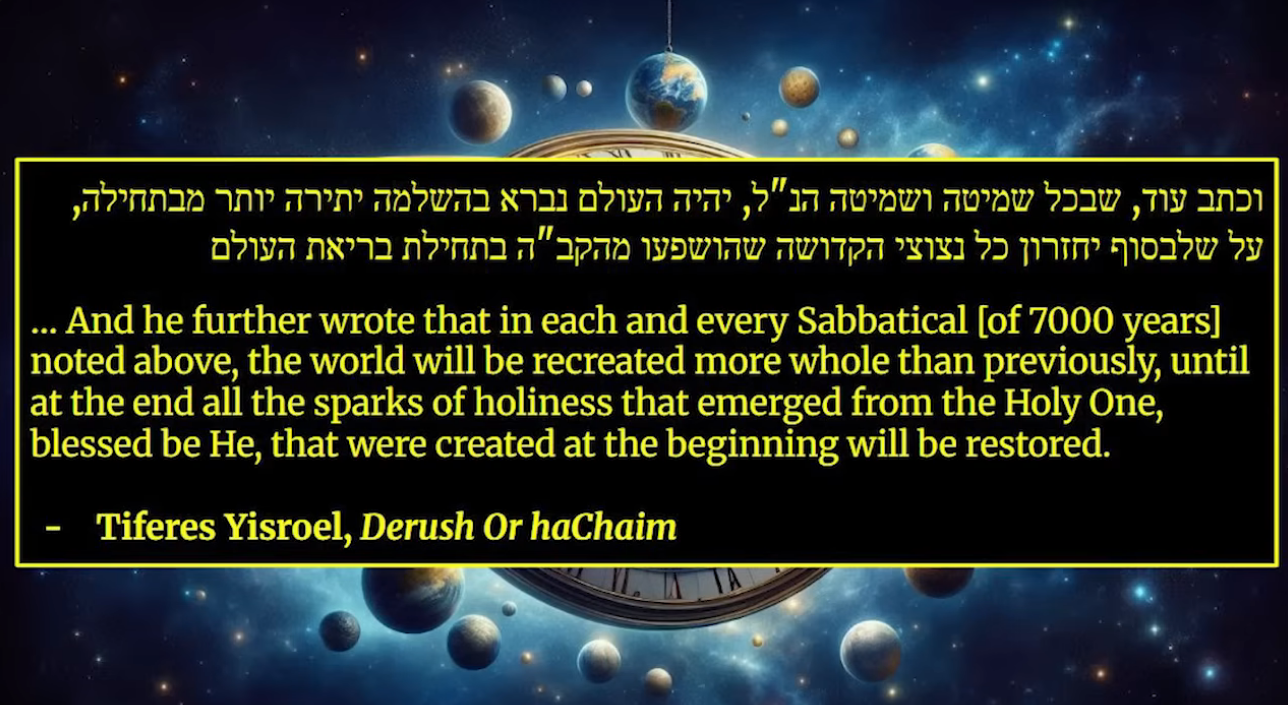
At the end of the Cosmic Jubilee, the 50,000 years, everything is reset. 7 chunks of 7,000 years flowing from one to the next, improving, and then finally it is all complete, and God clicks the reset button. Every 1,000 years is ultimately one of the 49 Gates of Understanding, which Moses was able to see, except for the final holy cosmic Jubilee. 6,000 years of hard work and strife, challenge, difficulties, then to a 1,000 year period where civilization sort of restarts, moving to the next phase, and then this repeats, 7 times, each a progression of the phases of development of mankind building on top of one another, flowing, culminating into a reset2root.
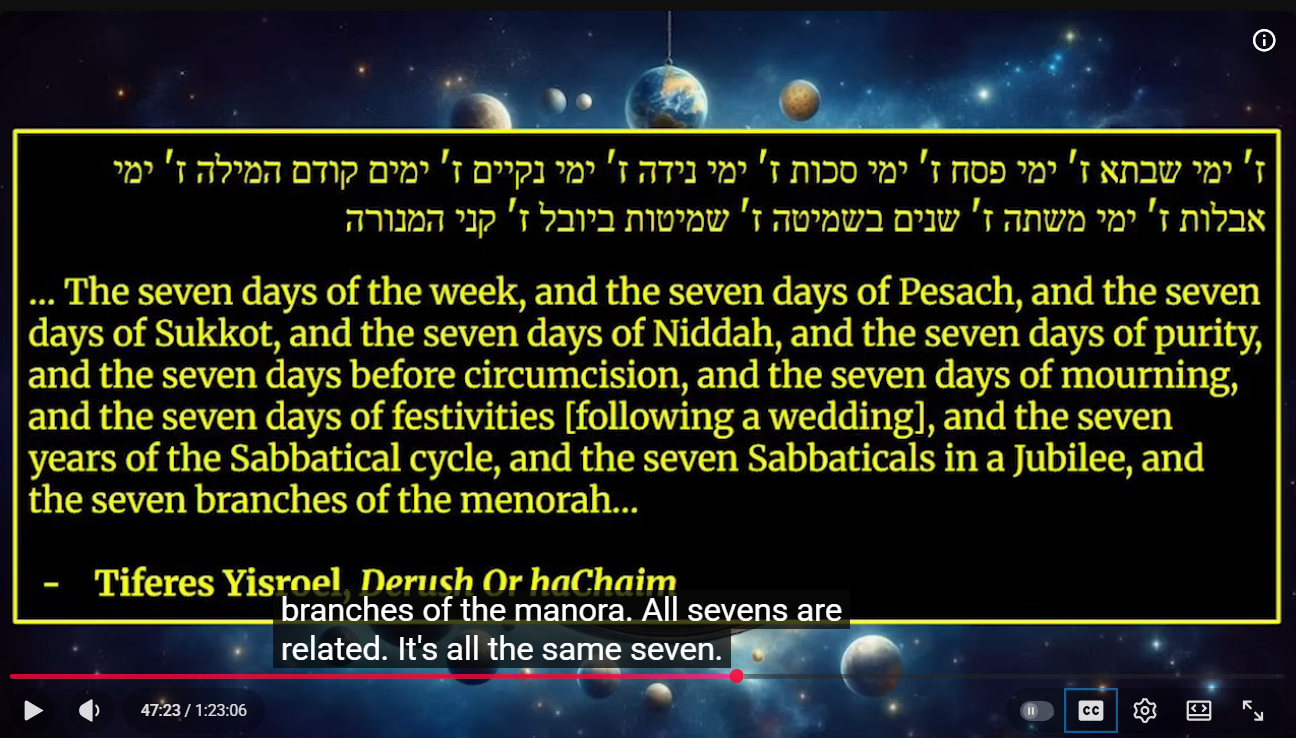
"For in six days the LORD made the heavens and the earth, the sea, and all that is in them, but he rested on the seventh day. Therefore the LORD blessed the Sabbath day and made it holy."
Exodus 20:11
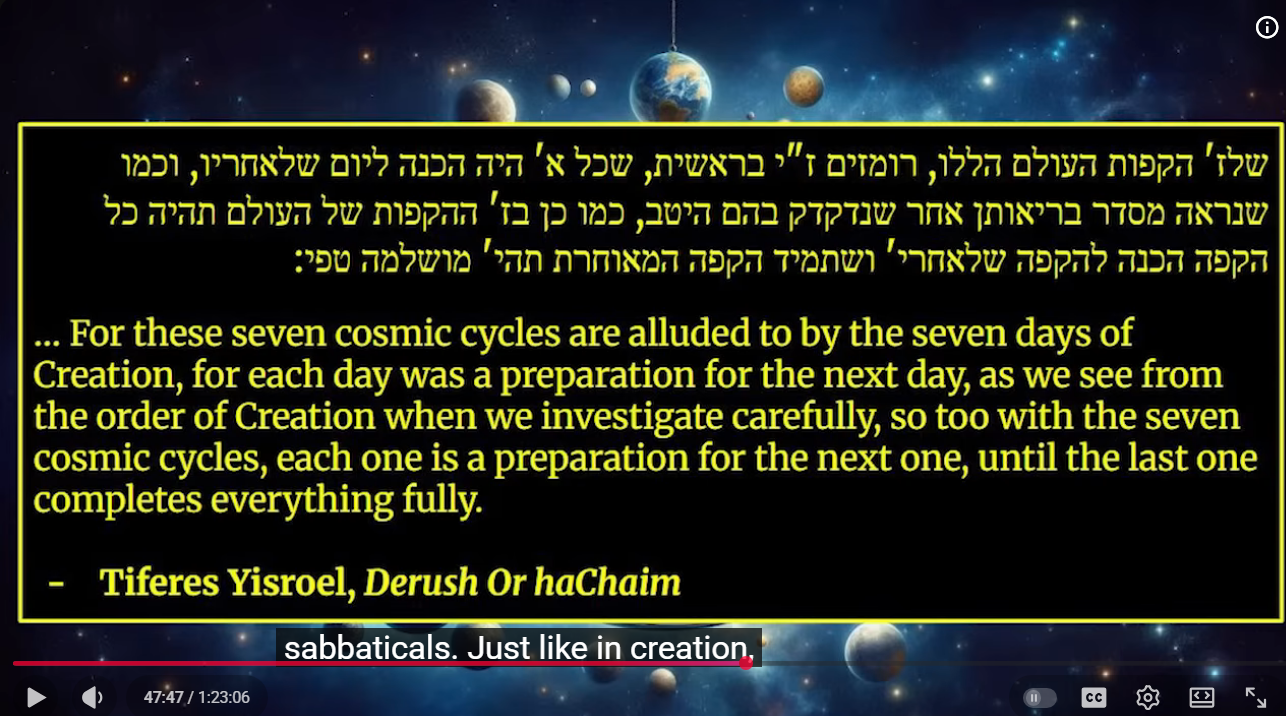
This 49 Gates which Moses received access to reminded me of the 49 leaves of the Enochian working. Could working through each of the different Enochian keys be a similar spiritual process to the unlocking of each of the Gates? Originally there are only 48 leaves, except for the one special secret first grid that was reserved for the Christ when the time was right. This leaves my theory a bit off, however, what if the Enochian working was never done? What if after completing all 49 of the Keys one would be able to then go ahead and receive the access to the 50th Gates?
From the official NASA.gov website,
"Yes, the Sun - in fact, our whole solar system - orbits around the center of the Milky Way Galaxy. We are moving at an average velocity of 828,000 km/hr. But even at that high rate, it still takes us about 230 million years to make one complete orbit around the Milky Way!"
This central orbit which we circulate around is supposedly the seed of our galaxy. Actually, they go a bit further than just the center of our galaxy, they believe the Milky Way revolves around an even greater central core, and so on. In Vedic tradition, I will reference the book regarding ["The Lemurian Scrolls"](Lemurian Scrolls) for example, in accessing the Akashic records, they tell that the avatars of the past essentially absorb and hold energy from this center. They are like walking beacons holding the vibrations of the cosmic rays emitting them like radiations.

They also claim that the obscuration or release of the life-giving rays emitted from the Central Sun, as our Milky Way Galaxy moves around its center, causes the four yugas to be experienced by our solar system. The degree of access we have to these cosmic rays is what essentially determines the evolutionary cycles of man. When the many galaxies of the milky way have a cosmological arrangement in such a manner that we are not able to receive emissions from this grand central sun, perhaps through the blockages of certain debris or planets, etc., when the emission of spiritual radiations lessens, our spiritual awareness wanes. Human society living on the planet begins to decline in their capacities, and "The life force of man, kundalini, sleeps and instinctive desire manifests in abundance." Science has discovered that this galactic nucleus we orbit over cycles of 225+million years is emitting a bright radio source, infrared radiation, and x-rays. Vedic knowledge tells us that these are indications of the energy rays that shoot out to sustain and nurture all life and intelligence. Lemuria and Atlantis go hand in hand. Many occult societies have been obsessed with both of these topics for a very long time.

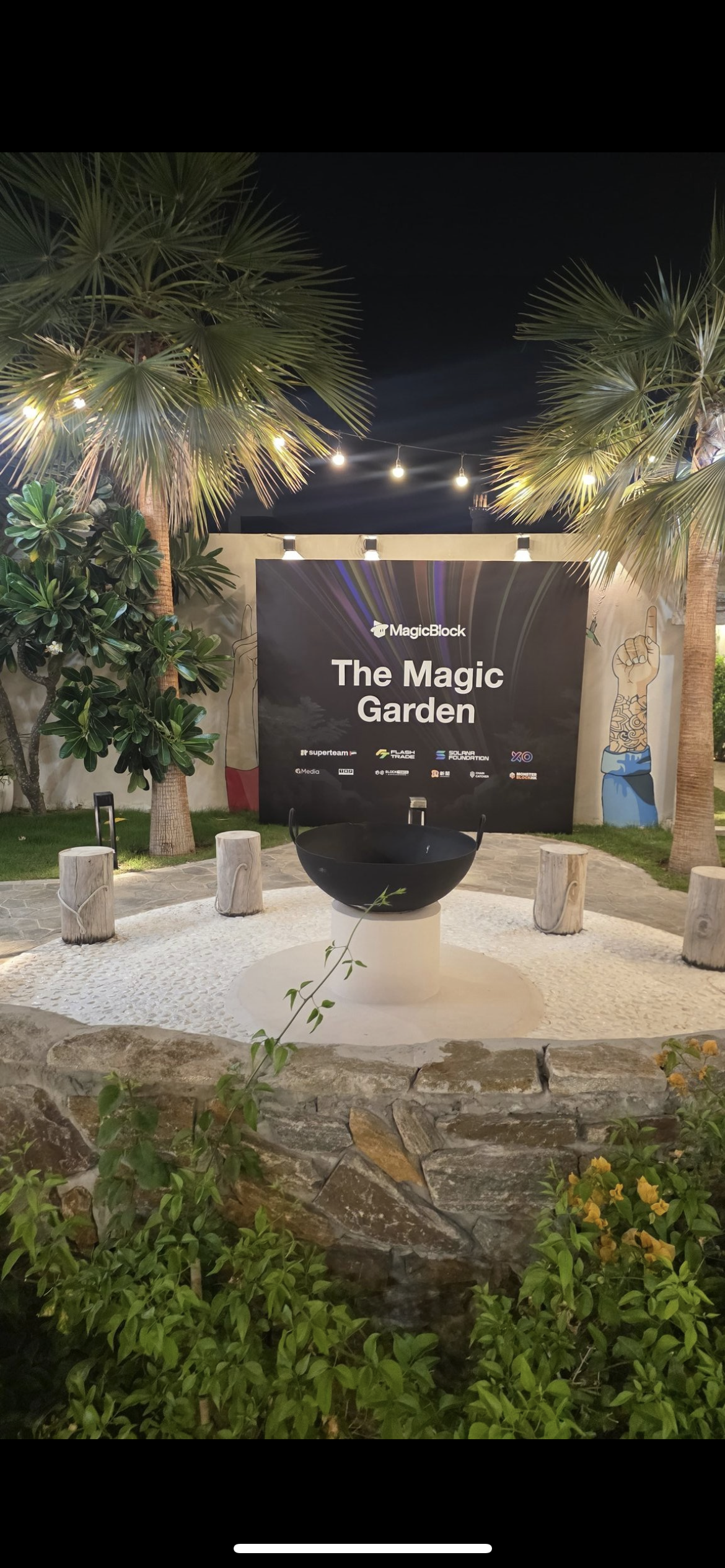
"The venue of this remarkable clairvoyant happening was the garden restaurant of Coco Palms Hotel. As the librarian presented each volume and turned page after page, I dictated slowly to a sincere monastic scribe, who patiently and accurately wrote down each word. These were the days when cigarette smoke billowed forth from elite hotel guests at neighboring tables, clouding the atmosphere and creating an ambiance in which the akashic manuscripts could be clearly seen. The backdrop of Hawaiian music, the hubbub of people talking and the lower vibration of worldly feelings, too, helped screen out the conscious mind to make this clairvoyant siddhi a working reality."
From what I gather, this guy was sitting in a hotel cafe going sixth sense and relaying insights to a scribe seated next to him. He had an etheric librarian showing him different books in the akashic records through his third eye which he was seeing through the cigarette smoke... but not without a certain beverage...
“Through the last several moons on my retreat, which incidentally ended yesterday, October 1, 1973, my third eye has developed to a great extent in precision and accuracy, the only catalyst being numerous cups of morning Kona coffee and a crowded room where the odic force is high, which acts as a mirror, especially if cigarette smoke is in the air, and enables me to see extremely clearly these akashic records."
Supposedly the library which he was able to access was property of Subramaniam, but he later verified that this was Skanda, aka the son of Shiva, aka the Hindu god of war. However, in one source on Babaji, it seems that he may also be known by this name. This however, could be devotees going too far and beginning to link things inappropriately. Maybe this is a different lineage of worship. I don't know, but this Lemurian Scroll's book is what I came across when Babaji stopped the stock market in St4r7,147.48Untitledd 5091444444

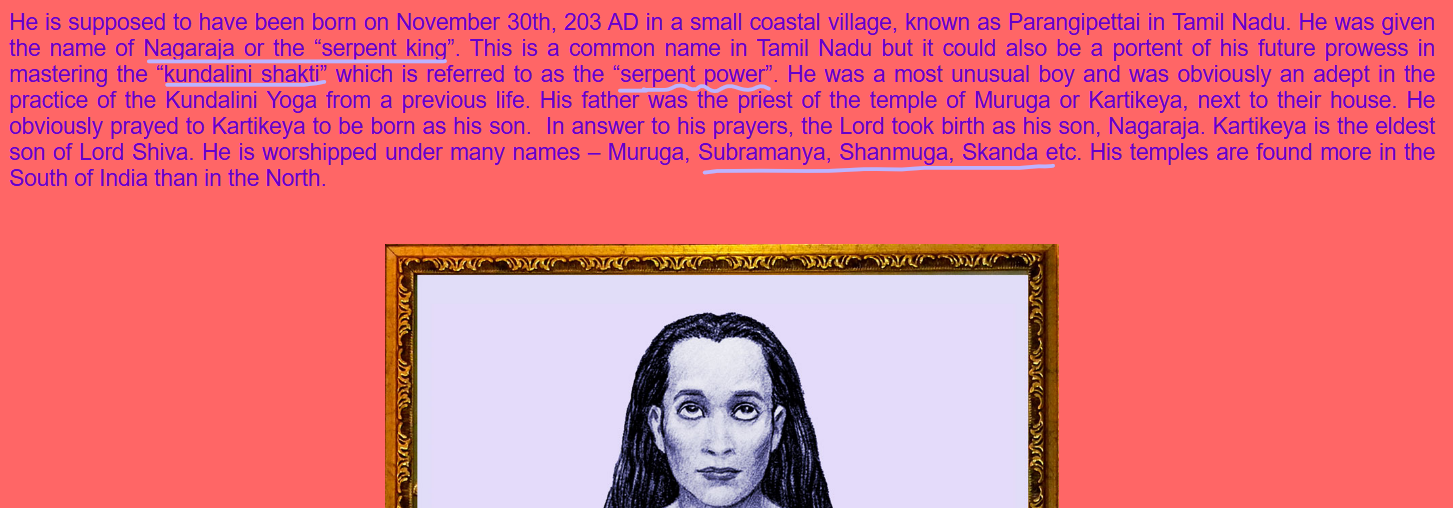
The Lemurian Scrolls supposedly offer us a window into the origins of mankind and our purpose for being here on Earth.
The author claimed that after finishing this operation, the librarian said
"an amazing work, well done"
and from that point forward, his 3rd eye never opened to the library ever again (although he was able to visit other worlds).
In the first chapter, titled "Pilgrimage to Planet Earth," it claims that there was a great migration to this planet for the sake of evolution. There was a risk involved, coming to what is termed "a fire planet," but it was needed for they were at a point in development which necessitated a sphere with a little bit of spark to it. This element would catalyze souls through new experiences into completing their unfoldment to the final realization of self.
"Before mankind arrived on Earth, celestial beings in wingless spacecraft spread seeds from other planets"
There were two reasons for souls to come to Earth.
- To realize the self (as they had not done so previously, just floating in bliss)
- Already having realized the self, some had come here to help others, to be jostled around in the fire and continue their unfoldment.
When planets become static and old, everything becomes static, solidifies, and cools down. Beings exist together like flocks of birds, or a school of fish. It is supposed to be fairly peaceful.
Souls still needing a little fire for their development couldn't craft such an experience while present upon a terrarium that lacked such an element, and so, leaders would pilgrimage with their followers, strategically, to perform the austerity of evolution at a place with some pyro. A "hot, young planet."
Advanced souls came first and prepped the land before continuing to bring more divine beings through and into physical form from other planets. Lord Skanda, whose library we are getting this information from (a little biased if you ask me) was one of the most highly developed souls, the leader of the first group - the celestial king of Lemuria. He came during a "sat yuga" (Golden age) phase, and was committed to staying and guiding until the next one came around. Souls from all sorts of different planets were brought in over time, through the practice of ceremony in different temples around the globe. Offering the essence of fruit and perfumed ambrosia would allow for a souls etheric body to begin absorbing what was necessary to form a denser physical body.
The location of this sort of operation would shift across the globe as our position relative to the stars and planets would shift, making possible the transmigration of various races from various planets, all settling in one area or another. For a while, souls from one certain location of the solar system would have a pathway in, and so, temple procedures took place to help facilitate that process, and then over time, as that possibility waned, the opportunity would open up in another location to make possible the bringing in of souls from another part of the solar system, and on and on across the planet.
These beings looked similar to us as we exist today, except at first, there was no gender, no male or female. There wasn't even such a thing as death, or reproduction, or even the need to sleep. The concepts of hunger or pain simply did not exist, and beings were able to fly around freely by mentally lifting themselves into the air, using the power within their spine. These original bodies were impervious to cold, or heat, and were able to sustain themselves completely through beathing in air that was so healthy, it filled their pranic essence every time they took a deep breath. Eating was not necessary at first, simply smelling the essence of cut fruits and flowers could serve as a complete meal. Eventually, the pungency of these original conditions waned, and flying became less phenomenal. The closest that this society got to death being in the picture, was when physical elements simply dissolved under the power of realizing the nature of the self, and the essence of their individuality returned to the planet they once came from, fully matured, having completed "operation fire planet."

Souls come in during the sat yuga, on through the Treta yuga, and then no more come until the end of the Kali phase. When the next sat yuga begins to seat itself, those who have been here for all the yugas will finish their evolutionary processes and leave, while simultaneously, more divine souls will come in as the cycle repeats itself. This fire planet is very young, having become habitable only a few of these cycles ago. There are older, "cooler" planets whose inhabitants live underground in places that have been constructed millions of years ago - using their surface like a park, only to provide nourishment. It is necessary to complete several of these yugas on Earth in order to obtain admittance to other planets. It is hard for us to calculate the exact length of time of these different yugas, but the eminence of a new one is discernible by the changes occurring within the population.
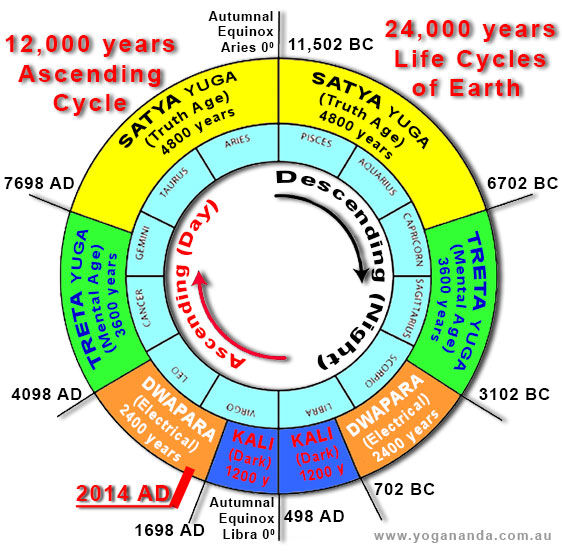
Philosophical truths, practical advice, prophecies, and other insights would be shared through holes in the wall of the monastery. From what I gathered, "monks" would be isolated and share freely when inspired, a method to remain unidentified and still give to the world. This is similar to how it worked at the Delphic Oracle, where the Pythia prophesied talking through holes in wall. The gurus of these monasteries would live quite elusively. They could appear in any form, therefore, monastics would never know if the person they were interacting with was in-fact the guru. Everyone was treated with the same respects. Some gurus would be well known, but oftentimes they operated incognito. You maybe thought that this fresh recruit just being admitted was perhaps deservedly open to a certain "noob" treatment, but that right there was in-fact the guru themselves. When first arriving on the planet, everyone had emanating from themselves a certain combination of sounds or tones. This was the way they spoke, and as thought would occur, the tones that radiated out from the body would change. Basic tones were originally the Lemurian's names, but after coming into the first Earth body, the tones ceased as the power of speech came online. They were always identified or called by the basic tone of the inner body. Everyone quite literally had their own unique "vibration," or "frequency signature." Names were less important, as you would pick one up here at this monastery, often some nickname from a story shared, or an identifier from the previous monasteries location, "this one here is Kentucky," and then you would travel and be given another name, accumulating many. The only thing loosely associated with any sort of permanency was the history of the basic tone of the body. A consciousness car-fax, holding the frequential past of your soul, if you may. Anyone who would start to develop an identity around some certain name or personal history would quickly move monasteries, or be moved. Total functioning of the monastery was the primary priority. They found no name was necessary for them to remain pure channels of the divine force... and the Lemurians were pretty strong with the force. They could move object with their minds, and even do something like simulate a forest fire in the mind of another even though nothing was actually occurring.
"During this time there will be similarities between the two yugas, such as mankind’s ability to understand the true nature of himself, harmony between people, flying for short distances and the ancient orders of monasticism again flourishing on Earth. During the next Sat Yuga, knowledge of working with and through the rays of the Central Sun will return. Then man will live underground again as he did before he came to this planet, and then remember how to travel easily through space. He will never travel easily in space until he lives under the surface of the Earth, our prophets clearly state."
That is right, you guys probably forgot about flying, haven't you? There are numerous different saints of various traditions which have been recorded as flying in our past. This could very well be a serious and legitimate part of our reality that we no longer have access to, due to the ways in which our societies function. Imagine for just a moment with me, that this was in-fact true. Seriously, for just one single second, work with me, can we just get a little silly for a second and conceive of a world where something like flying/levitation was real? If you agree with that proposition, that in some sort of percent chance calculation, maybe, yeah, it could be possible, imagine then that the world was so disconnected from its own truth that when you say something about 'flying,' it was perceived as complete nonsense. What the f@^#, you think we can fly? But imagine it were true, seriously.
"Lock this guy up he needs medication."
I am not suicidal.
"We are getting reports he has been trying to jump out of windows and is a risk to himself"
The gift of levitation/flying in the Catholic Church is generally considered a sign of sanctity. Saint Joseph of Cupertino's story is one that may exemplify an individual whom has attained an incredibly high degree of consciousness, so much so, that it may have actually been an impediment to his day to day life. Many other canonized saints were also able to do this as-well. Growing up in Italy, he was persecuted and punished by the Catholics for his natural higher level state - they looked at him and gave the declaration - "remarkably unclever."

Who needs cleverness though, the foundational prayer for the Sikh religion titled the "Japji Sahid," which means song of the soul, repeated as part of their morning practice, seems to not value this character trait. The famous Yogi Bhajan, credited with developing much of the modern kundalini systems, even though he was a bit of a perv, made this prayer absolutely foundational for disciples. They would integrate recitation of the Japji Sahid into every morning practice, as part of the "Age of Aquarius" sadhana(a 2-3 hour morning routine). "The Sound Current of Japji and the meaning of its words, when meditated upon with openness and love, awakens a soul to its destiny." They viewed enlightenment as encoded within the scripture, and kundalini yogis perceived themselves to be ushering this 'Aquarius' energy into the world, through themselves, to help usher in this new age on a global scale. Legend says that Guru Nanak was lost in a river for three full days – many believed him to be dead. His clothes sat on the bank but he had disappeared. Everyone was worried, wading into the water themselves to see if they could find any trace of him.

Nanak later re-emerged, enlightened, unable to speak about what it is he saw, but was completely changed, reciting Japji. "There are no Hindus or Muslims." He rushed to explain there were no opps anymore. Everything was now one. Nanak had stepped up to a much higher level of consciousness, and from there, set what became the foundational essence of the Sikh religion. It is said that he traveled on foot for miles and miles to share the word with people all over, giving away much of his possessions. Basically, Sikhism = secret unified new one world government order under the Satanic demonic Unitarian globalist elite rothschild control Populatio Black magic pHONEICIAN BLOODLINES SECRETTrillionair
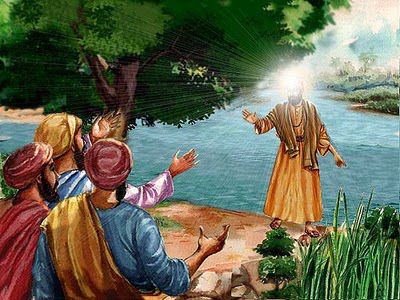


A tough origin story, St. Joseph's father died before his birth and their families home was seized to settle unresolved debts. His mother was forced to give birth in a stable. Joseph had ecstatic visions in early childhood, but they ultimately led him to being seen as troublesome, because, well, there we some outbursts of anger that came along with them as-well. He was considered a bit like the village idiot, a mouth breather who would gaze off into the distance staring blankly at who knows what.

Saint Joseph of Cupertino tried to join the ranks of the Franciscan Friars, but was denied. Going to another city, he found admittance, but was let go after being seen as unfit for the duties required... because of his ecstasies. He went back and tried to join the Franciscan's again, after family scorn, even though he had no education, and, through a little bit of pleading, he was able to acquire a position serving in the stables. From here, he worked his way up the Catholic ranking system, impressing everyone around him by simply living a life of simplicity and great devotion. Now they let him in to the order, and here he began the journey to priesthood. The guy had (ADHD) a difficult time with his studies, being perhaps a little too right brained, and could only recite one verse.
Beatus venter qui Te portavit" (Blessed be the womb that bore Thee), Luke 11:27.
When it came to Priestly finals season, Joseph was graciously asked to expound on just one verse. He did so in such an impressive manner, that it got him the position of Deacon. This is a sort of preliminary role one must go through. Every priest is first a deacon, where they learn how to be a beacon, for the Lord. From here, when it was time for the official Priest initiations, he got lucky again. The Bishop that was performing the exam questioned all of Joseph's fellow alumni, and was so impressed by them, that he simply assumed everyone there fit the bill and was ready to roll. Shortly after this point, we begin to see allegations that Joseph was levitating and floating around during Mass or communal prayers. This is when he was separated from the rest of them, confined to a small cell and no longer allowed to join in mass or public gatherings. Almost always he would let out a violet scream or shout before taking flight. One time when he was walking through an orchard when caught by the beauty of the sky, floating up to the top of an olive tree, having to be helped down later with a ladder. Some reports have him going as high as 30 meters into the air. He was suspected of witchcraft and caused all sorts of fears to surface. Passed under supervision from one monastery to the next, his devoted ascetic lifestyle kept going. Cupertino only ate solid food maybe twice a week.
was actually cool, giving is the patron saint of air travelers and pilots because he had the ability to levitate and fly through the air.
"Cosmic rays from the Central Sun will become stronger and stronger, heralding the dawn of the next Sat Yuga. There will be a new vibration, and everything will change. Mankind will again understand himself and virtue will dawn as the Sat Yuga quickly unfolds its strength. Many who are not ready for the light of this yuga will perish. Those who are of the Sat Yuga will experience the beauty of its dawn, unaffected by the astrological and Earth changes which will claim the lives of the unenlightened bound by the fierce dragon of lust.
...
This will be a time when people will change from the inside out. People won’t think the way they used to. Everything will respond to the new inner and outer space vibration— cosmic rays getting stronger and stronger bringing in the Sat Yuga. This has to do with what’s in space. As the yuga dawns everything on Earth will become clean on a mass scale through the media of a mass method of communication. When people again come from other planets in the way they did in the Sat Yuga, the change will be complete and the dawn of the Sat Yuga will have fully arrived. It will be a gradual change to a great intensity. It will seem as if time is speeding up in the beginning, and concepts of space will change"
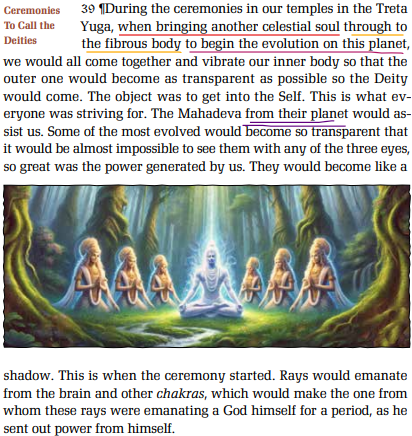
"This group of us who will carry the power through in the monastic tradition—and many of us will be the same but in different external forms—are able to hold within our minds the rays of the Central Sun of this galaxy that are diminishing due to the configuration of the rearrangements of the galaxy. We and we alone will have the powers to initiate others into having the ability to disseminate through their celestial and physical bodies these penetrating, life-giving rays of the Central Sun. During the next Sat Yuga, a synthesis will occur for the first time of all three cycles of yugas that have preceded it. All that has occurred since celestial beings first began to inhabit the planet will blend together, as man will then be consciously conscious of the forces on the planet."
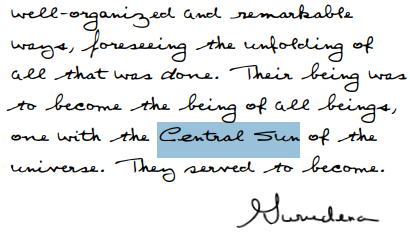
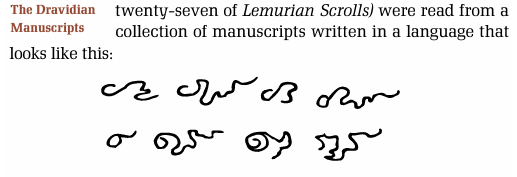
"They were easy to read, as a translation did not have to occur through the process of the universal language that happens within the akashic area of the mind when languages foreign to an individual are encountered. In the Antarloka, as well as the Sivaloka, each one hears another speak in the language he is accustomed to, due to the immediate process of translation that occurs. This is called the universal language."
Athena was the Goddess associated with wisdom, warfare, and handicraft. She was also represented by owls, olive trees, and snakes. In Athens her sanctuary stood to be known as the Parthenon, however, there was another temple to Athena on the Acropolis that was destroyed in 480BC prior. The site was left as a ruin for thirty-three years, exhibiting the cities morale. Architects Ictinos and Callicrates began work in 447BC on a new building, and within 15 years or so, saw a substantial amount of progress allowing them to call it, for the most part, done, by 432BC.

"Parthenon" comes from the Greek parthénos (παρθένος) 'maiden, girl' as well as 'virgin, unmarried woman.' “The Parthenon” translates into English as “the house of the virgin.”
Therefore the Lord himself will give you a sign: The virgin will conceive and give birth to a son, and will call him Immanuel.
Isaiah 7:14
There is some controversy surrounding this quote. There are some who regard the word in Hebrew used, Almah(עַלְמָה), to be in reference to a young maiden or young girl. The 'virgin' part was just another inference of the word used, which is employed elsewhere with a different meaning. However, when we see the oldest Greek translation of the Hebrew bible(done in the 3rd century BCE), known as the 'Septuigant,' they chose the Greek word (παρθένος) parthénos. Legend has it, 72 Hebrew scholars, 6 from each of the 12 tribes participated, locked in 72 rooms(maybe 72 days as-well). The notion of parthenogenesis, self generation, necessary for virgin births, did not exist in Israelite thought(at-least not the main narrative). When Matthew used this word in his further writings, some interpreted this as his opportunity to apply the word parthenos in a manner that conformed to the existing pagan divine birth-myth motif's. They believe he shows a disregard for the Septuagint’s reasoning in rendering ‘almah as parthenos. There, they are simply refining the word from young woman to indicate more specifically that the woman was in-fact a virgin at the time of prophecy, not necessarily claiming post-conception as-well(although some claim parthenos can also refer to a non virgin as-well). And so, they claim that Matthew's use of Parthenos here is stretched to fit his narrative.
(Fun fact: this was commissioned by a guy married to his sister, Ptolemy II Philadelphus (Ancient Greek: Πτολεμαῖος Φιλάδελφος, Ptolemaîos Philádelphos, "Ptolemy, sibling-lover.")
(Also, before the discovery of the Dead Sea scrolls in Qumran caves during 1947, the oldest copy of the 'Masoretic Text,' aka the Hebrew Bible, had speculation that they purposefully left out certain things that would ruin the messianic narrative. The dead sea scrolls gave us a copy that confirmed they had the same story.)
She will give birth to a son, and you are to give him the name Jesus, because he will save his people from their sins."
Matthew 1:21
23 “The virgin will conceive and give birth to a son, and they will call him Immanuel” (which means “God with us”).
Matthew 1:23
Prior to the Parthenon’s construction, an earlier sanctuary that stood on the Acropolis honored and housed an ancient statue of Athena - considered a xoanon(ξόανον). A xoanon was often an ancient wooden cult image or statue regarded as very old and sacred; some were believed to have fallen from the sky or to be of divine origin. This was long before classical stone and bronze cult-statues became standard. The temple was built to honor the official cult of Athena Polias, patron of Athens, after military victories, but was eventually destroyed by invading Persians in 480 BC. The ancient cult of Athena Polias was eventually transferred to the Erechtheion, a new temple built on the north side of the Acropolis, between 421 and 406 BC.
There are two stories which give us this alternative Pallas name we see for Athena. The first is that it was one of the giants she fought against in battle, whose skin she wore over herself like a coat. A Silence of the Daaaamn. The other story claims Pallas was a female companion or friend of Athena (sometimes described as the daughter of Triton). During a sparring/game or mock battle, Athena accidentally kills Pallas. Out of grief Athena takes the name “Pallas” in memory of her friend.
We shouldn't confuse this with the Temple of Athena Polias located in Turkey.
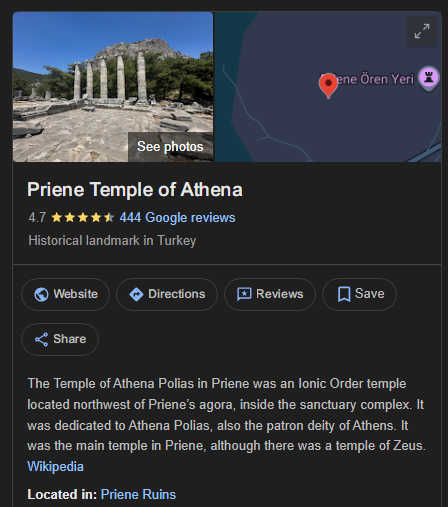
It was reconstructed after Alexander the Great commissioned the task post victory at the Granicus river. This deed was not recorded in the famous war records which kept track of his journeys in

, but it is evident in inscriptions that he had carved into the foundation of the temple.
"King Alexander dedicated the temple to Athena Polias."
.jpg)
Also a bug

It seems that the term Xoanon found itself as the title of a modern Sabbatic witchcraft type cult. "The aim of Xoanon is literally its own name: the embodiment of divinity fallen from the sky. This arcanum is interpreted in our Work as the manifestation of magical books from the sidereal ‘heaven’ of initiatic consciousness." There was a division of their organization known as "Companie of the Serpent-Cross", being an outer perimeter of the Cultus Sabbati, which was a vehicle for the transmission of lore and praxis known as "Crooked Path Sorcery." One of their main books, encapsulating the ancestral and ophidian components of traditional sorcery and Sabbatic Gnosis, is The Dragon-Book of Essex. I wonder how many people participate in Draconian and Luciferic societies like this, as there seems to be a lot of different lodges, and they have been around for a while. Is it strange weirdos whom aren't really doing anything special, or are these books on the shelves of powerful figures shaping our world? Let's see... another one of the books by their members, Andrew. D. Chumbley, first appeared in 2000, titled - ONE: The Grimoire of the Golden Toad. It is the working magical record of the author’s 1999 undertaking of the ritual known as ‘The Waters of the Moon.' It was re-released after his death with 777 basic copies, 77 copies made with goatskin, and 7 copies with both goatskin and toadskin. From one person who read it, "The first bit of this book tells how to kill a toad and let his body rot a certain way so that you can find the magical bone within that will allow you to summon Satan in the form of a horse. If you get on pony Satan’s back, he can carry you around the world in seconds. ..... "I wonder how many poor little toads were killed by the freaks who are into this crap......" "I’m not going to read shit like this anymore.""
There was a book written by Francis Penrose exposing some of the architectural diversions that show up in the Parthenon, opposing the thought that all structural works were of a straight and narrow order in Athens. In his introduction to the subject, Anomalies in the Construction of the Parthenon, we see the beginning dialogue about the use of curves in their construction. The first edition of this was published in 1847, and then in a full book, released 1851, Principles of Athenian Architecture, he sealed the deal with the first complete working on the topic. In the meantime, while this was making its rounds through the world of architecture, a deluxe edition was underway to be shortly released in 1888.

128 pages, 47 leaves of plates
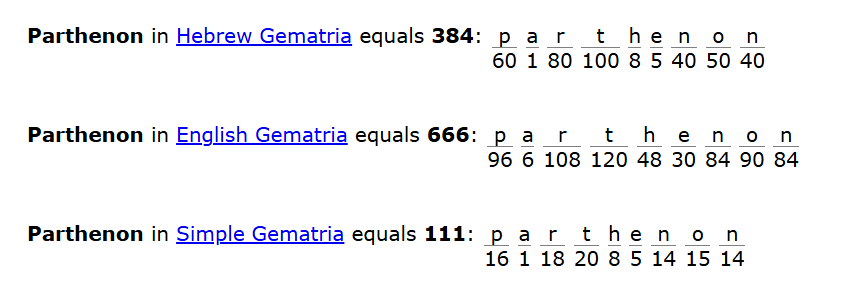

There has also been an incredibly advanced modern 3d visual of the Parthenon designed in the last few years. Created by Dr Juan de Lara with the support of the UCL Institute of Archaeology, the University of Oxford, LAHP, and the British School at Athens as part of his doctorate thesis on how light illumination functioned inside of these buildings. He used blender to painstakingly create a 3d replica for analysis, a modern animatory architect who indeed remarked on the difficulty which surfaced due to the fact that there are no straight lines. He is hoping to develop a full VR world where you can go on a digital tour of the building, in perfect resolution - as though you are walking through the ancient times yourself. This is still in progress(9% of £70,000 raised), and I think it would be quite cool to see him cross the finish line. Others have made their own 3-D walkthroughs as-well, but none r VR ready.
This is probably the best one...
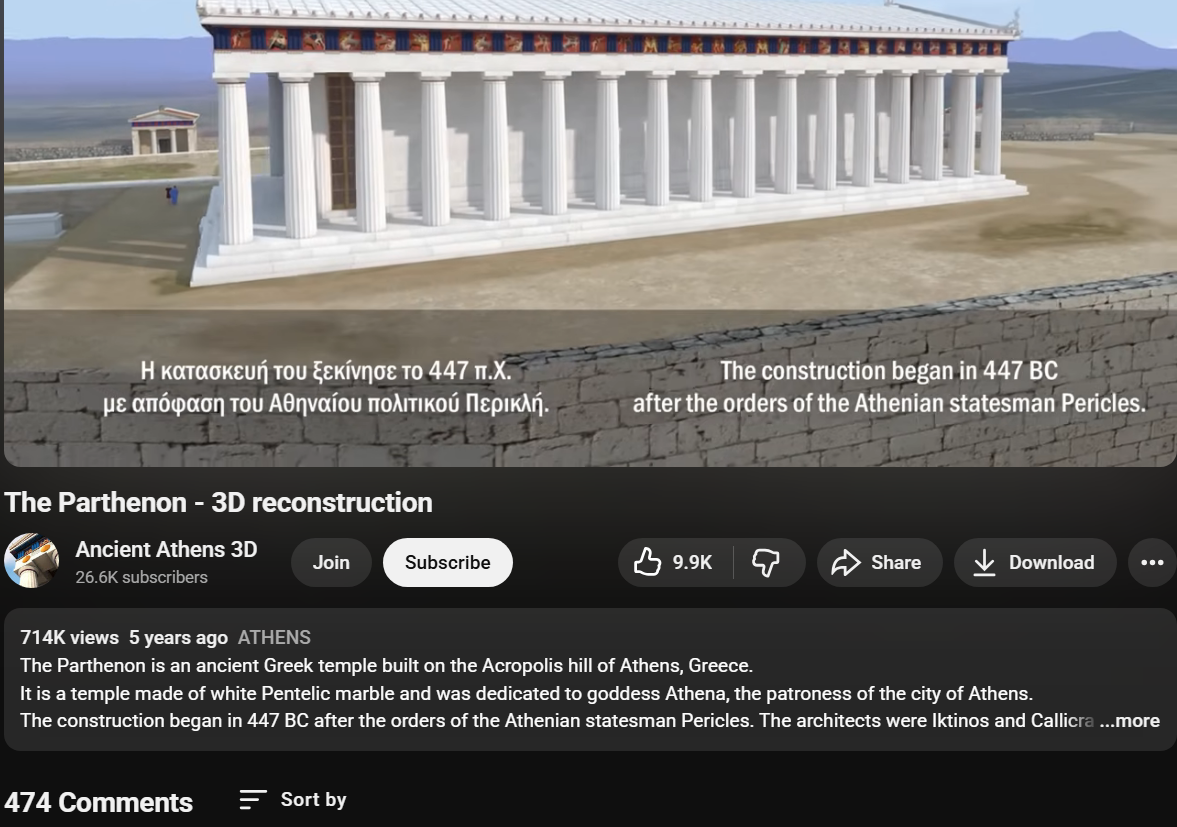
forp

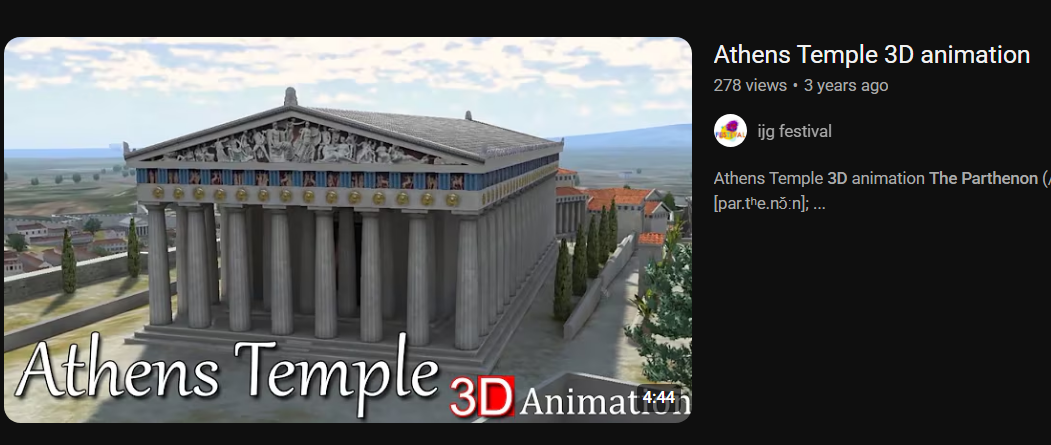
For Plato, Athena's name was derived from the Greek (Ἀθεονόα, Atheonóa) that loosely translated as the deity's (θεός, theós) mind (νοῦς, noũs). "God's mind." Latter Greeks rationalized this Goddess of Wisdom as coming from the mind of God. This makes sense because one of the myths of Athena's birth is quite literally from the head of Zeus himself. There was rumor that an unborn child was in the oven of the Greek goddess personifying prudence, first wife of Zeus, Mētis, whose name means "advice, wisdom, counsel; cunning, skill, craft." The meal cooking was prophesized to pack a punch more powerful than his father, and so, in a similar manner to the story of Cronos/Saturn swallowing his children out of fear, Zeus does the same, consuming the whole of his pregnant companion. This is interesting because

and wife of Zeus, having made his renewed life possible in the first place.
Thunder bird has to be clever to pull this stunt off. He takes advantage of her shapeshifting inclination and inspires its direction into the form of a fly, making a single bite possible. Eventually, the small child inside of him begins to develop. Celestial forces go so far as to fully equip Zeus's parasitic warriorworm incubation with a full suit of armor. Clanging around in his skull, Zeus eventually develops horrendous headaches. Athena has incubated inside Zeus for, potentially, centuries. He hires Hephaestus, in one of the myths, to come along and figure out a way to get her out. Pulling axe from back-pocket, he makes a striking hit to the skull of thunder, splitting it neatly in two, and out comes the Goddess, looking like she's already spent time on the battlefield. Other versions of the myth, where Hephaestus is self born from Hera, Prometheus is the one to come and perform the operation. There are also suggestions that the etymological origin of Athena's name comes from Athanasia (ath-uh-NEY-ziah), equivalent to “athánat" (os) deathless - from “thánatos” death).
Athanatoi (Ἀθάνατοι), or Athanati, means "immortals." This word is used in reference to at least 3 elite cavalry units of the past. The 10,000 man army of the Sasanian Empire(c. 224 – 651 CE), the elite tagmata military units of the Byzantine Empire(first raised during the late 10th century), and the Persian Immortals, another 10,000-strong unit of elite heavy infantry in the Achaemenid army(c. 550 – 330 BCE). Some people believe "Immortal" is actually a mistranslation on the part of Herodotus, that he mistook the Iranian word anûšiya or anūšiya" ("companion" or "associate", nnaki) with anauša- ("immortal"). They were an elite highly disciplined, and fearsome group of soldiers predating the Byzantine boys, named for their 10,000-strong rank. Whenever a member was killed, wounded, or fell ill, he would be immediately replaced, creating an aura of immortality.

Ultimately, the Immortals met their match against Alexander the Great. After almost two centuries as Persia's most renowned warriors, the elite force was defeated by the Macedonians in 331 BCE, paving the way for the downfall of the once-invincible Achaemenid Empire. The Battle of Gaugamela is Alexander the Great's greatest victory. The Persians were estimated to have 100,000+ soldiers on their end, some ancient sources claim 1,000,000+ men, what is unlikely - but it gives you an idea of their volume. Alexander and the Macedonians were only equipped with a smaller, but lethal army of around .... 47,000 soldiers. Through advanced military strategy, even leading a charge into the battlefield as the King himself, they were able to pull of a tremendous victory. The goal was to get close to Darius, as the Persians would flee if their king fled. A calculated charge broke the Persian center, Darius fled, and his massive army disintegrated.
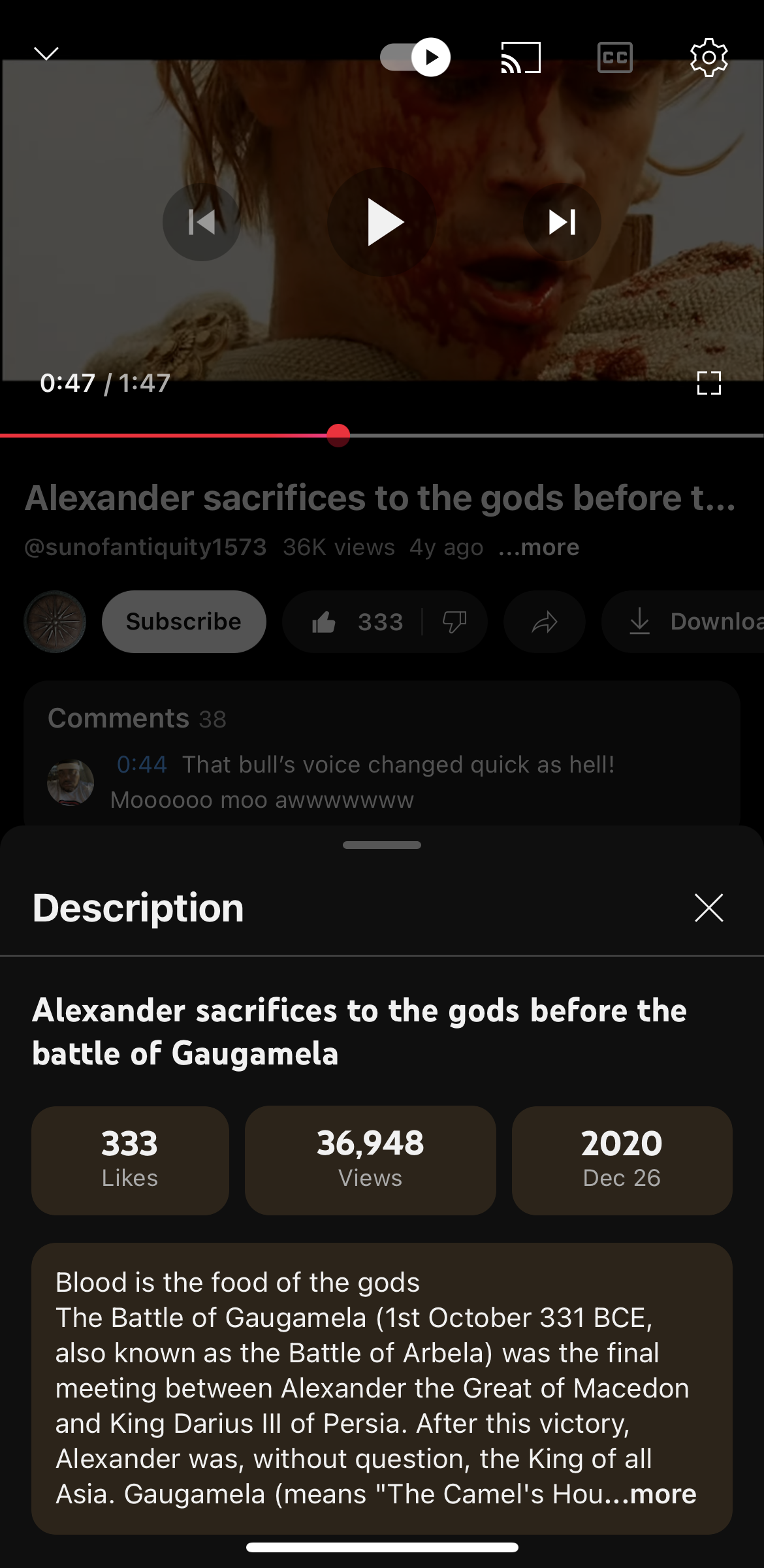
Mother Mary Virgin
The West African kingdom of Dahomey regarded snakes as immortal because they appeared to be reincarnated from themselves when they sloughed their skins. Snakes were often associated with immortality because they were observed biting their tails to form a circle, and when they coiled themselves up, they formed spirals. Both circles and spirals were seen as symbols of eternity, and when we zoom out and look how space is organized, who can say that they were wrong. The Ouroboros is a classic symbol depicting a serpent in the act of eating its own tail. It represents the eternal cycle of life and death, where one thing feeds on into another in an endless loop of creation and destruction. The first Ouroboros we see in history comes out of engravings from the tomb of 18th Dynasty boy-king Tutankhamun, who reigned c. 1332–1323 BC. Located in Egypt's Valley of the Kings, the circular self consuming serpent is introduced biting its own tail here in King Tut's hut(perhaps one of the most inbred of all the pharaohs).

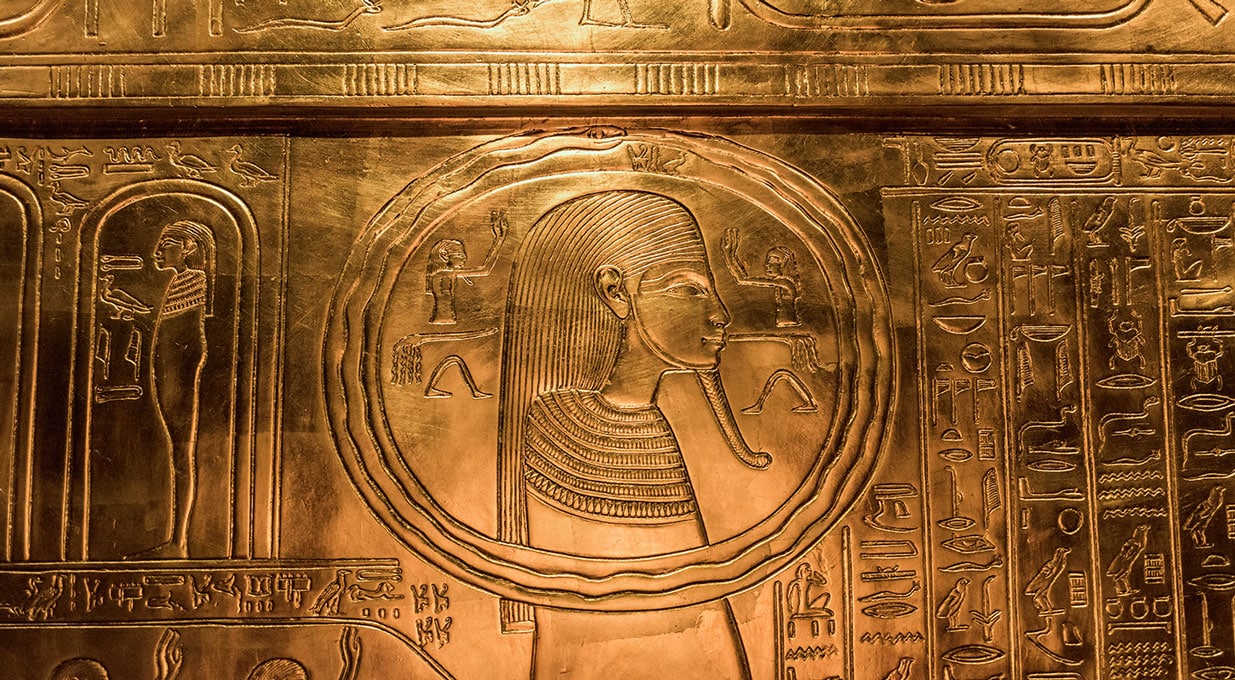
“The power of life causes the snake to shed its skin, just as the moon sheds its shadow. The serpent sheds its skin to be born again, as the moon its shadow to be born again. They are equivalent symbols. Sometimes the serpent is represented as a circle eating its own tail. That’s an image of life. Life sheds one generation after another, to be born again. The serpent represents immortal energy and consciousness engaged in the field of time, constantly throwing off death and being born again. There is something tremendously terrifying about life when you look at it that way. And so the serpent carries in itself the sense of both the fascination and the terror of life.”
― Joseph Campbell, The Power of Myth
One source I came across claimed that the ouroboros was a depiction of the primordial serpent Sata from the Egyptian Book of the Dead. This may be a stretch, but, the description of it does seem to have some alignment.
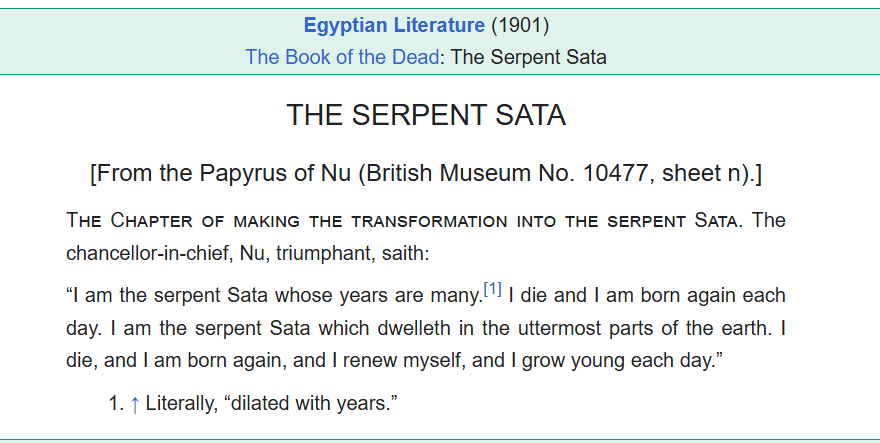
I am not sure if this is the same page that goes along with that text, but it is, at least, from the same collection
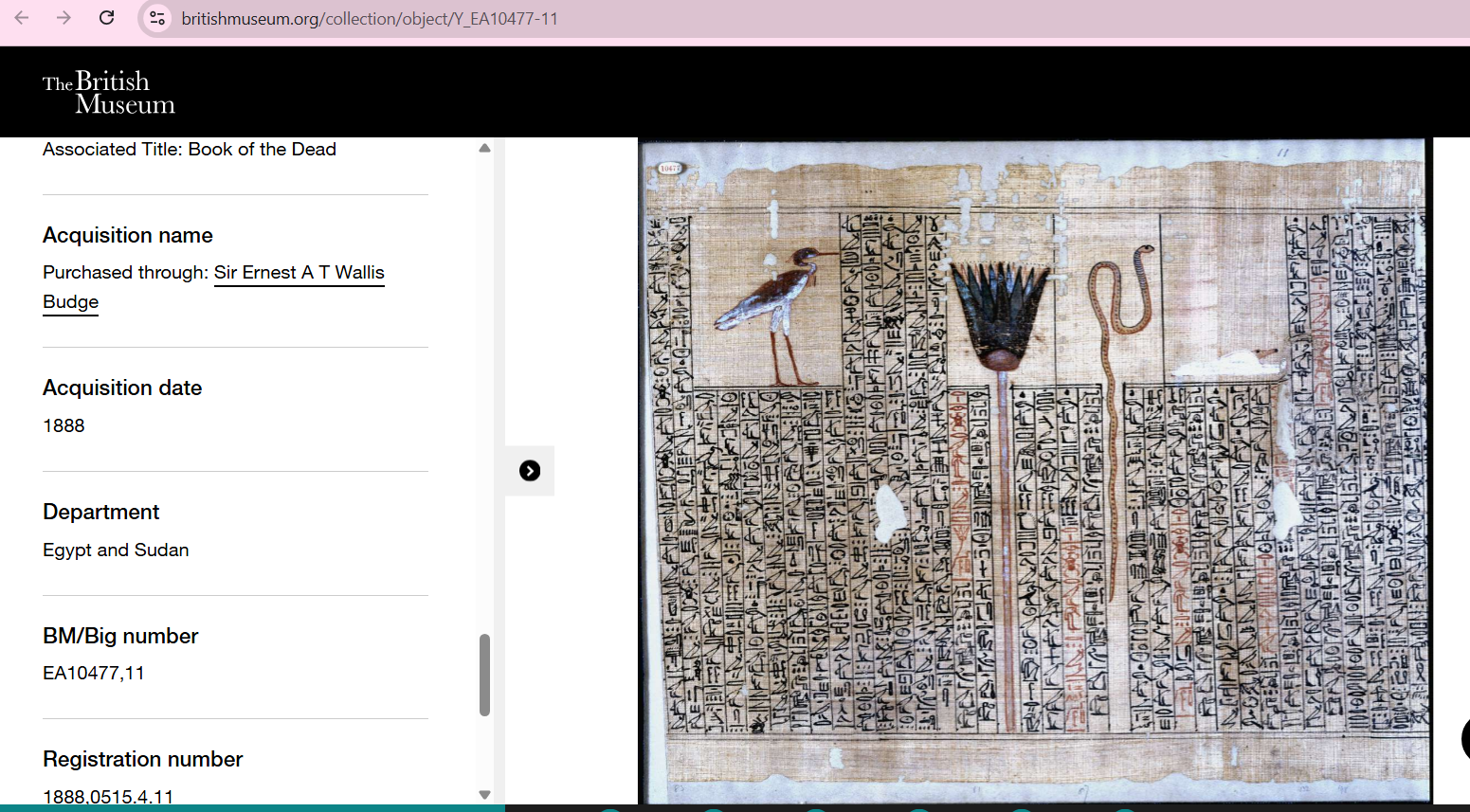
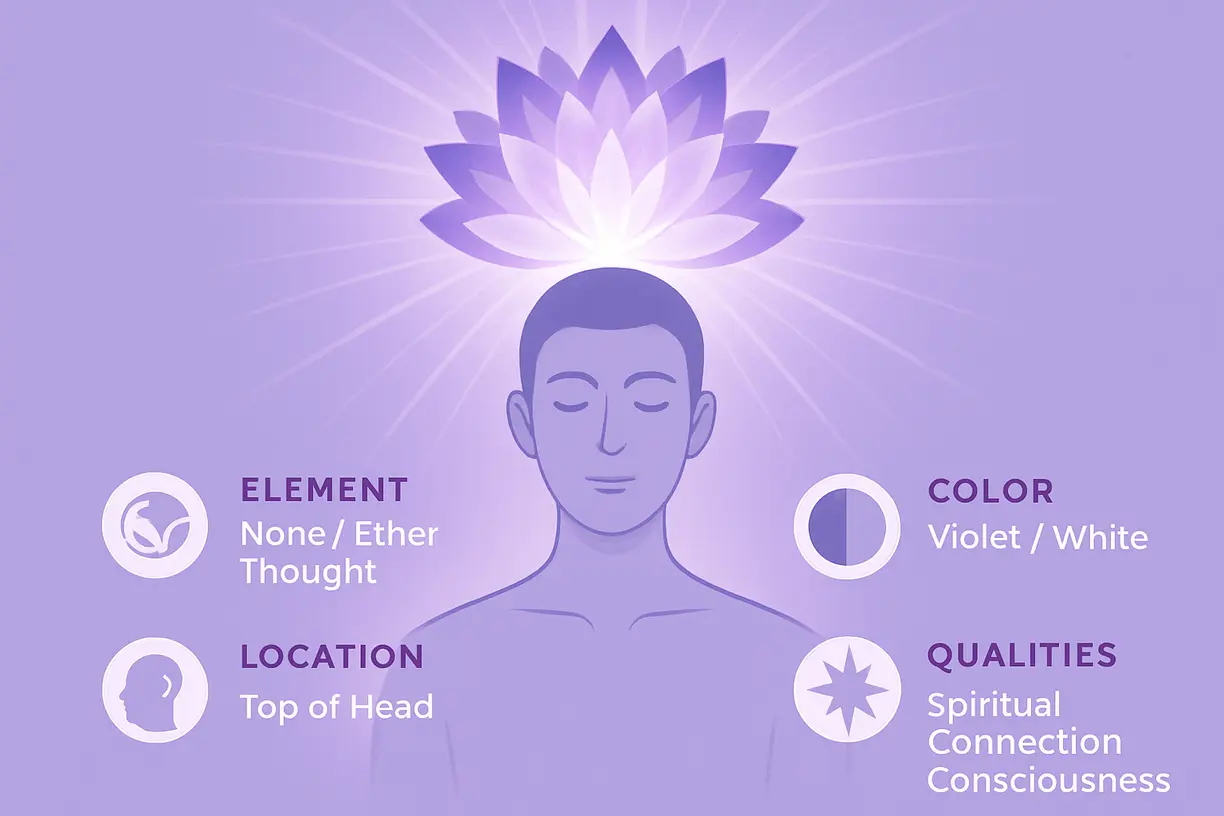
Ouroboros type imagery can be seen all over Egyptian culture, although we should be careful in transplanting symbolic weight the concept stands to hold for later occult schools of thought over a past civilization(someone wrote a whole paper on this). They could have been thinking of other things, for example, here it looks a little different. It looks exactly like the {imagebelow} with the kundalini resting at the top, perhaps through the third eye and into the crown chakra.
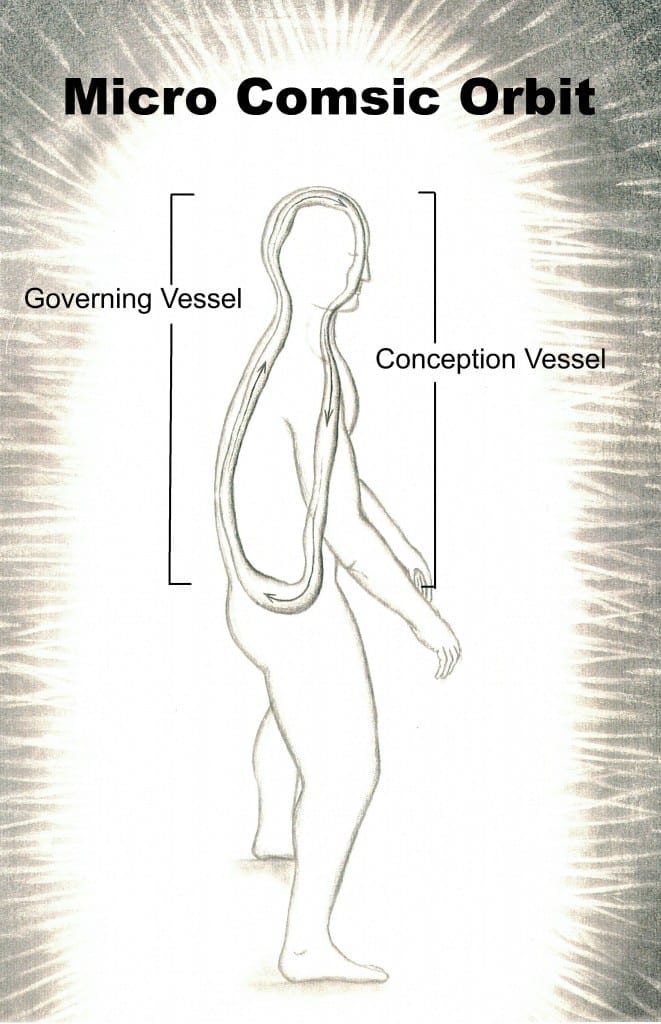
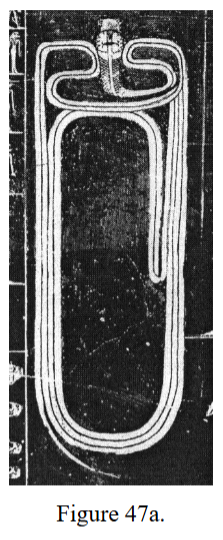
From the ceiling of the tomb of Phaoroh Ramesses VI
VI is 6 in roman numerals
We are now going to transition from Phaoroh's 6-9.
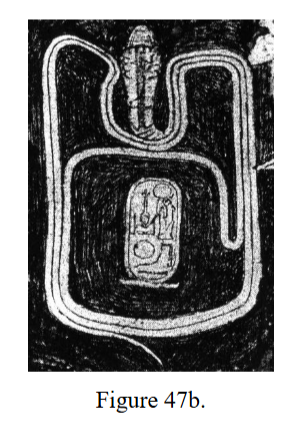
Ramesses IX was a pharaoh that, according to some sources, ruled from 1129–1111 BC. The number seems to vary depending on where you look, I'm not sure if this is credible, but his successor, Ramesses X, supposedly only ruled for 4 years from 1111 BC – 1107 BC. There is no fact checking here on the internet(<--vv--^^--especially--^^--vv-->), but this one tidbit spread like a disease in a small town, it seems, from one website to the next. Are we going to all shift into a sort of mass psychosis of false history through the percolation of incorrect information if we aren't careful?
The Egyptian Ouroboros: An Iconological and Theological Study, 2015, Reemes, Dana Michael
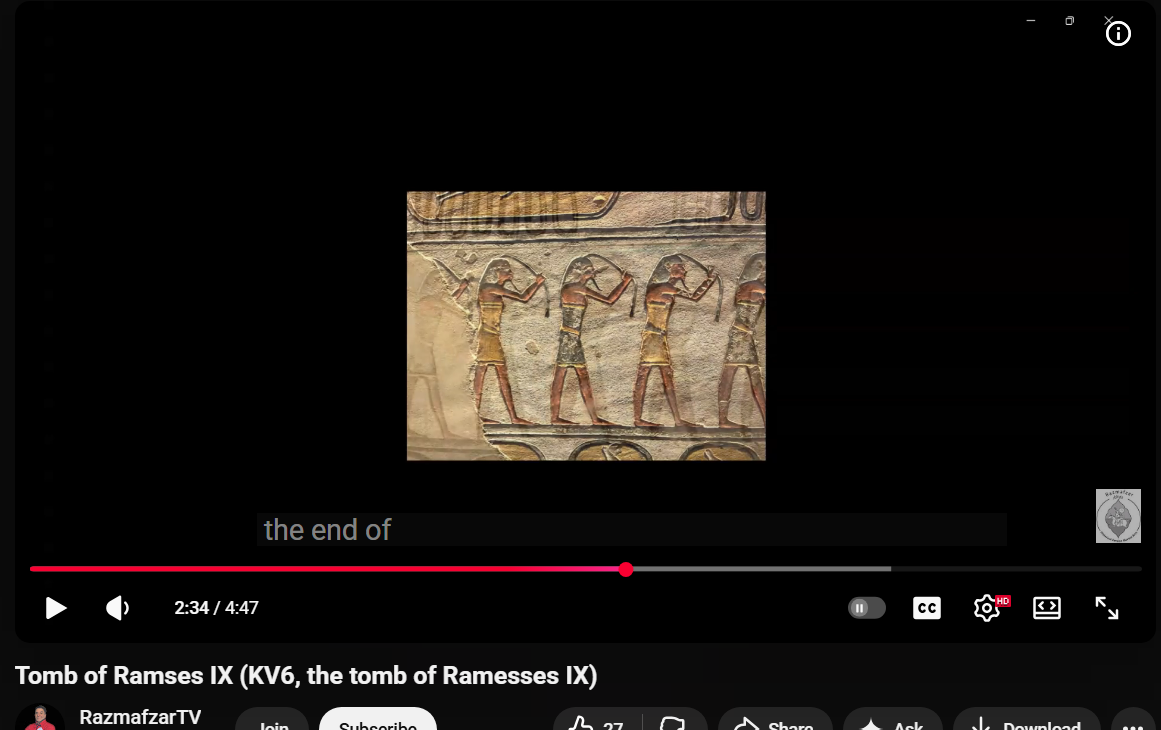

There is a wrestler that goes by this name as-well best known for fighting with Chikara wrestling.
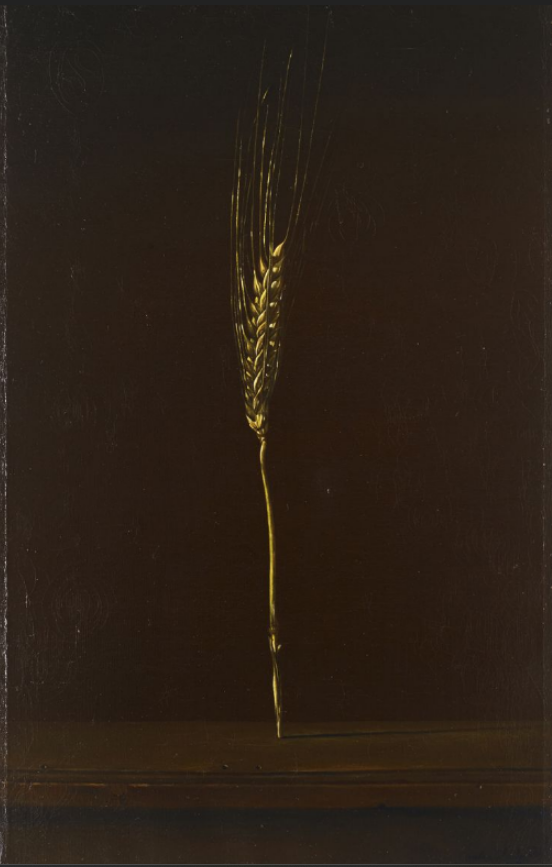
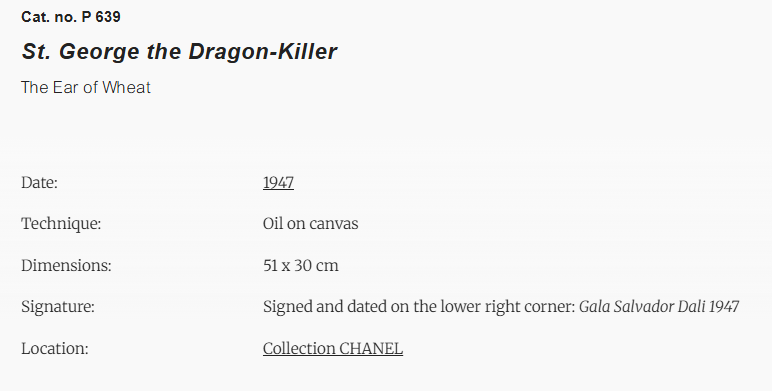
"I am sending you out like sheep into the midst of wolves; so be as wise as serpents..." (Matt 10:16)
Snakes hold reverence amongst the Eastern Orthodox Christians. There is a city, supposedly where a bunch of snakes will show up on a yearly basis. The story behind it all is quite fascinating, it has to do with pirates. The sacred snakes of Cephalonia are celebrated annually on 15 August (the Feast of the Dormition) on Cephalonia, the largest of the Ionian Islands in Western Greece.
In Relation To Athena Being Associated With Snakes and Bein an Ever Virgin, Mother Mary had some snake...

Snakes of the Theotokos which appear every year on the feast of the Dormition of the Theotokos on the greek island Kephalonia
The story goes, that they pray upon Mother Mary for protection, and then what they got in return was assistance in the terms of bringing a bunch of snakes to their side to scare off and fend away their foes, or their foes themselves turn into the coiled creature. Not your ordinary reptile, they even have, from what one evangelist was claiming, crosses on the tops of their heads and cross forked tongues. There have been some years reported to have no appearances from the snakes, but a certain claim is that this is due to earthquakes/weather phenomenon during that period. For some, it almost seems to me that this is like a groundhog's day situation, where the absence of the snakes is sign of great doom to come.
Theotokos (Θεοτόκος) is a Greek word that means "God-bearer" or "Birth-giver to God."
Holy Mother Mary is also an Ever-Virgin, according to Eastern Orthodox, a Aeiparthenos(Aeiparthenos)(ἀειπάρθενος), which means that before, during, and after the birth of Jesus - she retained her V-card. There are some debates about this in the different worlds of Christianity, whether or not she had further children afterwards
The Second Apocalypse of James, a gnostic text found in the Nag Hammadi library, refers to James(the brother of Jesus) as simply a relative. The Infancy Gospel of James, as-well, states that Mary remained a life-long virgin, because Joseph was an old man who married her without physical desire, and the brothers of Jesus mentioned in the canonical gospels are explained as Joseph's sons by an earlier marriage.

The ancient Greek Syballine Oracles, as-well, refer to Mary as "always virgin" (αἰεὶ κούρῃ). These were recorded by prophetesses in Sybil who uttered divine revelations in a frenzied state. , "to be inspired in one's tongue." The Sibyl’s occupied several locations around the ancient Mediterranean and serving as the voice of the local deity of each place. For instance, the Sibyl of Cumae was located in the vicinity of the temple of Apollo, therefore she was his voice/oracle, and those that heard her prophecy, were able to hear the words of Apollo himself.
Sybil itself refers to any of certain women of antiquity reputed to possess powers of prophecy or divination, a female prophet or witch.
The Ebionites, for example, a Jewish-sect of Christians, don't believe in the fact that Jesus was a special divine human at all, and so this stuff related to Mary isn't true.
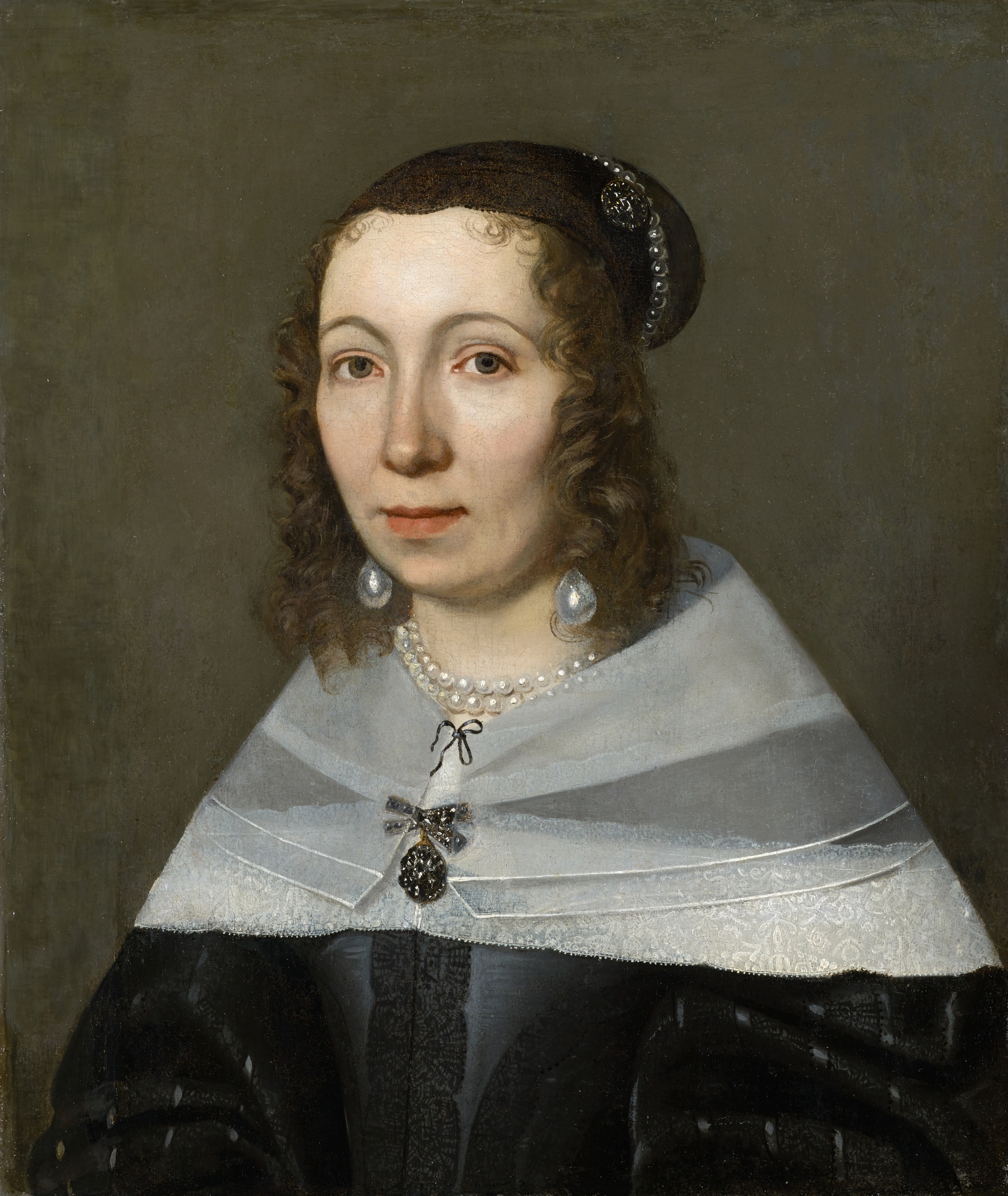
Maria Sibylla Merian (April 1647 – January 1717)
69 years old (married to Johann Andreas Graff 1665)
Maria was the first to observe and depict the process of metamorphosis in the field. During her career, she described and illustrated the life cycles of 186 insect species from direct observation, amassing evidence that contradicted the contemporary notion that insects were “born of mud” by spontaneous generation. This was a huge advancement of knowledge for an age where many naturalists still believed in ‘spontaneous generation,’ that living organisms develop from inanimate matter. During her career, she described and illustrated the life cycles of 186 insect species from direct observation, amassing evidence that contradicted the contemporary notion that insects were “born of mud” (and caterpillars from cabbages.) She changed the world of science forever as a pioneering artist of flora and fauna. David Attenborough, a man that will turn 100 years old in about 5 months or so(you know his voice from Planet Earth), claims her to be one of the most significant contributors to entomology.
Her book "Of European Insects" is quite expensive...

‘In my youth, I spent my time investigating insects.’

"De Europische Insecten: half-title; title page printed in red and black with hand-colored engraved vignette; 184 engraved plates on 47 leaves, all with contemporary hand-coloring; with hand-colored engraved vignette at end (toning and occasional spotting throughout; small marginal closed tear at bottom of leaves 22 and 23)."

She was honored by having her portrait placed on the Germany Federal Republic 500 Deutsche Mark, 1991. The banknote has been demonetized, so, if you have one, it is useless now(I'll take it.)

“Do not seek herein my glory / but that of God / to praise / Him / as Creator of even these small and most humble worms; / for they spring not from themselves / but from God.”
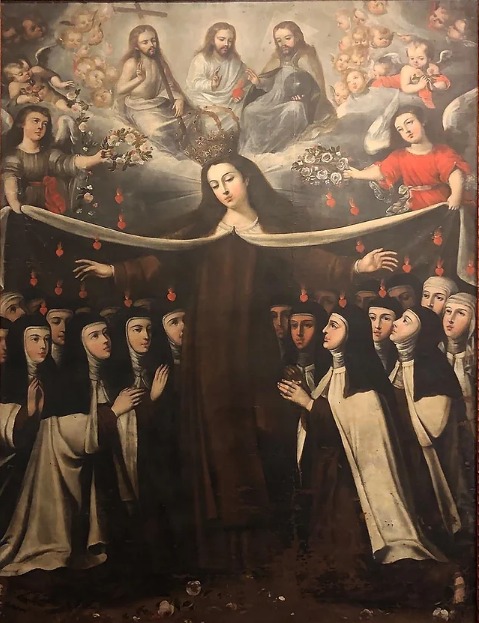
Virgen del Carmen, oil painting by Isabel de Cisneros (1666 –1714)
Carmel or Carmen derives from the Hebrew word Karmel or Al-Karem , which can be translated as 'garden of God'.
In the Catholic Church, approval of a Marian apparition is relatively rare. The majority of investigated apparitions are rejected as fraudulent or otherwise false. Mother Mary was taken seriously. For example, there was situation that got dicey known as the "Jetzer Affair." On 31 May 1509, Johann Vatter, Franz Ueltschi, Stephan Boltzhurst, and Heinrich Steinegger were burned alive for claiming false sightings.

This man was saved by an apparition of Babaji that showed up as a young kid and helped him through a downpour, remaining clear from any water. Seems quite similar to the accounts of Mother Mary apparitions, in which she stood in the rain untouched for hours.




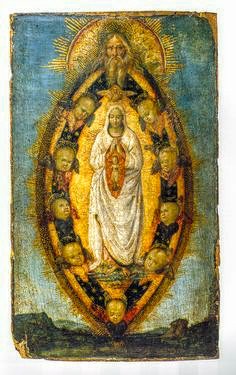
VVesica Piscis translates directly into from Latin as "bladder of a fish," or "vessel of the fish."
It is derived by taking two circles of equal diameters and overlaying them in such a way that their circumferences touch each other's epicenters. The intersectional area is also called "mandorla" which is an Italian word for little almond. The Vesica Piscis is the womb of the universe and contains within itself quite literally the whole essence of existence. This is a bold claim for what may seem like a simple two circles overlapping one another, but it is the foundation of sacred geometry. Everything that exists can spring out of this womb- football like shape. Traditions across the globe, perhaps even science, agree that life springs from some sort of division. You have an original source which must create something from itself, dividing itself. This brings us to the original duality. That which creates, and that which is created. The observer and the observed.
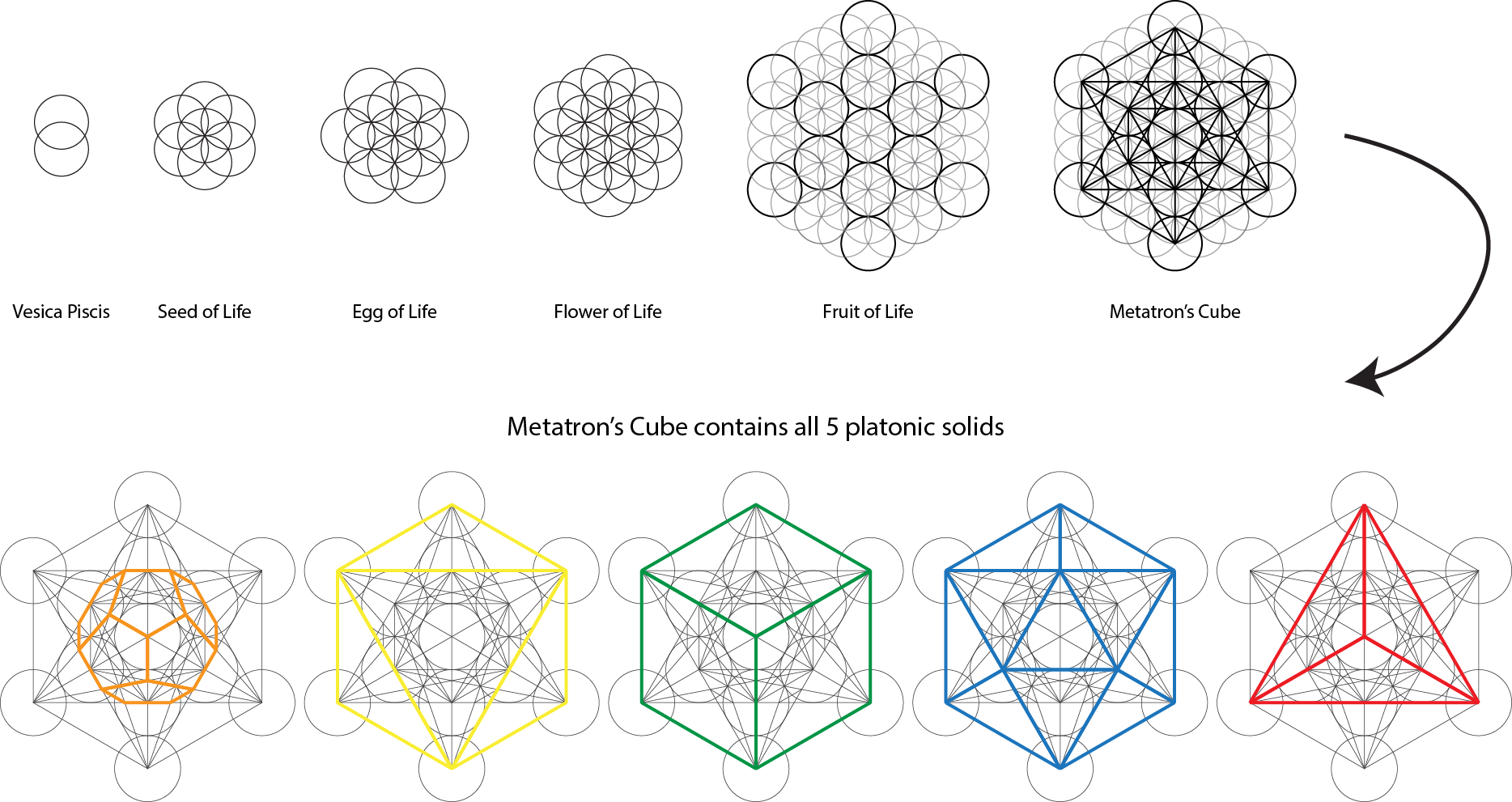
"Imagine my overwhelming joy when I discovered that the ancient Qabalistic Tree of Life, with all its wonderful possibilities as a means of mental classification of every idea in the Universe −− Natural, Human, and Divine −− was in its entirety based upon the same fundamental principle of the Vesica Piscis , and was therefore not a fixed design but capable of indefinite progression towards the Infinitely Small or the Infinitely Great . For it can be so drawn that it appears with all its details and properties, repeating themselves indefinitely in every direction of Space to Infinity."
Anatomy of the Body of God, Frater Achad
Frater Achad was the 20th person to join Aleister Crowley in his A.A. organization, after coming across his publication The Equinox. Crowley viewed Achad as his "magical son" and heir after Achad's 1918 discovery of the Qabalistic key to Liber AL vel Legis, the reason why "AL" was put in the title. Their bond soured in the 1920s over Achad's unconventional Tree of Life rearrangements and contact with another group, and he was expelled from the O.T.O. in 1936. Anatomy of the Body of God(1925) goes into a lot of depth on the Vesica Piscis, in ways Crowley would probably view quite heretical. If you were to point to him in a room, and knew him by his original name, you would say - hey, look over there, it's


"The Vesica Piscis is intimately connected with the discovery by Augustus Caesar, as narrated by Baronius, of a prophecy in one of the Sybilline books foretelling 'a great event coming to pass in the birth of One who should prove to be the true "King of Kings," and that Augustus therefore dedicated an altar in his palace to the "unknown God."
Anatomy of the Body of God, Frater Achad
For as I walked around and looked carefully at your objects of worship, I even found an altar with this inscription: to an unknown god. So you are ignorant of the very thing you worship—and this is what I am going to proclaim to you.
Acts 17:23
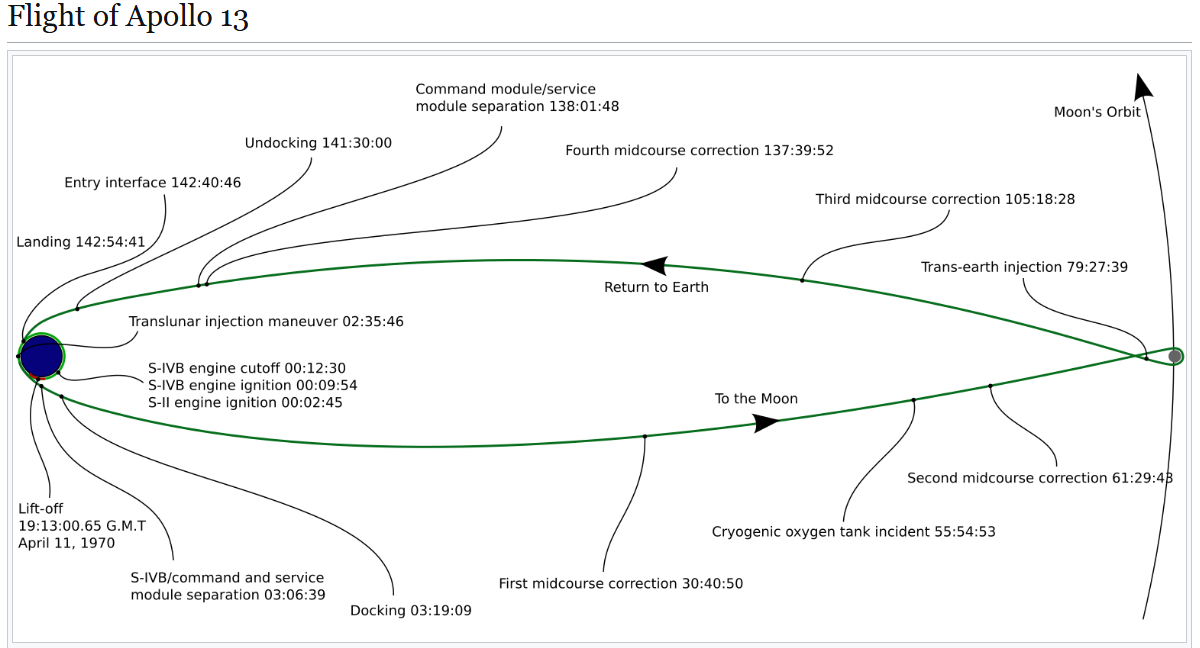
Vesta is the virgin goddess of hearth, home, and family. Her origins have been argued to go all the way back to Vedic India(2,000BC-500BC), which is difficult to prove, but gives us an idea as to how this archetype may have spread over, not only a long time, but also a long distance. She was rarely depicted in human form and was more often represented by the fire of her temple. Entry into said temple was only permitted to her Priestesses, “the vessel virgins,” who guarded certain sacred objects held within. They also prepared flowers and a sacred salt for official sacrifices, which is alchemically linked to the concept of fire. (c)Ovid, the Roman writer, claimed that Vesta was the Earth itself, which brings the phrase “salt of the Earth” into a new light. Their virginity was thought so essential to Roman survival, that if they were found guilty of un-chastity, they were buried alive.

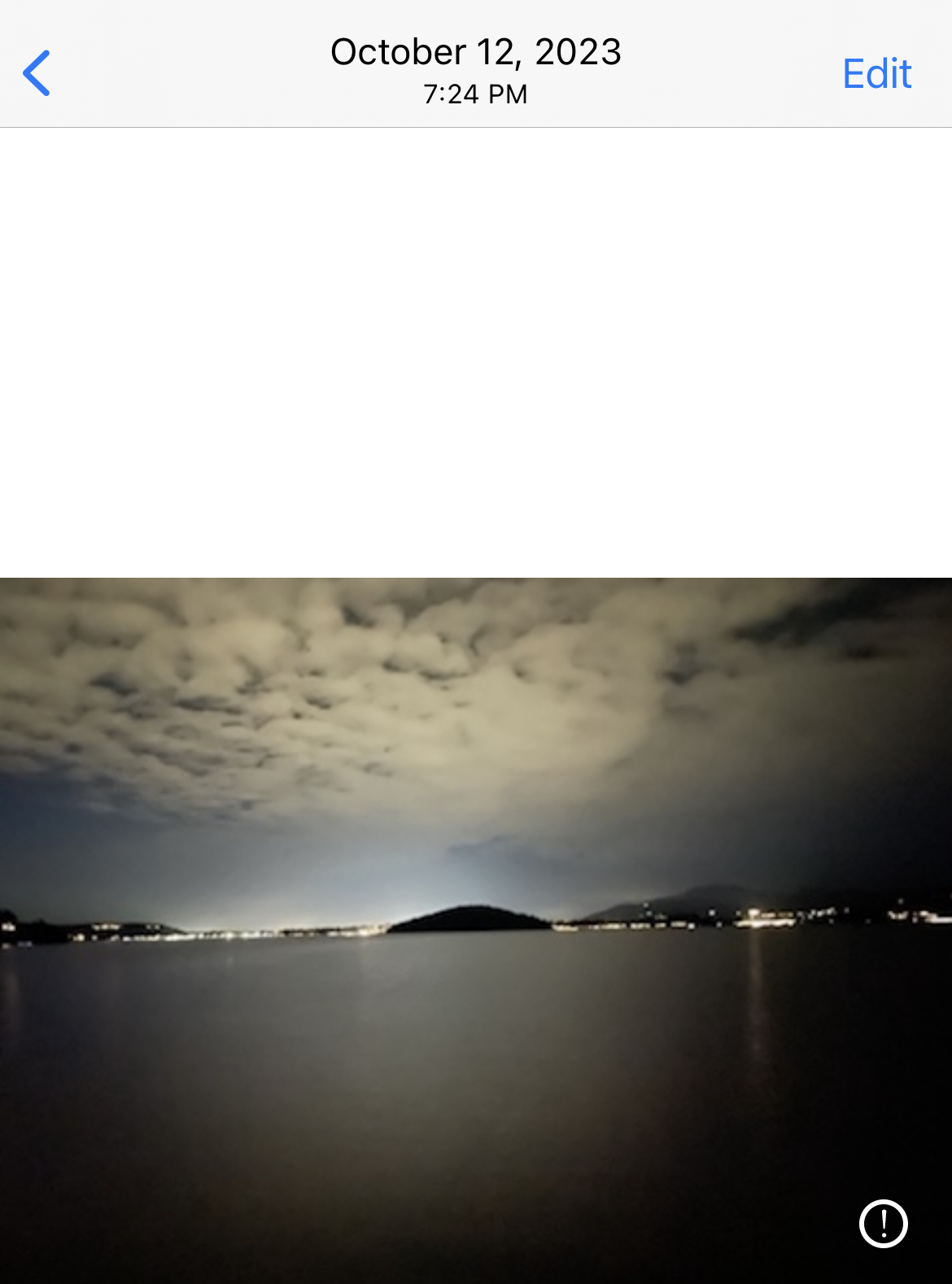
Vestallius was one of the most important rituals in Roman Culture. Privileged matrons walked barefoot through the city to the temple, where they made food offerings. This was one of the cults still active before being cut out by Christian rule in AD391. They did not have many myths, but the most notable one they carried was of miraculous conception. Virgin priestesses would, according to tale, become impregnated by a phallus appearing in the flames of their sacred hearth. The manifestation of the goddess combined with a supernatural male, this was claimed to be the process through which Roman founders - Roman Romulus(check that) and King Servius Tullius, were conceived. Vesta was daughter of Saturn and Ops, and was among the “Dia Consentes,” the 12 most honored Gods in the Roman Pantheon.
The festival took place during June from (6-7)-(6-15), in the time of Gemini, at-least according to our modern tropical zodiac. This represents the conjunction of opposites, and a new third being brought forth through the conjunction of those opposites(attainment).
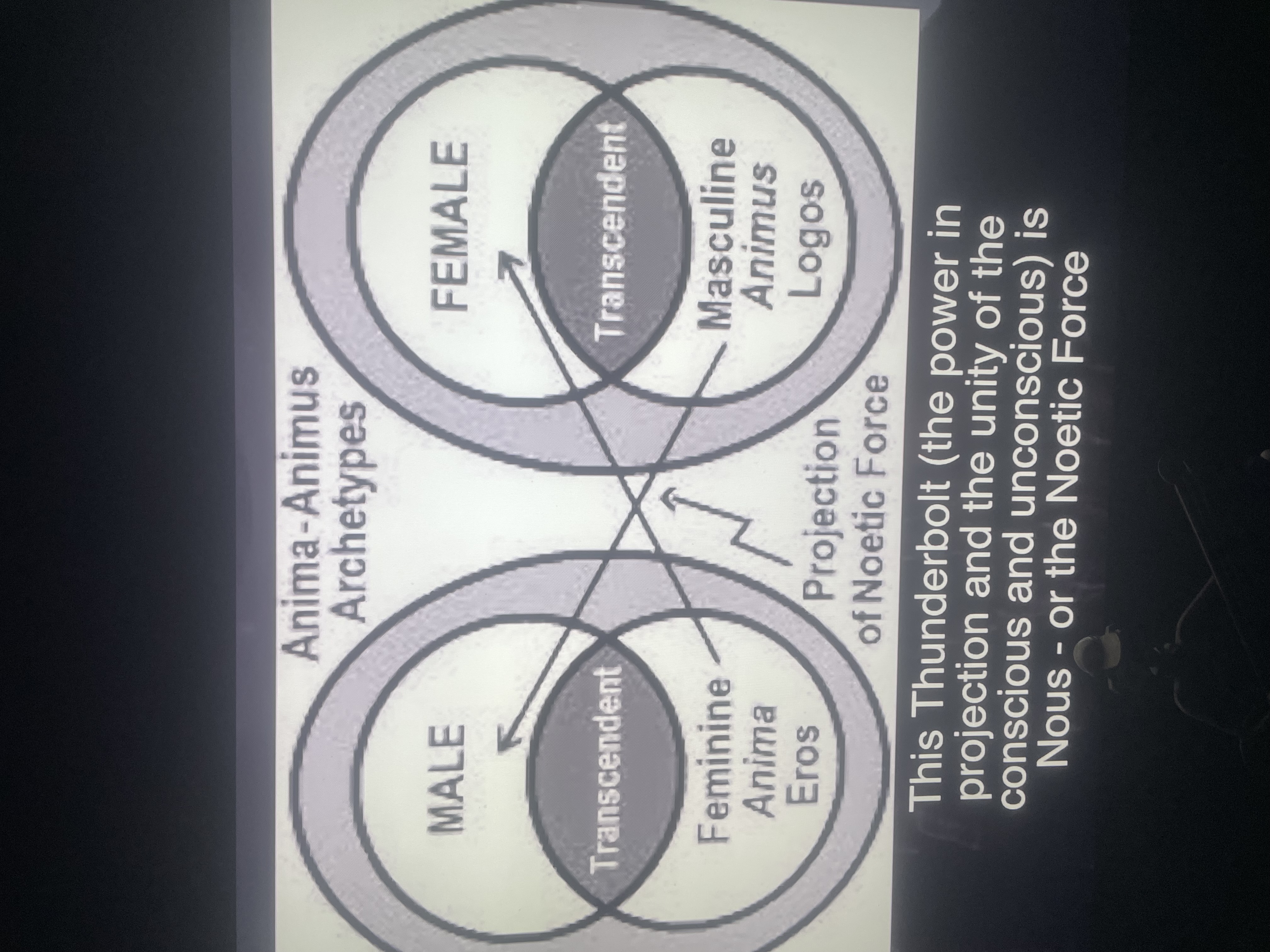
Through the esoteric lens, when you bring the unconscious(feminine, negative) and conscious (masculine, positive) together, there is a transcendental function that occurs, leading to a new birth. The eclipse that is formed by the vesica piscis is this union of opposites, a yoni-like symbol giving rise to something new created by the combination of male and female (idea, energies, etc). This can be seen as the birth of a magical child in some ways, a virgin birth that happens within an individual that takes on the necessary steps to consciously individuate and grow this new transcendental aspect. You can see this in the idea of different magical practices, or the world of “manifestation,” for example, as-well as in dreams.
Much of magical practice, in both ancient occult and modern approaches, utilize the combination of consciously willed intentional thought(masculine), with the energy of emotions and the subconscious(feminine). This process of conscious willing something “impregnates” one with the seed of its fruition, making possible the reception of different visions/synchronicities/insights, a Hansel and Gretel trail, the beginning of a “quantum jump” into the “timeline” of a desired outcome being brought to life(if followed). Our dreams themselves, as hypothesized by Freud and Jung, are a sort of way these things process and grow/relay the inklings of what is to come/how it is that things may come. Prophetic dreams, “Promethean foresight,” extrapolate contents of the subconscious into the conscious mind and birth a transcendental picture to be given consideration. Because time does not necessarily exist in this realm, the psyche utilizes past present and future all at once as we glean as much insight and wisdom as possible to help the process of individuation along. The masculine pole of the magnet in a sense pulls up relevant and important information from the subconscious into the awareness of the observer. The purely conscious mental logos(masculine) is given sensations in the body, and even things appearing in the physical material world(feminine), all as clues to the path laid out by seed of higher guidance.
The Roman God Janus, Iānus, meaning in Latin 'arched passage, doorway',
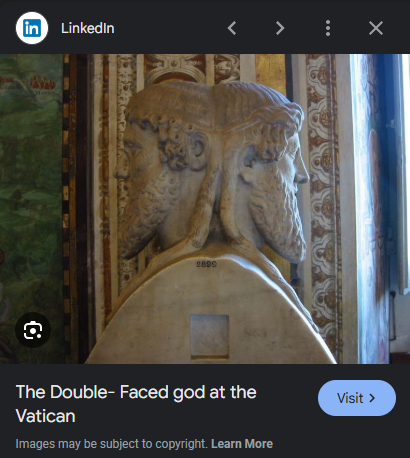
.jpeg)
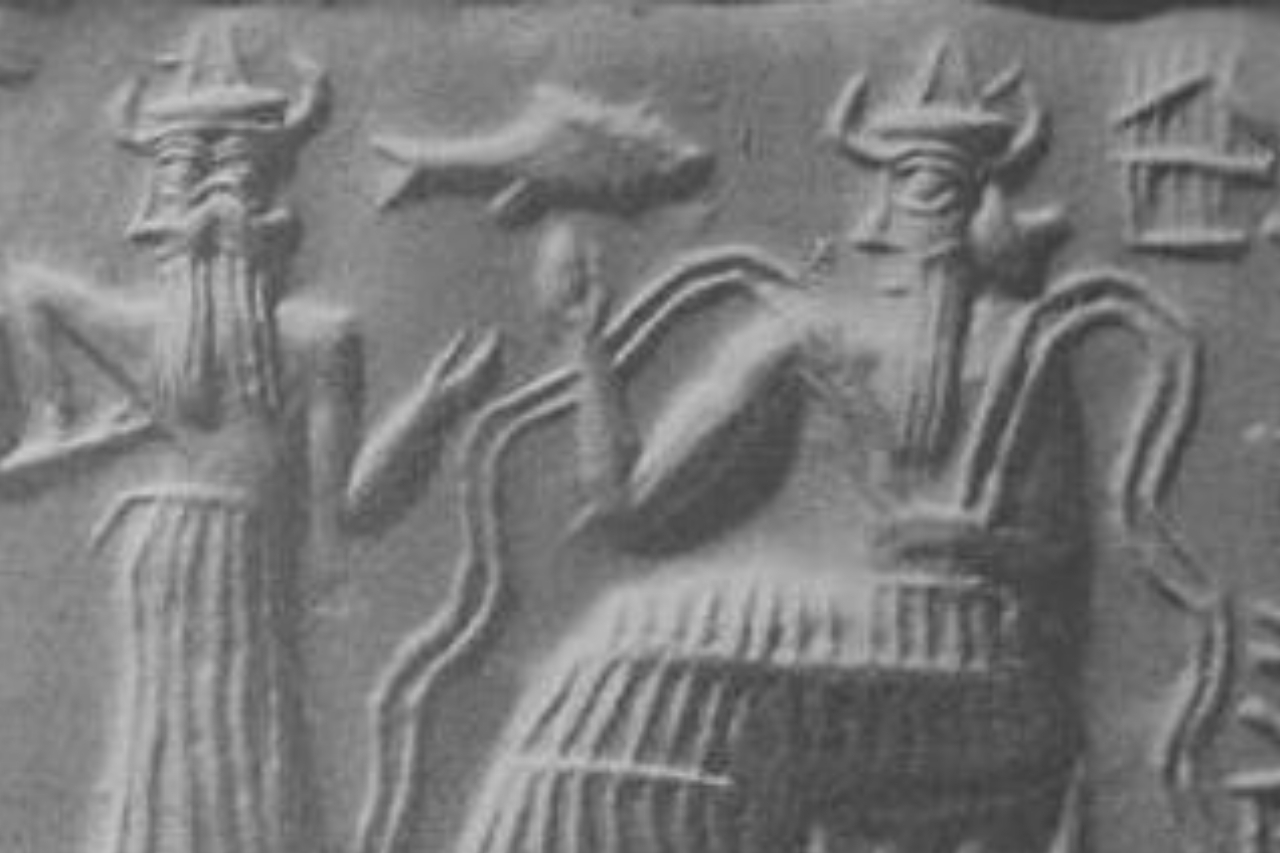
Sumerian Isimud
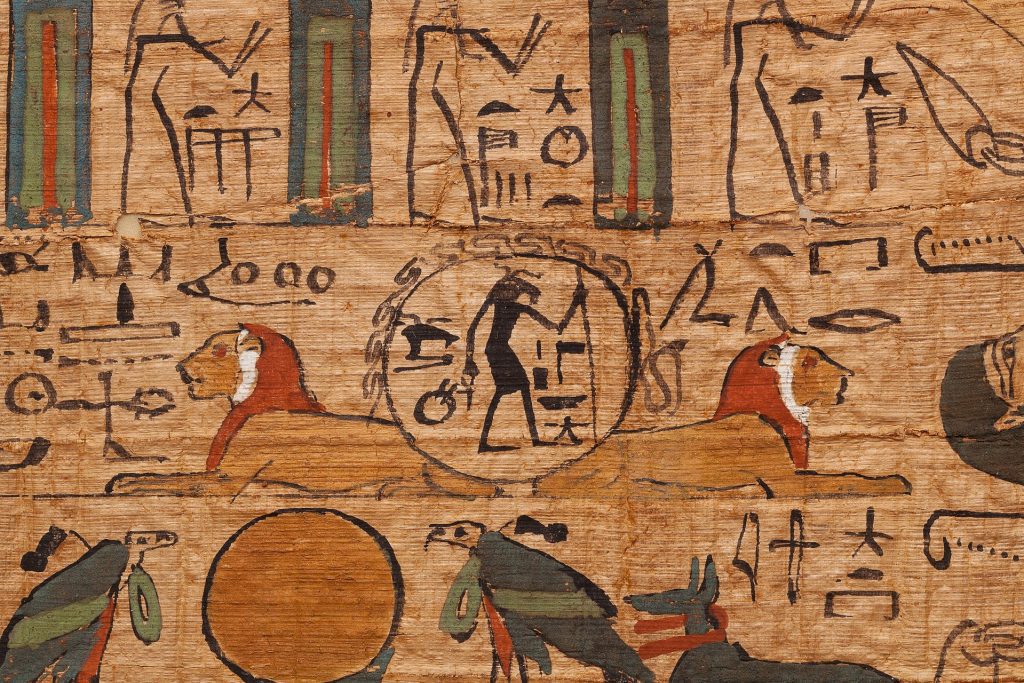
Aker, a twin lion deity, could almost be seen like an Egyptian equivalent to Janus, holding aspects of the Vesica Piscis. Instead of two heads facing each direction, it was two lions seated back to back, carrying the Akhet cross in-between. One of the lions faces the East, where the sun rises and begins a new day, is known as Duau, meaning tomorrow. Their jungle juxtaposition, a fierce feline known as Sef, booked a seat (Trivago) facing the west - where the sun sets - placing their bets - on the moments - of yesterday. Aker was associated with the mast of Ra's solar boat, and "The Book of Aker" is a papyrus about the solar journey. In this text he imprisoned the demon Apophis to prevent him from harming Ra's boat, which, because of Aker's double face, was provided protection both forward and back. Since the Egyptians believed that the transitional gates for both morning and night were guarded by Aker, they would sometimes place twin statues of lions/sphinxes at the doors to palaces or tombs(to guard against evil spirits and malevolent beings.)

In the "Book of the Dead," one of the more famous Egyptian texts, Aker gives birth to the god Khepri, whose name means "He who is coming into being." Khepri was associated with scarabs, which held religious significance in the early times of Egypt, acting as a symbol of rebirth, regeneration, and transformation. Since scarabs would fly around during the hottest part of the day, they were associated with the sun, and this God representing the rising morning sun.
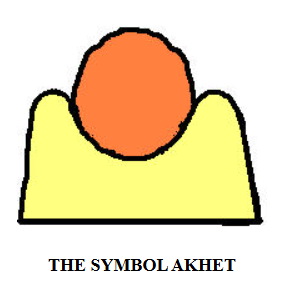
The Akhet hieroglyph, translated as horizon, represents a "mountain with the rising sun." You often see Aker paired with this Akhet symbol, like a parent guarding their child. You also see the word showing up in the official Egyptian name for the Great Pyramid of Gaza (Akhet Khufu), as-well as in the old Egyptian city Akhetaten(1346-1332BC), which was founded by Akhenaten, whom, was supposedly contacted by The Ra Contact & Harvest long ago, hence his historical attempt at being the first to formulate all into a system of monotheism(the one infinite creator).
Khepri was equated to eternal life and the concept of resurrection, as a sun god and universal protector that was constantly reborn. His pushing of the sun up into the sky each morning was derived from the scarab beetle who rolls their ball of dung.
"To Khepera who is self-created, I offer my praise. Each day you rise anew, O god, again and yet again; each day you rise is as the first,"
Hymn to Khepri
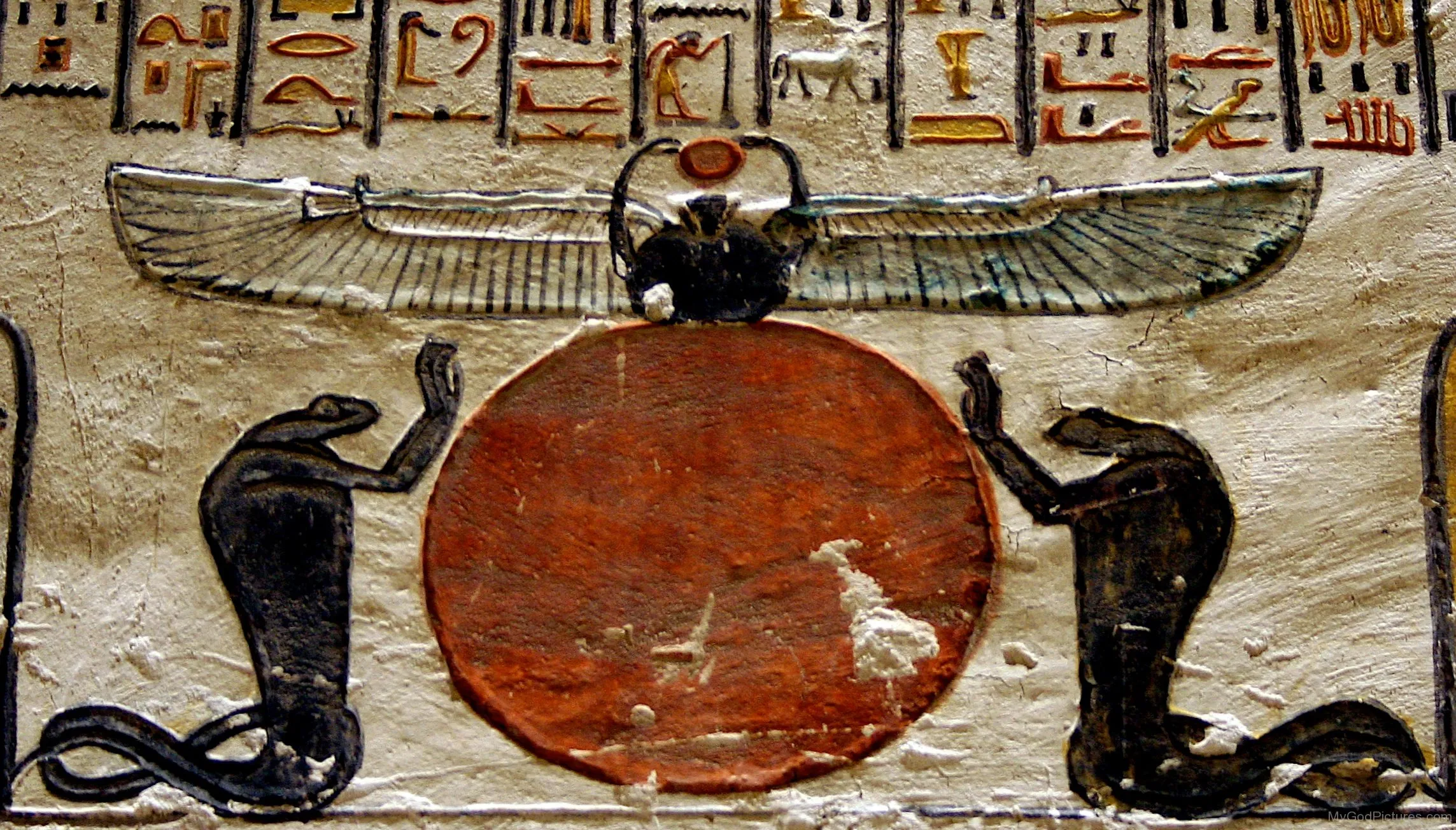
When we relate this idea of the vesica piscis with synchronicity, the dream realm (where past, present and future combine), and the manifestational birthing process of the psyche, it should be noted the origin of "synchronicity" itself. Carl Jung was running into difficulties while treating "a young woman of high education and serious demeanor." His attempts to soften her hard rationalistic shell were the only hope for the journey of psychological change she was after. "She always knew better about everything. her excellent education had equipped her with a weapon ideally suited to this purpose." Jung tried his best, but failed to sweeten her "impeccably geometrical idea of reality" with "a somewhat more human understanding," and was thus forced into a space that something "unexpected and irrational" would make way, something that would "burst the intellectual retort into something which she had sealed herself."
The woman Jung was working with went into relaying a dream she had the night before. Someone had given her a piece of jewelry, costly, in the shape of a golden-scarab. While she shared with the shrink, he began to hear a gentle tapping on the window behind himself. Turning around, Jung saw "a fairly large flying insect" that was making an effort to enter the dark room, repeatedly knocking itself into the glass(anybody in there?). Opening the window, Carl caught the creature as soon as it flew in. Holding a grand beetle, whose color reflected a gold-green, nearly the same as the golden piece of jewelry from his patients dream, he handed it over to her with the words "Here is your beetle."
Rest in peace to Dr. Robert J. Gilbert of the Vesica Institute. Lots of synchronicities led me to his work. Part of me thinks he faked his death and is living in a mountain.

The Vesica Piscis shows up in the famous Birth of Venus painting. You may recognize this from the popular Lil Peep song Kisses in the Wind

"Brother Klein then goes on to show how the Vesica Piscis was the true foundation of Gothic Architecture"

9.png)
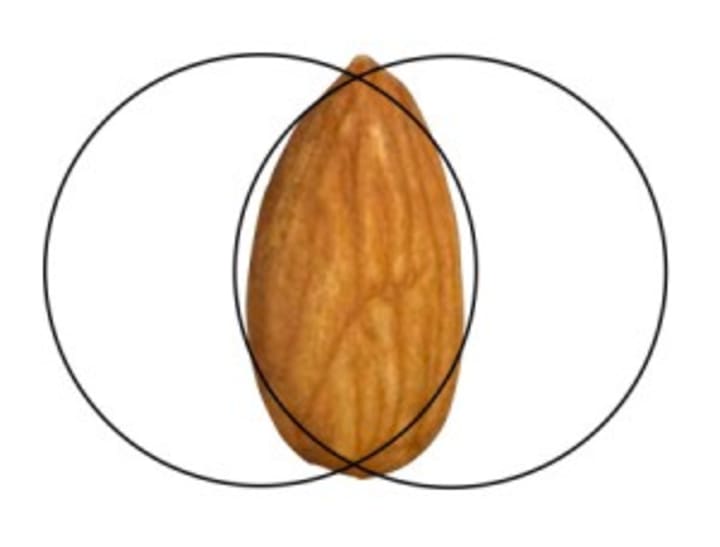
%20(1).jpg)
The man who painted this masterpiece
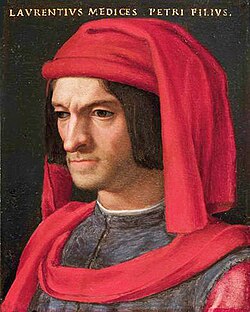

Aphrodite was so stunning that everyone in Olympus simply didn't know what to do with themselves. To ease quarrels, Zeus, who in some myths only performed this action after trying to 'get at her' himself(to put a potential rape nicely), married the beauty off to the ugliest guy in the city(to limit jealousy, in one version). The only problem here is that Aphrodite, the Goddess of love, she couldn't see past appearances, and was unable to fall for him. Heph's character wasn't exactly pretty though, in her defense. One of his main nicknames was Amphigyḗeis(Ἀμφιγυήεις), often translated as "the lame one," literally "lame on both sides." The Goddess had been escaping late at night with a more manly man, the god of war, Ares, whom captured her heart. She also had flings with Hermes, Dionysus, and Poseidon, as well as mortals like Anchises and Adonis.

Aphrodite + Ares; love and war, it was a perfect union. She was so enthralled, that when he cheated on her, she cursed the woman it was with, Eos, to be infinitely hypnotized with an unquenchable desire for handsome young (mortal) men. Like other major deities, Eos was immortal, possessing eternal youth and immunity to disease. Keep your eyes open fellas, but be careful, she would abduct these mortal men like the male gods would to female mortals, and in the situation with one of her favorites, Tithonus, it wasn't pretty. A trojan prince with an onus for (redacted), Eos enjoyed his company so much that she bartered with Zeus for his immortal status. He granted this, but she forgot to ask for eternal youth, leading Tithonus to age without dying for an eternity. He became a withered, babbling, probably difficult to look at figure, which eventually led Eos to transform him into a grasshopper. That's what you get for sleeping with Aphrodite's man. Well, not her actual husband. When Hephaestus caught on to the fact that Ares and his wife were getting down, he placed a trap. "Helios, the all seeing sun, was high overhead while Ares and Aphrodite spent a frantic afternoon rolling around the grass playing “hide the war god’s sausage.”" (I stole that line from a 2008 Wordpress blog). With new intel, Heph anticipated that their next arrangement would dive into all sorts of fishy behavior, and so he forges an inescapable golden net to capture Ares doing the breaststroke. Off to the store to get groceries, he proclaimed(a trip to Lemnos), enticing Aphrodite to take advantage of the empty home. Brolic battlefield boy, like the watchtower he was, saw that main man was gone, and begins to make a b-line to her abode. The two begin their bad behavior, nakedly, and the unbreakable, nearly invisible net(expert craftsmanship), falls down ensnaring them to the mattress. Hephaestus then comes home, "Aha gotcha b!#$%", and then makes a cry to Zeus and all the Olympians.

"the clavicle (collarbone) sits horizontally across the top of the rib cage"

“Father Zeus and you other sacred gods who live forever, come here, so you can see something disgusting and ridiculous— Aphrodite, Zeus’s daughter, scorns me and lusts after Ares, the destroyer, because he’s beautiful, with healthy limbs, while I was born deformed. I’m not to blame. My parents are! I wish they’d never had me! See how these two have gone to my own bed and are lying there, having sex together, while I look on in pain. But I don’t think they wish to lie like this for very long, no matter how much they may be in love. They’ll both soon lose the urge to stay in bed. But this binding snare will confine them here, until her father gives back all those presents, courting gifts I gave him for that shameless bitch— a lovely daughter but a sex-crazed wife.”
The Goddesses were too modest to show up and witness what had been captured, live, but some of the male gods did, and they didn't seem to have much empathy for the poor guy.
“Uncontrollable laughter broke out among the blessed gods”
— Odyssey § OD.8.326
"But lord Apollo, son of Zeus, questioned Hermes: “Hermes, son of Zeus, you messenger and giver of good things, how would you like to lie in bed by golden Aphrodite, even though a strong net tied you down?” The messenger god, killer of Argus, then said in his reply: ”Far-shooting lord Apollo, I wish there were three times as many nets, impossible to break, and all you gods were looking on, if I could like down there, alongside golden Aphrodite.
At Hermes’s words, laughter arose from the immortal deities."
You guys have to understand that Hephaestus had it really rough. There are two different tales which describe his origin. This abuse in the realm of relationship, both from Aphrodite, and his own carnality towards Athena, it all stems from childhood trauma. According to the popular Illiad of Homer, Hephaestus is the son of both Hera and Zeus. However, in the also popular Theogony of Hesiod, Hephaestus is a self-created product of Hera alone(sorta like the demiurge). In one myth, Hephaestus is born from Hera as a way for her to seek out revenge on Zeus for creating Athena without her(even though the ordeal was a total headache for him). However, in doing so, going forth to give birth out of self creation without her consort, the child came out misshapen and hideous. This adds another layer to the situation where he makes his move on Athena, as though it could have been the peak of a subtle aggression built from the fact that she was the reason he was born in the first place. Hephaestus was deformed and had numerous physical ailments, what the Greeks referred to as lameness. Disgusted with this child of hers, Hera threw it from the tops of Mount Olympus, where upon landing, in some myths, he gained these physical ailments, and in others, simply fell to the sea. From here, the baby was raised recued by sea goddesses Eurynome(perhaps a mermaid), and Thetis(the mother of Achilles), a sea nymph. It is a good thing they got ahold of Hephaestus when they did, because otherwise someone would have had a difficult time finding their fire.
When the Olympians fought the Titans, Prometheus and his brother(Epithemius), both titans themselves, decided to fight for the opposing Olympic team. Assisting a victory against their own kind, the two brothers were gifted by Zeus with the responsibility of creating all living things. Epimethius was going to distribute the gifts of the gods amongst these creatures, and he did, providing the ability of flight to some, swimming to others, and dexterity on land to a few.
While this was occurring, Prometheus was shaping the first human being .... out of mud. This sounds a lot like the Kabbalistic concept of the Golem, as-well as Genesis 2:4 "And the LORD God formed man of the dust of the ground, and breathed into his nostrils the breath of life; and man became a living soul." In the Quran man is fashioned from clay, as is the case with the Mesopotamian Epic of Gilgamesh, also the famous Sumerian Annunaki Enki story, and so too, the Egyptian creator god Khnum(known as the 'Divine Potter'). In Chinese mythology the goddess Nü-Wa created mankind from clay as-well. Fashioned after the gods, Zeus ordered that these mortal beings were to stay that way, to be subservient and dependent on them for protection, and provide worship toward the deities above(So God created man in his own image, in the image of God he created him - Genesis 1:27).
Prometheus didn't necessarily enjoy this limitation on his passion project, and he didn't seem to like Zeus's attitude towards humanity. In Hesiod's Theogony, we are given a story where Prometheus was tasked to help settle matters with some of the human's gifts in a tale called the "Trick at Mecone." Most perceive that humanity never had fire until the famous story where Prometheus stole it, but this tale seems to imply that humanity did indeed already have at-least some access to
Sacrificing and then splitting up an ox into two separate piles, Prometheus cleverly placed the worst of the animal's divisions, it's bones and whatnot, underneath a bunch of fat, what seemed to be concealing the best meat. In another pile, Prometheus places the succulent flesh and skin underneath what is the unappealing belly of the animal. When Zeus made his decision, selfishly picking the best pile for himself, of course, he fell right into the trap. This generated a tremendous amount of negative voltage in Zeus's thunderous thighs, and he decided to punish not only Prometheus, but also his creation. No more fire for the human beings, it was outlawed. They can't use it to cook food(like ox meat), keep warm at night, or see, etc. This was unacceptable to Pro- who fesses a denial of these orders. Scaling the walls of Olympus, he makes way towards the forge of Hephaestus(hasn't he had enough stolen from him </3). Do you have a light I can bum? Έχεις κάποιο φως που μπορώ να κάψω? Prometheus sparks his torch and then hid it in a stalk of fennel so that he could deliver these rays to his people in privacy. Acquiring conflagration gave them the power necessary to be able to dominate the natural order of things, being incredibly sufficient unto themselves. A warm night cozied up next to the fire was now possible, you could cook your food, but it also opened up avenues to other thing. Prometheus's fire spread like propane, acting as a major catalyst for rapid civilizational progression. Now was possible the forging of weapons for war. When Zeus looked down and saw what it was that had happened, he asked why the humans down in the town had fire?! Prometheus replied, "wouldn't you like to know weather boy," at which point, Zeus, he actually laughed a little bit, for just a second, but then he got back to feeling the sting of his pride and authority being undermined once again(by a Professional), deciding that he has had enough of this guy. Furiously, Zeus imposed a brutal punishment. From now on, for the rest of eternity, Pro (me) the us, was to be chained to a cliff. He had to commission the expert craftsman of the cosmos, Hephaestus, to bind him with not one, but two chains to hold him there(or so I assume).
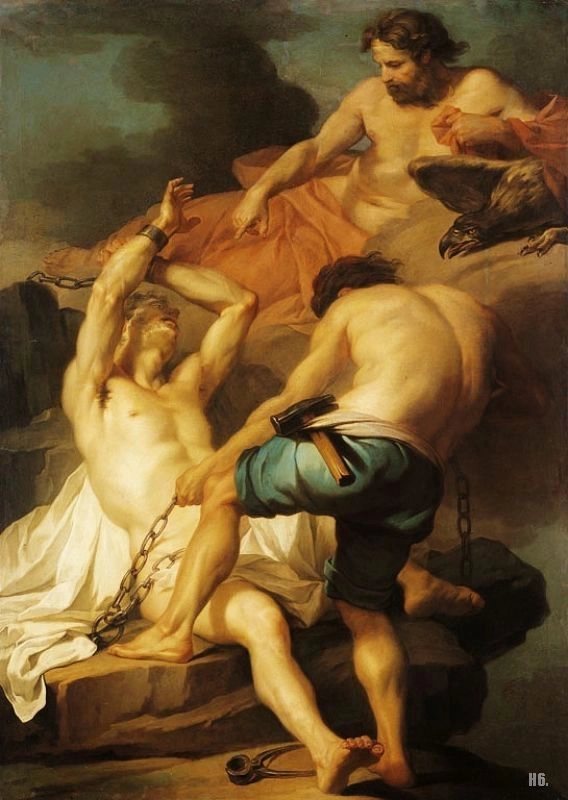
Vulcan Chaining Prometheus, by Jean Charles Frontier, 1744, via the National School of Fine Arts, Paris
There are many who draw parallels between the story of Prometheus, and that of Azazel from the Book of Enoch. In the same way that the fire which Prometheus brought to man was able to give them the ability to craft weaponry and wage war..
- "And Azâzêl taught men to make swords, and knives, and shields, and breastplates, and made known to them the metals 〈of the earth〉 and the art of working them, and bracelets, and ornaments, and the use of antimony, and the beautifying of the eyelids, and all kinds of costly stones, and all colouring tinctures. 2. And there arose much godlessness, and they committed fornication, and they were led astray, and became corrupt in all their ways."
And oh... don't forget, Azazel was also bound with (hand+foot), two chains...
from Enoch, Book 1, Chapter 10:4-7
"And again the Lord said to Raphael: 'Bind Azâzêl hand and foot, and cast him into the darkness: and make an opening in the desert, which is in Dûdâêl, and cast him therein. And place upon him rough and jagged rocks, and cover him with darkness, and let him abide there for ever, and cover his face that he may not see light. And on the day of the great judgement he shall be cast into the fire. And heal the earth which the angels have corrupted, and proclaim the healing of the earth, that they may heal the plague, and that all the children of men may not perish through all the secret things that the Watchers have disclosed and have taught their sons."
Now, yes, it is clear. I have purposefully selected this bible quote to fit my own narrative in a very specific way. The opening part of this chapter, 1-3 was just so dreary, I thought that maybe we could skip over it.
Then said the Most High, the Holy and Great One spake, and sent Uriel to the son of Lamech, and said to him: '〈Go to Noah〉 and tell him in my name "Hide thyself!" and reveal to him the end that is approaching: that the whole earth will be destroyed, and a deluge is about to come upon the whole earth, and will destroy all that is on it. And now instruct him that he may escape and his seed may be preserved for all the generations of the world.'
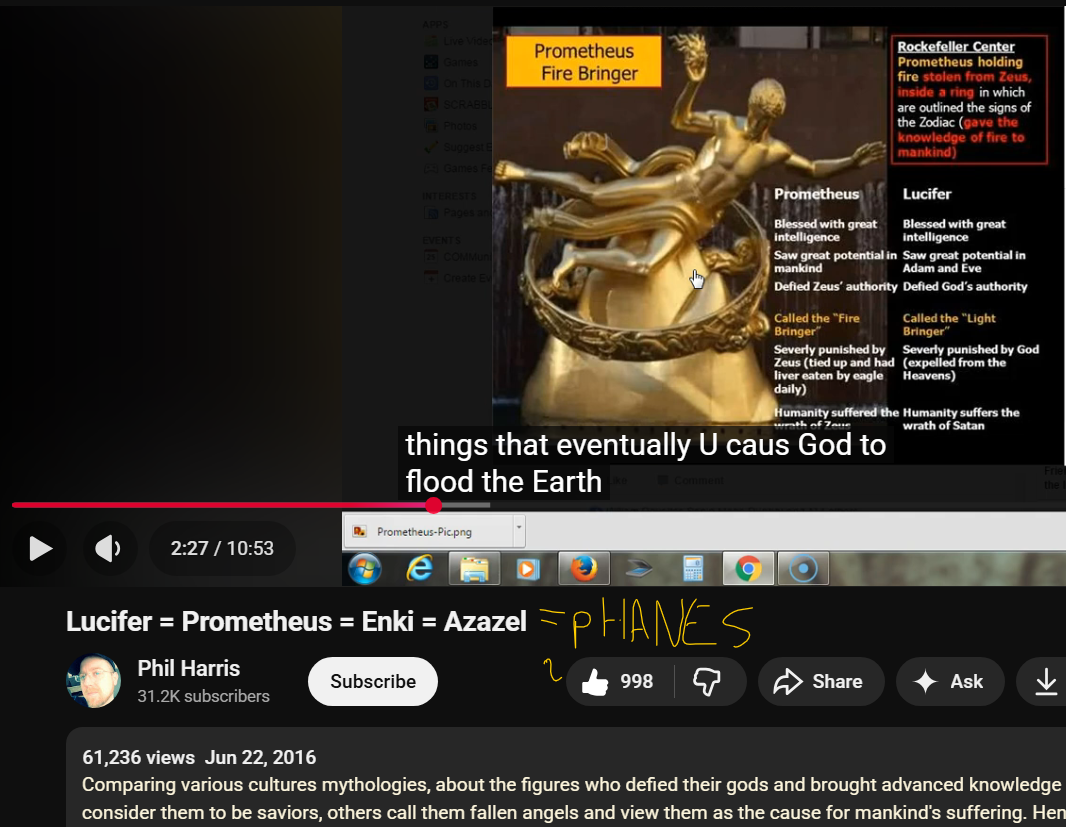
The mountain resort that Prometheus was given an all exclusive infinite stay at as part of his prize for choosing to be a decent a person, was, to put kindly, 1(morning) star. Every single day an eagle/roomcleaner, representative of Zeus, would come and bash their beak through his skin and tear apart their morning liver. The organ, able to self generate solutions to these intrusions quite quickly, was ripped to shreds on a routinely basis, in a manner akin to Frank Gallagher. For the Greeks, this was seen as the seat of the soul, of intelligence, and life itself. Due to the fact that his liver seems to heal itself every night, it becomes a learning example for the concept of immortality, a sick twist, an unlimited burden, where torment can become the only thing you know.
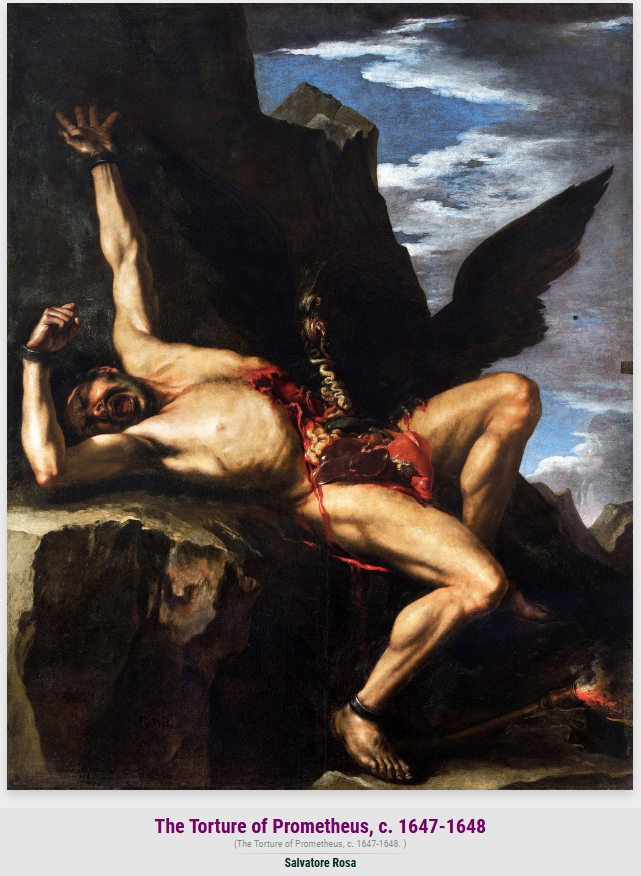
The two brothers
“Epimetheus”
(Ἐπιμηθεύς, translit. Epimētheús)
ἐπί- (epí-), meaning “after,”
μηθ-/μαθ- (mēth-/math-)
“afterthinking”
“Prometheus”
προ- (pro-), meaning “before,”
(Προμηθεύς, translit. Promētheús)
μηθ-/μαθ- (mēth-/math-)
“forethinking”
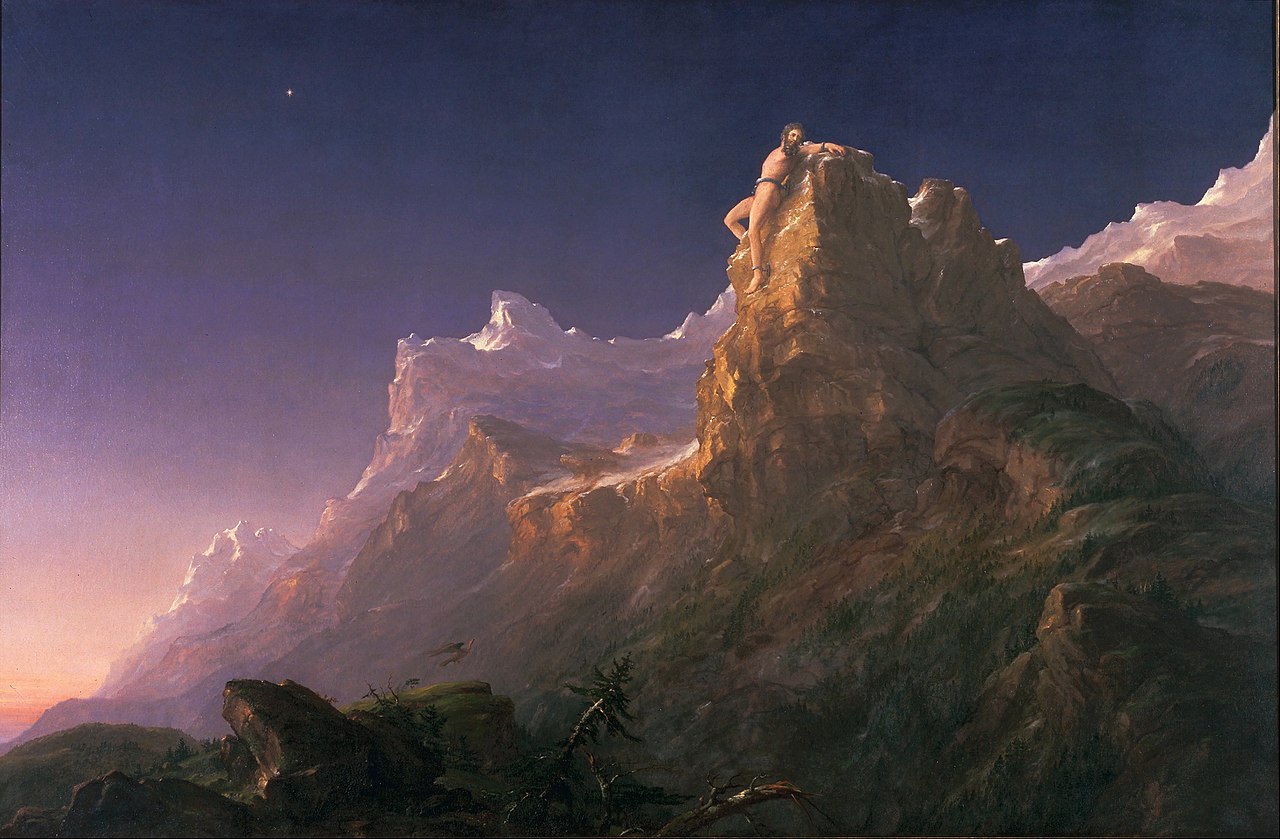
Prometheus Ьoᴜnd, Ƅy Thomas Cole, 1847, ʋia the Fine Arts Museums of San Francisco
18.10
Questioner
I see. The entity Aleister Crowley wrote, “Do what thou wilt is the whole of the law.” He was obviously in understanding, to some extent, of the Law of One. Where is this entity now?
Ra
I am Ra. This entity is within your inner planes. This entity is in an healing process.
18.11
Questioner
Did this entity, then, even though he intellectually understood the Law of One, misuse it and therefore have to go through this healing process?
Ra
I am Ra. This entity became, may we use the vibration sound complex, overstimulated with the true nature of things. This overstimulation resulted in behavior that was beyond the conscious control of the entity. The entity thus—in many attempts to go through the process of balancing, as we have described the various energy centers beginning with the red ray and moving upwards—became somewhat overly impressed, or caught up, in this process and became alienated from other-selves.
This entity was positive. However, its journey was difficult due to the inability to use, synthesize, and harmonize the understandings of the desires of self so that it might have shared, in full compassion, with other-selves. This entity thus became very unhealthy, as you may call it, in a spiritual complex manner, and it is necessary for those with this type of distortion towards inner pain to be nurtured in the inner planes until such an entity is capable of viewing the experiences again with the lack of distortion towards pain.
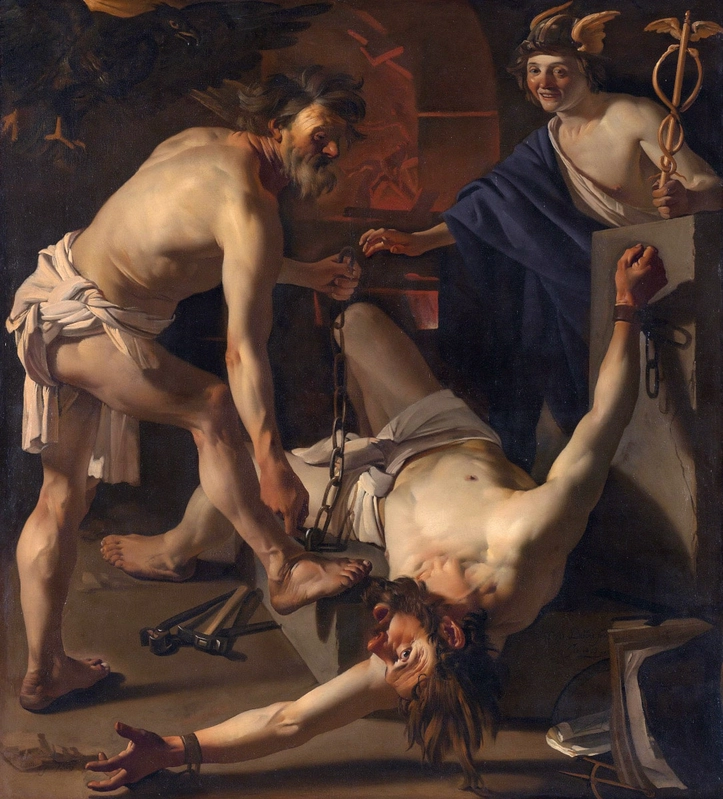
Prometheus Being Chained Ƅy Vulcan, 1623, Rijks Museum, Amsterdam
Prometheus and Epimetheus had two more brothers, one name Menoetius, and another, Atlas
Just to clear the air, Atlas, the Titan who was tasked with holding up the heavens on his shoulders as punishment for a rebellion against the Olympians, has nothing to do with Atlantis. Plato still however chose to use this as name for the king of Waterworld in his Critias. The oldest of 5 pairs of twin brothers, who were all kings of different regions, born from Poseidon, "The eldest was Atlas, and him he made king of the centre island."
I was however able to find a quote regarding a king that Plato never spoke of...
"When in 1873, I made the excavation of the ruins of Troy at Hissarlik and discovered in the Second City the famous 'Treasure of Priam,' I found among that treasure a peculiar bronze vase, of great size. Within it were several pieces of pottery, various small images of peculiar metal, coins of the same metal and objects made of fossilized bone. Some of these objects and the bronze vase were engraved with a sentence in Phoenician hieroglyphics. The sentence read 'From the King Chronos of Atlantis.'
HOW I FOUND THE LOST ATLANTIS, THE SOURCE OF ALL CIVILIZATION
by Dr. Paul Schliemann
The 2023 vision which crept into the minds eye of the individual whom is typing this seemed to posture the location of their body onto a mountaintop region. Some sort of elevated position. From this spot, what was observed down below was a great fire, the burning and collapse of something. I had somehow found myself separate from the whole occasion. There was an immense feeling of guilt and shame, as though I had done something wrong. The fact that I was not in the chaos below was because there was some sort of insider information that had allowed for me to escape the fate that lied waiting for the rest in great turbulence. There was also consideration that maybe I just felt a lot of sadness for what was occurring and labelled these emotions as my own guilt, creating a narrative from there. I let go of the less than favorable emotions experienced surrounding the catastrophe of this evening. If something had happened, maybe it was a legitimate tragedy, and worst case scenario, maybe I had something to do with it, but it was in the past, and here we are I guess in the modern day making amends.
Didn't know what to think of it much back then. At one point in the meditation, after being guilted for crimes against humanity, it said something along the lines of "You were the Christ." My brain took that and ran with it, conjuring up these sensation like I literally had gaps in the center of my hands where the nails would be. Was I Jesus, or tapping into Jesus's memory and being given a first person hand hole replay? Part of me thinks it would make sense for Jesus's life to be a grand cosmic reparation for deleting Atlantis. You break it you fix it. The actual message was likely referring to how before we were all born, we came from that same home, that same 'source' of love that Christ stood as a symbol and embodiment of. We all were 'Christ,' but have forgotten. It is a higher dimensional field of unlimited understanding, compassion, love, etc. Even if I destroyed Atlantis... to touch this realm for just one moment... it is now forgiven.
I decided to go through the Akashic Records retrieval once again this October. Starting the meditation, one of the first things heard was "You are now going before the Angel of Death." It sounded, the way things were framed, that I was being given the opportunity to choose whether or not to die right now and ascend to higher realities, or to continue living and ascend here. Holy smokes. What kind of suicide spirituality have I just walked into. Now I'm feeling like this is a battle for my life. On one hand, it was interesting, because by proclaiming that you don't want to disappear away in the ether, all the different parts of yourself that are maybe a little resistant to the day to day are suddenly revitalized with a piercing awareness - they ultimately wouldn't want things to actually end. It takes out some of the dramatics. Psychologically, I hypothesize it could operate as somewhat of a juxtaposition experience TRP (Tilling the Soil). This was intense, an all or nothing meditation with 432hz shamanic flute tones in the background to narrate things. Am I being initiated into Heaven's Gate? (founded in 1974)
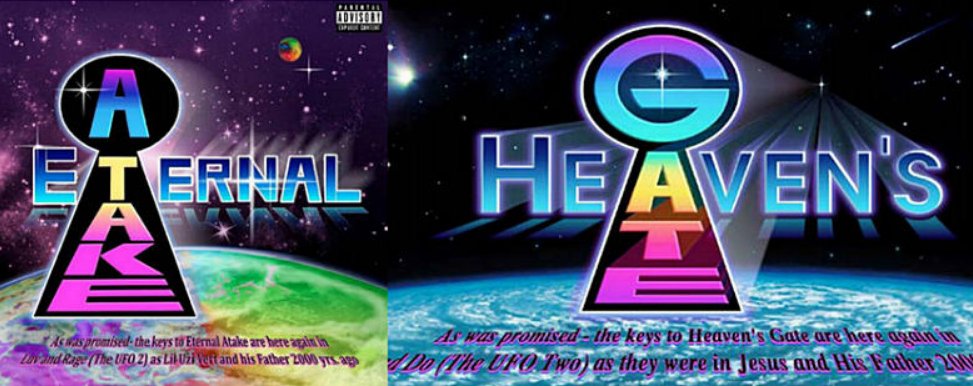
The masterclass progresses, and eventually we take a little journey into the past through the Akashic, venturing to Atlantis. I had a vision where I was in this room that was very powerful. It housed a generator of some sort, nuclear perhaps. It was glowing, and could have been the center of the city. There was this sense that I was somehow a 'higher up' here in this society, given the access to this room. Maybe an engineer. The next scene that came up for me was related to... what I believe to be my own wrongdoings. Maybe I was just observing some scenario that took place with others, but it was from the first person. Overwhelmed with temptation, it seemed that I had reached out and grabbed something that wasn't supposed to be messed with. Not sure what exactly it was that I did, perhaps this was all some metaphorical scenario, but someone reached in and touched the center of this thing.
The feeling that came over me at this point was that this had something to do with the fall of Atlantis. It was a full circle back to the original vision from years prior that inspired the idea that maybe I could have contributed to its downfall. Even further, now I remember having gone through this masterclass a few other times. This wasn't just the second rodeo, but was maybe a third, fourth (or fifth). Without any recollection of what was experienced during these, I do remember joking with someone about one particular experience. "Yeah I was the guy that caused the fall of Atlantis, sort of a troublemaker." The stuff that was coming up was so profoundly ridiculous, that it felt egotistical, and to avoid entertaining delusions, I just didn't take it seriously. "You were the King of Atlantis but failed and ruined everything." But what if I was, maybe not THE person to cause the fall of Atlantis, but did something that contributed to it? You hear that they fell due to greed and whatnot, technology becoming too advanced, even perhaps something to do with Ai. The memory was a perfect example of that uncontrollable greed emotion mixed with some sort of advanced technology.
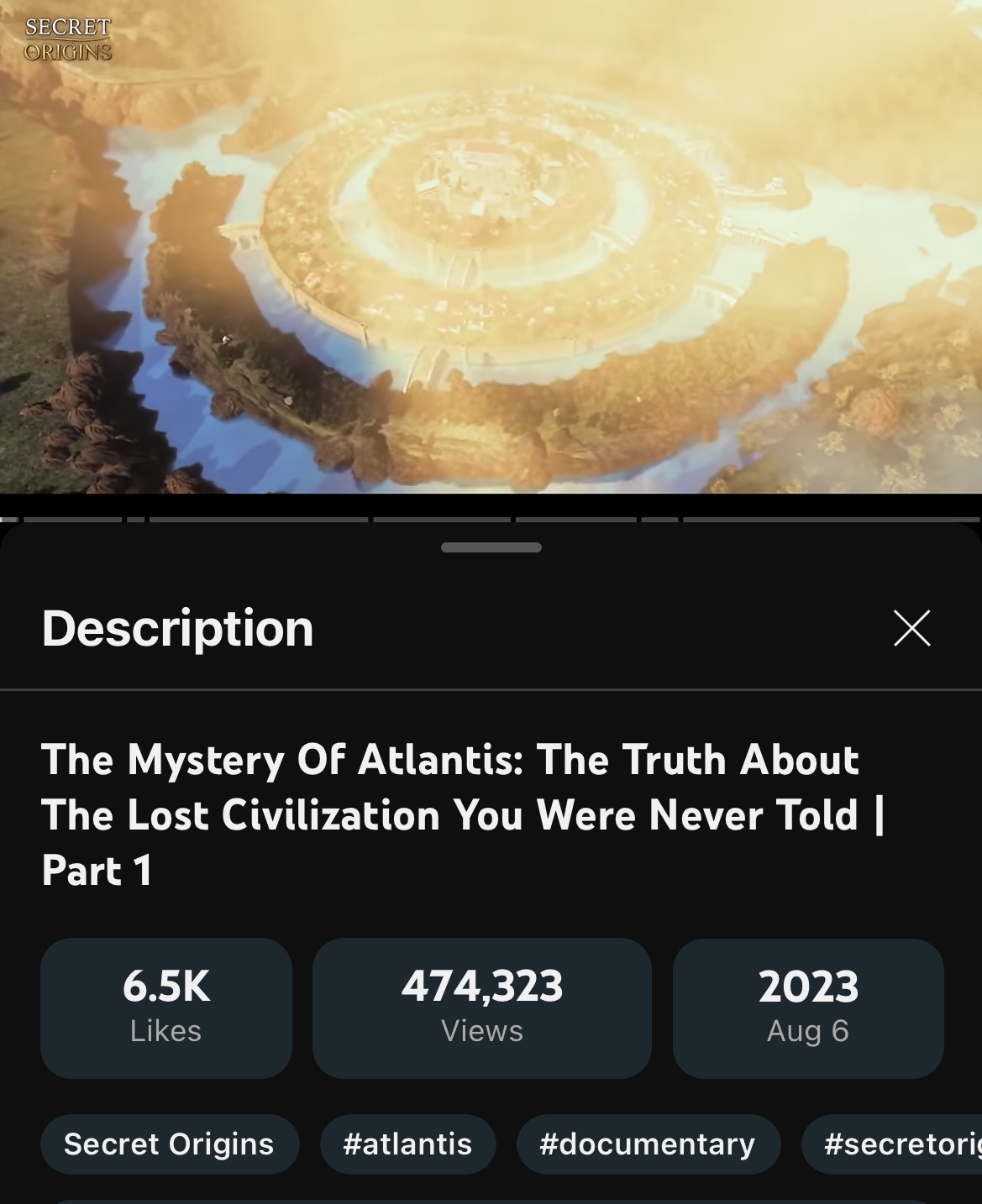
So ultimately, what I came to... was that...
My own moralistic failings helped in some way to contribute to the collapse of that prior civilization.
A burning catastrophe.
Can you believe that?
All these lifetimes,
are they perhaps a reparation for my past ill-deeds?
Or was I simply observing the elements which contributed to the fall of that society,
nothing to do with me?
So.... when it comes to the Atlas 3i thing ....
Am I Atlas ... opening his third eye?
Probably not.
Could I have been opening my 3rd eye... to Atlantis?
That's a possibility.
Less than 24 hours proceeding, I went outside and found a double rainbow(the second one was a bit faint). Briefly looking out the window on a trip to the bathroom, there was a bright orange sky. Going out to observe the beauty in the air, I looked to the right, and boom... there it was. Going back outside just 3 minutes later, it was all gone, present for just a brief period - barely caught.

My mother, perhaps Cleopatra, had a past life memory that she shared with me a while back. She used to be a health nut, vegan, living out in the forest with my brother when they were younger. At some point in time she had what was claimed to be a 'past life memory.' This is interesting in comparison to my own experiences with the masterclass. It was extremely similar to the story of Noah's ark. She was leading a trail of animals away from some sort of burning area. There wasn't a perfect 2 of each animal, there weren't much details, but all she remembered was leading a pack away from the destruction.

Looking through Manly P Hall's work titled "Atlantis and the Gods of Antiquity," I found an interesting quote that seemed to connect dots from both her memory and my own. Look, this is in no way some sort of scientific analysis of the past, I am not trying to claim any of this is true or not, but it's my own adventure down the storyline. I fully admit to being a pseudoscientific fraud with absolutely no base to my claims. First Manly P Hall quotes a bit from Helena Blavatsky, who summarizes the events of Atlantis as
"the Atlantis-race became a nation of wicked magicians. In consequence of this, war was declared, the story of which would be too long to narrate; its substance may be found in the disfigured allegories of the race of Cain, the giants, and that of Noah and his righteous family."
So essentially, she is claiming that this is where the story of Noah's Ark all came from. Interesting.
Manly then goes on to state
"Before Atlantis sank, its spiritually illumined Initiates, who realized that their land was doomed because it had departed from the Path of Light, withdrew from the ill-fated continent. Carrying with them the sacred and secret doctrine, these Atlanteans established themselves in Egypt, where they became its first 'divine' rulers. Nearly all the great cosmologic myths forming the foundation of the various sacred books of the world are based upon the Atlantean Mystery rituals."
So maybe being on a mountaintop looking over the destruction was actually because I could have been an old "spiritual initiate" and saw that this end was coming, along with a bunch of others. Perhaps my mother was in charge of escorting the animals. If we consider the idea that, the souls which lived through this period of Atlantis may still be alive today, all of us reincarnations from the past, could that not explain why we are, as a society, beginning to re-create a set of similar conditions to the past? Is that not how trauma works? Technology and being insane is what destroyed them.
"From the Atlanteans the world has received not only the heritage of arts and crafts, philosophies and sciences, ethics and religions, but also the heritage of hate, strife, and perversion. The Atlanteans instigated the first war; and it has been said that all subsequent wars were fought in a fruitless effort to justify the first one and right the wrong which it caused."
Atlantis and the Gods of Antiquity, Manly P. Hall, Page 35


1,198 deaths...
Exactly 110 years later, 40,177 days from the sinking of the Lusitania, Atlas 3i enters the Solar System...




As I unlocked this oceanic grief, becoming aware of how my actions in the past may have impacted, quite literally, through the impact of a powerful explosive, the lives of so many... I sat there in silence. How could I have assisted in that? This emotional current continued to wade into the next evening(perhaps a few days), as I went and observed how, even just the awareness of this new part of myself, as a deep water terrorist, caused for a ripple effect of aquatic mischief to be sent out into the field.

“DADZ LOVE” serves as the 13th track on Justin Bieber's seventh studio album, SWAG.
It features the artist Lil B, who is one of the individuals on this planet holding a very high level of swag. I wrote an extensive report on this for a class 9 years ago.
https://tan-lilah-17.tiiny.site/


.jpg)
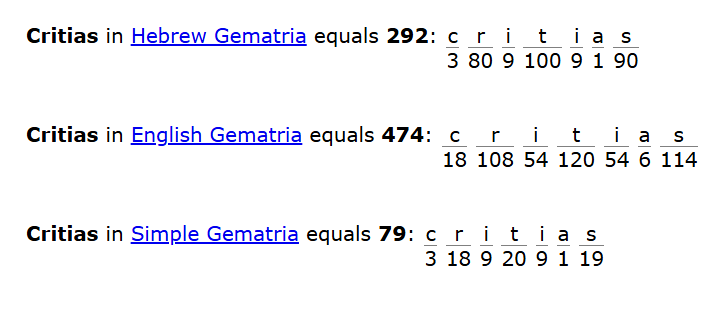
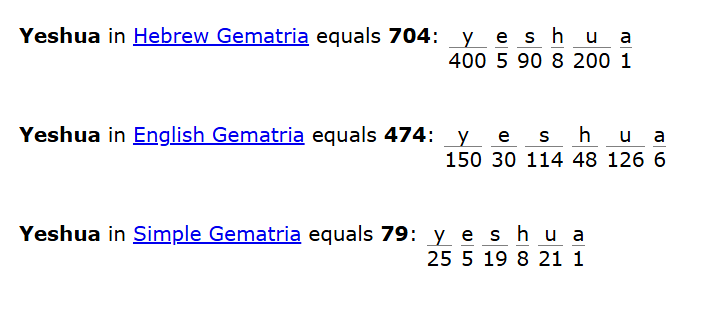
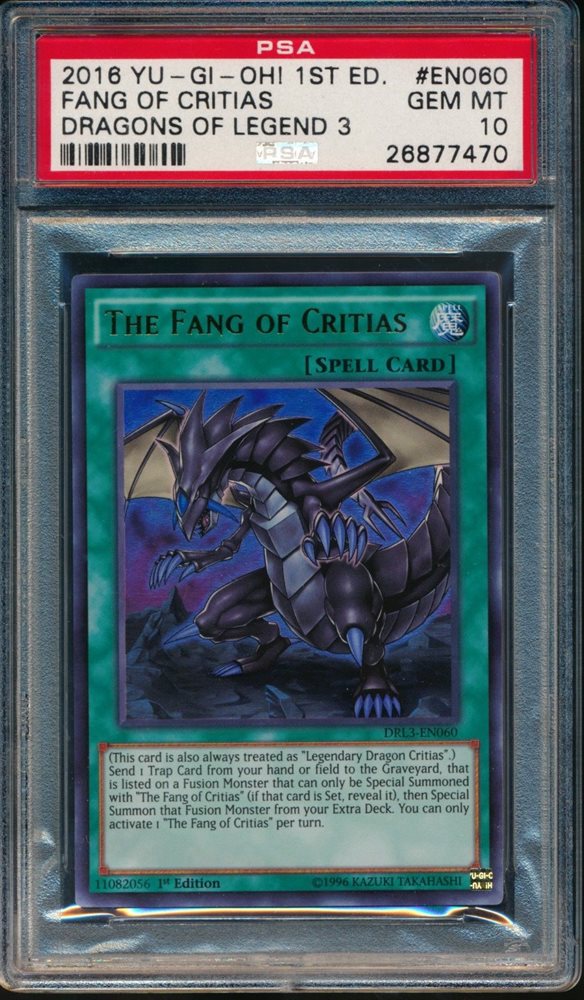

There seems to be an inspiration from these works of Plato that showed up in the Yu-Gi-Oh series as-well. The characters from his work on Atlantis all have equivalents - Timaeus, Critias, and instead of Hermocrates, it is Hermos. They are dragon-knights that have two forms. Firstly, their human knightly form, and then, of course, they also hold the capacity to amp things up and turn into dragons. They originally were minding their own business in the Spirit world... that is.... until Atlantis became corrupted by the Orichalos.
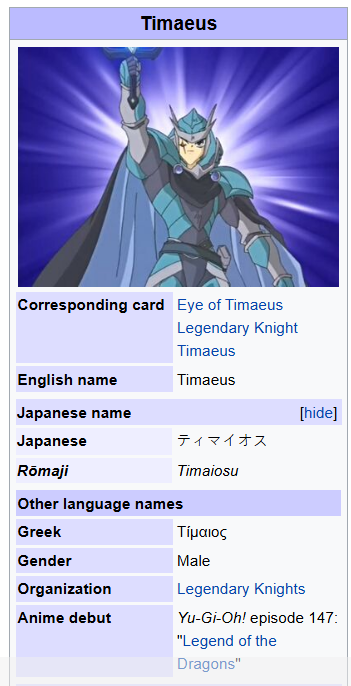
It starts out with a recapping of the previous seasons ending, Yugi Mutou emerging victorious in a tournament for the Battle City Championship Crown. Due to his successful endeavors, as prize, Yugi was given the rarest card from his opponents deck. This happened to be "The Winged Dragon of Ra," which gave him the full set of all 3 of the Egyptian God cards(in addition to Slifer the Sky Dragon and Obelisk the Tormentor).
At first he is not sure what to do with these, wondering how to use them to unlock the hidden powers of the Phaoroh (he is possessed by the spirit of an ancient Egyptian Pharaoh named Atem, which happens after Yugi solves the Millennium Puzzle in the first episode, creating a dual personality. Yami Yugi (Dark Yugi) takes over when Yugi is in danger or needs help with duels).
Next we are given a brief cutscene of a man entering into the depths of the ocean, being strongly advised to
"Stop your descent,
Repeat,
Stop your descent."
"Absolutely not. We may be on the verge of the greatest discovery man has ever known. We must continue"
He is informed that the water pressure at that depth is too dangerous, to which he replies
"This is my life's work, and I've come too far to turn back now. Over and out."
What is seen down there throws him into disbelief...
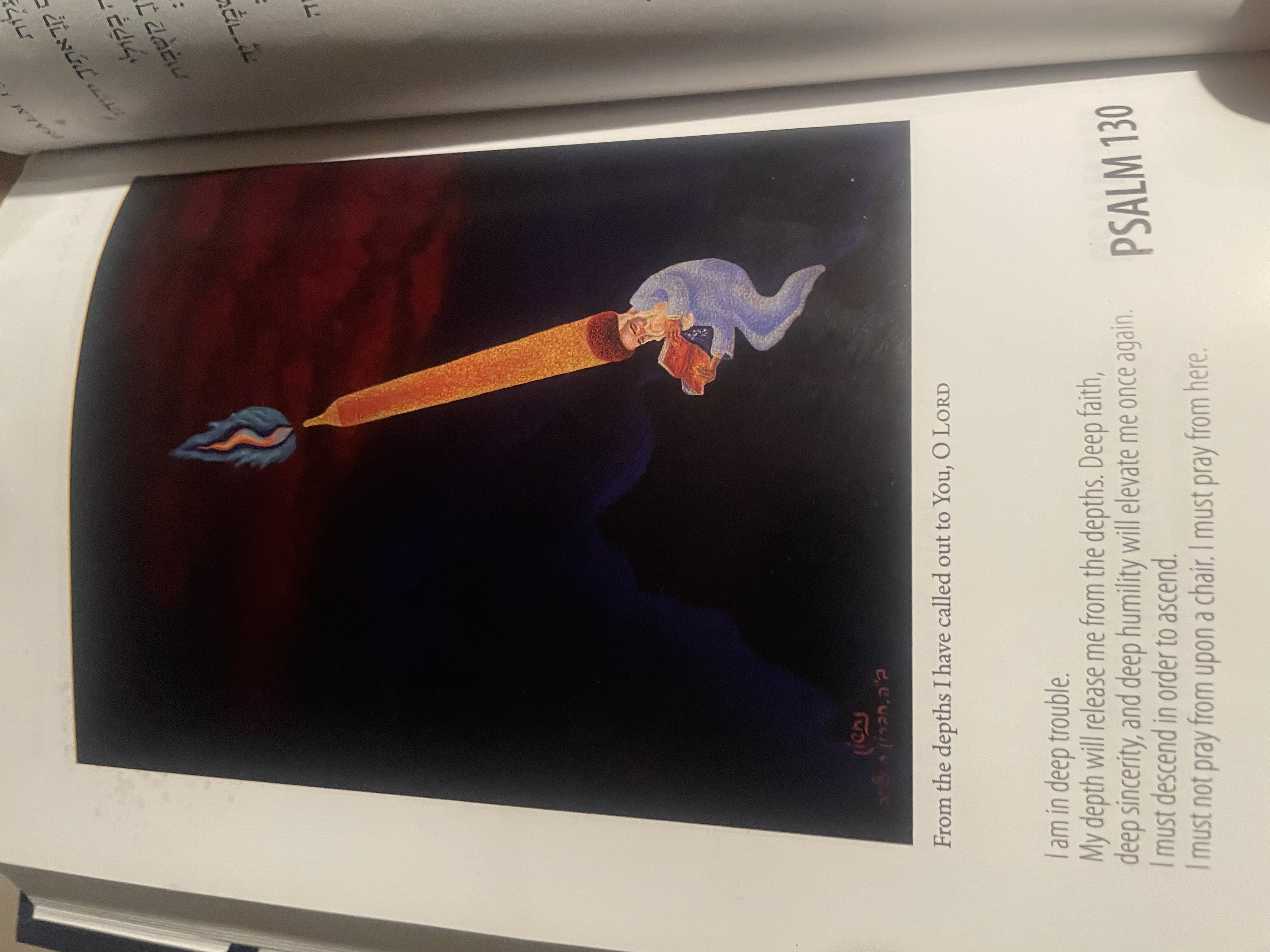
Back to the civilized world, a man on the TV gives report that
"Renowned scientist Arthur Hawkins has uncovered evidence of a 10,000-year-old lost civilization in the North Atlantic Ocean. These ruins are the oldest and best preserved man-made structures ever discovered."
Next we see two clumsy young duelists run into each other on the street, underneath the news reports flashing across billboards, recognizing one other immediately. Word must have gotten around town about Yugi's accomplishments.
"What brings you to town?"
"Uhhh the cheese festival."
In actuality
they were both on their way to challenge Yugi for his Egyptian God cards,
hiding true intentions.
"I'm just a fan of cheddar."
The quirky pair start racing one another down the sidewalk to go and try their luck for these Egyptian cards. Suddenly a mysterious man in a black cape appears, and the two whimsical characters run into someone on the sidewalk, again, but this time... it was together.


Rex Raptor: Ever hear of stepping aside?!
Weevil Underwood: Yeah! What's your problem?
Gurimo: The problem should be yours when I strip you two fools of your souls.
Rex Raptor: Does the Grim Reaper know you've raided his wardrobe?
Gurimo: [his eyes glow green, explaining the Orichalcos]

"I bid farewell to your soul"
Next we see Yugi getting taken over by Atem while still in school, helping him to skip algebra class. He had come to a sudden insight. Wait! The museum... The deity begins to navigate his occupied vessel there, the completed trio calling him to the location. Atem believed it to hold the secret to unlocking his lost memories, and powers once possessed. Mysteries of the days as pharaoh will soon be clear. Before reaching the destination, there is a brief cutscene of a another magician casting some sort of black magic spell before the focus comes onto what YuGi was trekking towards.
"Great deities of domination, I call upon thee.
Use the Pharoah's force to penetrate the dominion of the beasts..."

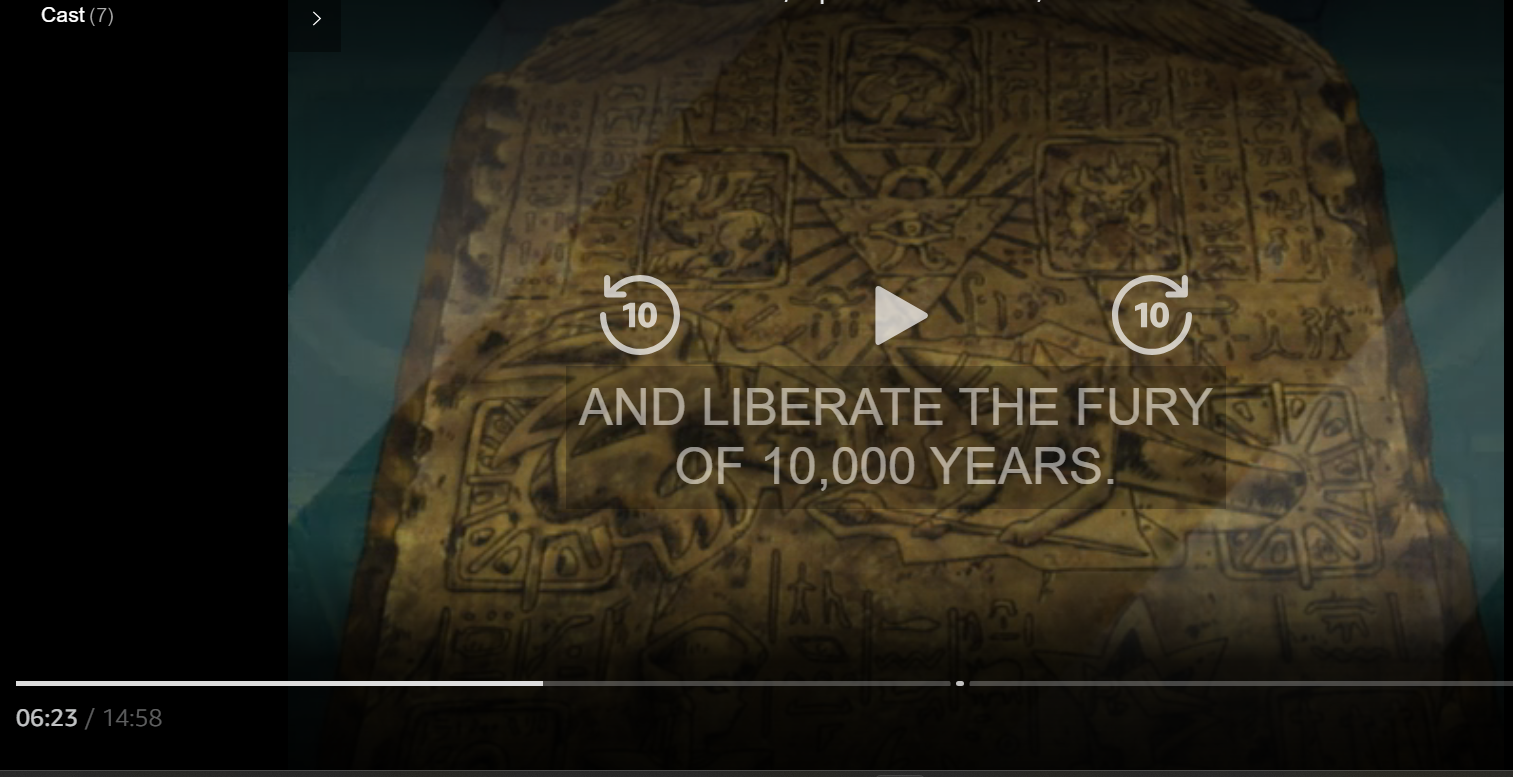
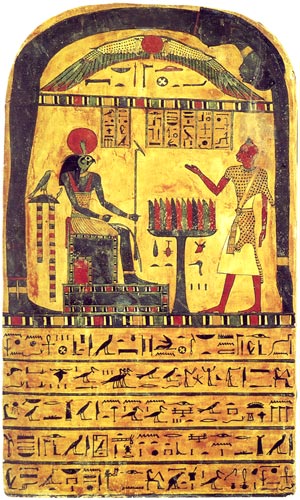
The famous Stele of Ankh-ef-en-Khonsu associated with Aleister
Yugi proceeds to get electrocuted and monsters appear all over the city

Running out of the museum, the two who 'bid farewell' to their souls earlier were found by Yugi and his team


Later Yugi's 3 Egyptian cards are stolen by the mysterious man in a black cape, along with two of his fellow henchman(one named Alister). After meeting one another on a rooftop, they enter into battle, where we see a unique card that is played,
(you can steal your opponents soul)
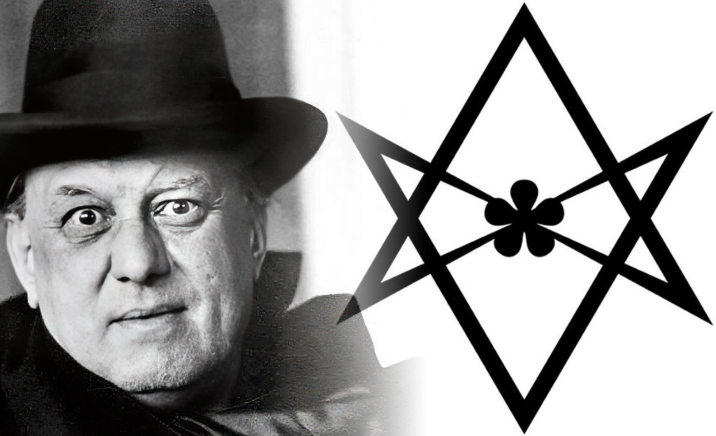
Aleister's Thelema hexagram
The Seal of Orichalcos, with Enochain runes surrounding it saying "Oreichalcos" twice.
In the Japanese anime, the text on all "Orichalcos" cards are written entirely in Enochian , except for "Orichalcos Sword of Sealing"
There is this guy named Dartz...
He's a bit of a trouble maker.
Quite the villain.
Older than the Atem-Phaoroh that was locked away in Yugi's puzzle that grants him his abilities.
This ancient god is dated to be 3,000 years old in the original, and 5,000 years in the English dub.
Dartz on the other hand...
he's been roaming the Earth for 10,000 years.
Name another villain that has had such of a head start.
Centuries to perfect an evil agenda...




Dartz comes from a dark background. When we look at his origin story, we can see why he had this motive for world domination. He inherited the throne of Atlantis, the great lost city, from his father Iron Heart. One day, Atlantis had a hailstorm of ‘Orichalcos’ stones, which corrupted the city as they fed on their own greed. Dartz even watches his own wife turn into a monster in front of his own eyes. In turmoil, he turned to the Orichalcos for answers, believing it held the power to cleanse the world of its growing sin. The stone’s dark will consumed him, convincing him that humanity was beyond redemption. From that moment, Dartz devoted himself to awakening the Great Leviathan, intending to purge the Earth and build a new, perfect world from its ashes.
“The people of Atlantis were evil, and I have been chosen to wipe them out and start over again”
Being the chosen host for the Orichalcos, he was granted great power(and no responsibility). There were some powerful perks to the position. Dartz was gifted an army by the Orichalcos, souls that could spawn and despawn at his will. He had the ability brainwash others and manipulate their bending to his will. Dartz could also alter the weather and conjure storms, having powers over the elements themselves. In addition, Dartz was able to communicate with people telepathically, even showing visions of the past. Conjure swords out of thin air? No problem. The list goes on and on, he pretty much had the world at his fingertips, it seemed he could do anything. All of these abilities were incredibly powerful, sourced by the Orichalcos.
In the "world of Atlantis" (from Plato's narrative), orichalcum is a precious reddish metal, second only to gold. It was found and mined in many parts of this forgotten civilization during ancient times. The name orichalucum derives from the Greek word oreikhalkos, meaning "mountain copper" or "copper mountain."
In his accounts, Plato wrote that the three outer walls of the Temple to Poseidon and Cleito (in Atlantis) were encased, respectively, with brass, tin, and a third material, which encompassed the entirety of the citadel, "flashed with the red light of orichalcum." There is claim that the floors of this temple, its pillars and interior walls, were all completely covered by the material. The roof was a combination of gold, silver, and orichalcum. The center of the establishment hailed a pillar of orichalcum, on which, the laws of Poseidon, and the records of the first son-princes of Poseidon, were all inscribed. For centuries, still, today, experts have debated the metal’s composition and origin. Some scholars suggest that orichalcum is a brass-like alloy, but ultimately, nobody really knows.
The substance is mentioned briefly in just a few other places in history. From the works of Joseph Flavius, in The Antiquities of the Jews, section 8.88 states, referring to King Solomon and the construction of his temple...
"He also made a brazen altar, whose length was twenty cubits, and its breadth the same, and its height ten, for the burnt-offerings. He also made all its vessels of brass, the pots, and the shovels, and the basons; and besides these, the snuffers and the tongs, and all its other vessels, he made of brass, and such brass as was in splendor and beauty like gold."
https://lexundria.com/j_aj/8.88/wst
"in splendor and beauty like gold"
(en aiglē kai kallei chrysō)
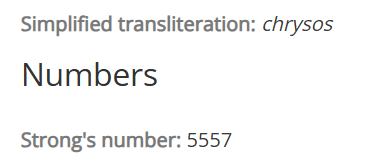
It also believe that in Vergil's Aeneid, it was mentioned that "Turnus drew a breastplate, stiff with gold and pale bronze," which people consider to be a reference to orichalcum.
The area of Bulala is located on the East side of the ancient Greek town of Gela, in Sicily, Italy, on the left bank of the homonymous river(flowing along the wide fertile plain). This is the location where, in 2014, we finally struck orichalcum - found by a local diver Francesco Cassarino. His endeavors resulted in the discovery of 39 bars of ore, which, perceived to be the legendary material, were found under the sea. Oooooohhhhhhh.... are you ready kids? Who found 47 ingots of orichalcum during dives and further surveys in that same location just two years later? (Soprintendenza del Mare research team). Exactly 47 bars were found, supposedly just somewhere around 10 meters from the original location, of what is mostly a copper and zinc mixture, along with some other elements intertwined, a scattering of nickel, lead and iron. This was a doubling of the material available for them to research and analyze, to come to a conclusion about what it really was. The analytical results of the chemometrics obtained on both sets confirms their similarity and is reason they are considered to be of potentially the same naval load. It was all discovered around a ship that had sunk probably somewhere around 2,600 years ago, what they think to be perhaps resultant of a storm that caught sailors in southern Sicily sideways while they were sliding into the city, at-least, says Sebastiano Tusa, archaeologist from Sicily's Superintendency of the sea. Two more archaic shipwrecks have been found in the same area, but this was the biggest Orichalcum haul ever discovered, and final, definitive evidence to many...... that Orichalcum was real. Others however, claim there is zero evidence that these ingots would have been identified as orichalcum by their producers or consumers(no red glow, its just brass, bro).
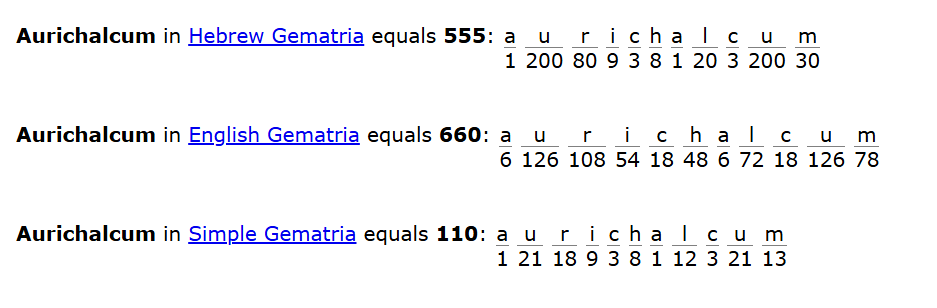
There are only 4 remaining books that survived the Mayan civilization, what spanned across thousands (really, that many?) of cities, over centuries of development. Just 4. They are all named after the locations they have now found themselves in. You have The Madrid Codex, The Berlin Codex, The Paris Codex, and of course, the only one still in its region of origin, the CMM.

The Mayans had an incredibly complex calendrical system, quite impressive really, if you think about how they had the world 1,000+ years later under the assumption that, based off its trailing ellipse, 2012, that must be where it all stops. The Maya Codex of Mexico (MCM), is the oldest surviving book of the Americas - North, South, and Central, outlining some of the elements of this system, especially in its relation to Venus. This was especially important in connection to their 260 day calendar. Their 365 day and 260 day calendar shared interlocking dates every 52 years, a time of extreme anxiety, which called for a special fire ceremony. Every flame in the city was extinguished, and cult statues were destroyed before they could turn on their once worshippers. "Pregnant women were locked in granaries and their faces were painted blue in the belief that they would not then turn into monsters during the night." A captive warrior would be set on fire after they cut out his heart, while alive, drilling out his empty chest cavity, on a hilltop, at midnight, on the overlapping dates. If this was successful, that fire would then be used to reignite the city. If it wasn't, the sun itself was at risk of being attacked by rampaging star demons, or worse, they expected the stars to become monsters that would descend and devour humanity (Tzitzimime for the Aztecs which had a very similar 52 year routine, in-fact, they are more known for it).
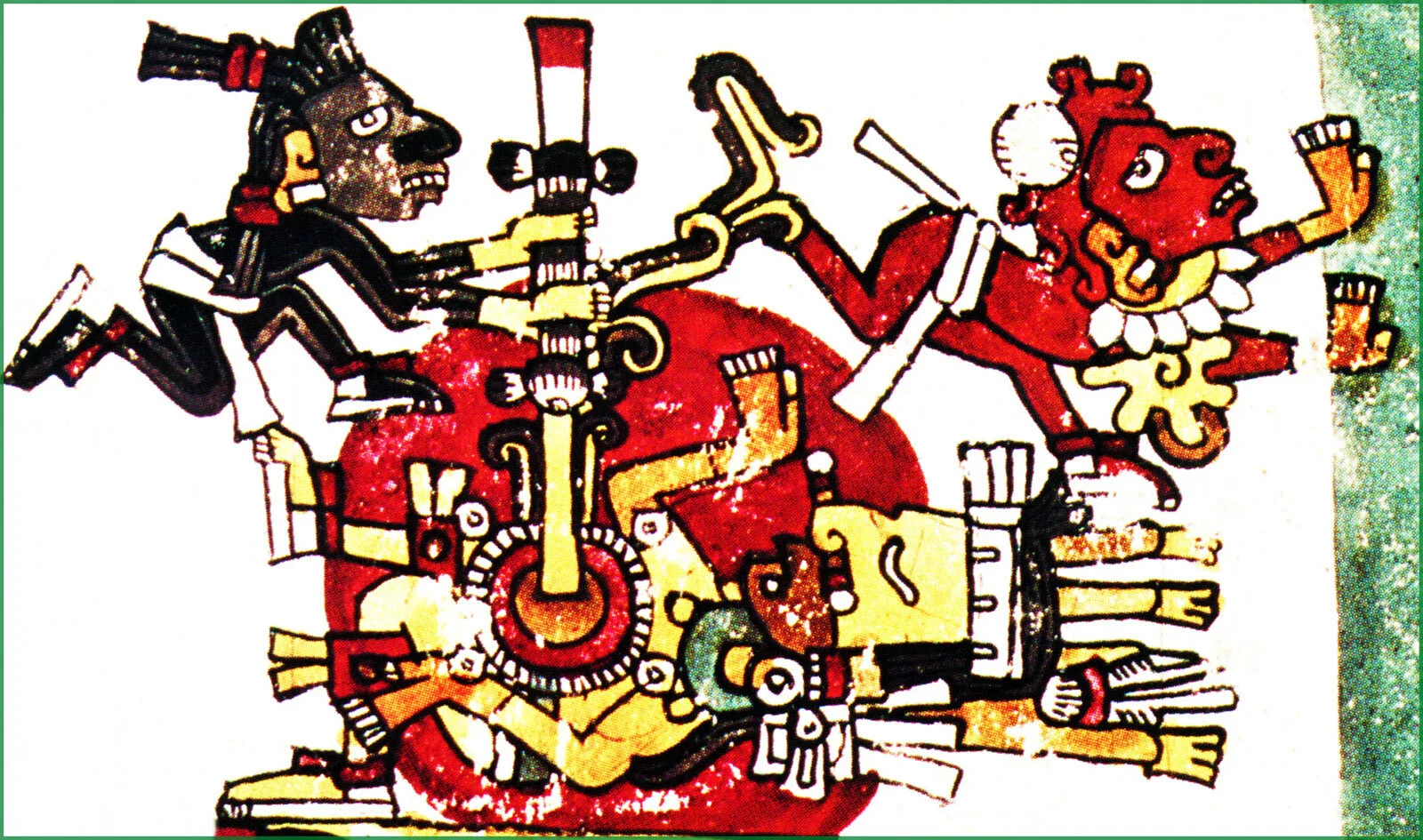
Unfortunately it was officially renamed the Codice Maya de Mexico (CMM) in 2018 by the National Institute of Anthropology and History of Mexico, a bit of a codex block for someone like myself, who was looking to disperse the MCM TLA (three letter acronym) as many times as I possibly could within these writings in order to inspire all the radiant divine women reading this to perhaps position myself as their Man Crush Monday. Each week could have started out so wonderfully....
Every culture, at-least the ones we know about, the ones that left a mark, develops some means by which to count, calculate, and track the passage of time through an observation of astronomical bodies. We've got lunar calendars over here, solar calendars over there, lunar-solar collaborations in other places. The Mayans were able to recognize that the movements and positions of celestial objects did have some kind of a direct influence upon terrestrial events, what many through history in other places noted as-well. This is why they kept a close eye on, and had an entire system designed to specifically track Venus, seen as a harbinger of chaos, famine, pestilence, and evil. The CMM is ultimately a set of calculations tracking the specifically dangerous days in their 260 day calendar in relation to Venus, a dangerous planet.

Given Venus's orbit around the sun, a 225 day occasion, and the planets position in relation to the ball of fire, it never appears to stray too far. For the Mayans, Venus appeared 236 Earth days as the Morning Star - rising prior to the sun. It then plays its 'superior conjunction invisibility' card, which means that the visual line between the Earth and Venus is blocked due to its passing behind the sun for 90 days. Venus then re-appears as the evening star, to even things out, chasing the sun across the sky at sunset (for 250 days), before the bright luminous sphere hides once again for 8 days, in what is termed "inferior conjunction," passing between Earth and the Sun directly, who's fluorescence makes it too bright to see. The start of any 4 of these phases was of "extreme dread" for whoever authored the CMM. Like all calendars, these numbers are not necessarily exact - at least for the 4 phases outlined. Their total, however, was quite close, with our modernly calculated 583.92 orbital period, they were less than two hours off (according to Nat Geo) at an approximate 584 days. No telescopes. No calculators. Stones and sticks.
The actual, what is termed a "synodic period" for Venus, consists of 263 days of rise and fall as the Morning Star, before disappearing for 50 days, and re-emerging for another 263 days as the evening star, then to an absence of 8 days. It just so happens that the Venetian Solar Year is about 224.7 Earth Days (~7.4 months), which calculates out to a nearly perfect 8:13 ratio, meaning that the Earth circles 8 times for every 13 orbits of Venus. The path that Venus makes when viewed geocentrically in relation to Earth draws what seems to look like a flower(over 5 synodic periods), shifting 144degrees with each petal portrayed, leaving behind a beautiful pentagram. Each cycle is one of the "5 petals of Venus."
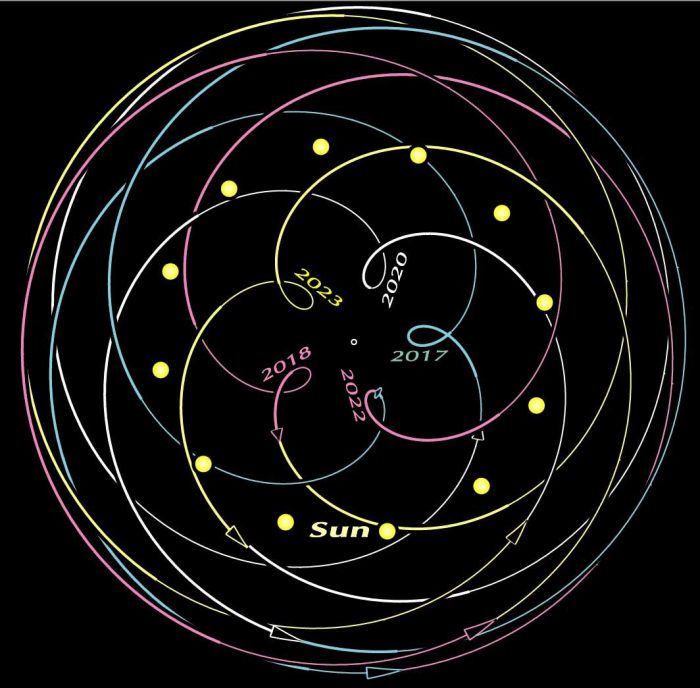
The surface pressure of Venus is approximately 93 bars. 1 bar is slightly less than Earths surface pressure(1.013 bars), a unit found by calculating the Earths atmospheric pressure at an altitude of 111 meters and 15° Celsius(59° Fahrenheit), which means that it is similar to what you might experience 930 meters below the sea. The first interplanetary impactor, Venera 4(which sent back measurements every 48 seconds for 100 minutes), reached Venus in 1967, followed by the lander Venera 7 in 1970. Both of these were Soviet missions. The Venera 7 unfortunately faced a parachute malfunction during its descent. Recording a bit of information on the way down, it seemingly went dead after a harsh landing. However, a few weeks later, upon further analysis, it was found that, to their surprise - it survived. Transmitting an extremely weak signal, less than 1% of its normal intensity, the Venera was able to relay a beam back to the boys of Mother Russia for 23 minutes before winking out. This technically means that its descent was successful, making it mankind's first ever, if just barely, 'soft-landing' on another planet. What was recorded during these 23 minutes was shocking. The planet was HOT, wielding a mind-boggling 887° Fahrenheit temperature, what equals out to 475° Celsius.

Unlike in Western Astrology, which sticks with a 1:1 God:Planet assignment, and related Venus to the God of Love - the Mesoamerican astrological system allowed for planets to be associated with (or manifest as) a range of deities. In the case of Venus, all of them were fearsome "harbingers of doom." One which we see is the long snouted, serpent footed (on one leg) deity Ka'wiil, also known as God K. This is a creator God usually seen with a torch, stone celt, or cigar - normally with emitting smoke coming out of his forehead. The serpent leg represented his lightning bolt, and, it seems the God had an accentuated serpent tooth as-well. The numeral nine appears all over symbols for the God, connecting to it in some way, what brings to my mind at-least, the extreterrestrial "council of nine," or the great white brotherhood, the Egpytian Ennead, etc.

This guy is found on pages 1 and 4, the others, even scholars have a hard time discerning. However, the skeletal deity seen elsewhere is likely the Mayan God of Death, Kimi, or Cizin (the 'stinking one,' from the root ciz, 'flatulence.') This figure is often associated with the Central Mexican Venetian war and death deity, Tlahuizcalpantecuhtlil (Dawn Lord, or, Lord of the Dawn of the Star, 7 syllables we are all likely to mispronounce). He was known for causing harm to people by shooting darts, after spending 4 days making them in the underworld. What else would you do to pass the time after dying as evening star, while waiting for resurrection into morning?Depictions here do seem to show venetian deities shooting darts into water sources and temples... so ... likely him. This figure, for the Aztecs, was a dual deity - a manifestation of Quetzacoatl (the morning star) and Xolotl, his twin brother, the evening one. Xolotl was a god of fire, lightning, twins, deformities, misfortune, death, and sickness. Sort of the dark personification of Venus, who lead the dead to the afterlife, he is, still, however, associated with heavenly fire, as-well as this critically endangered salamander(please spread the word).
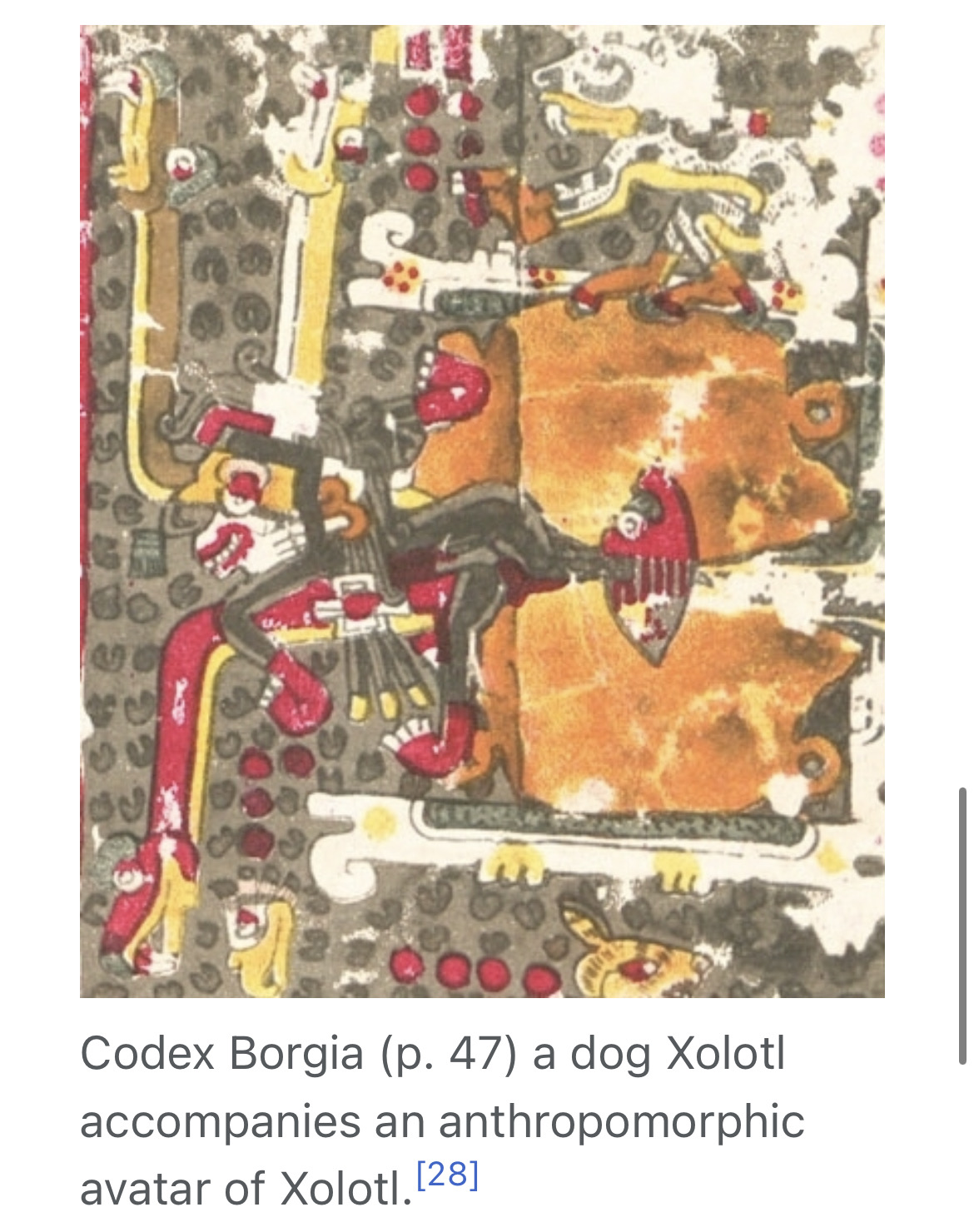

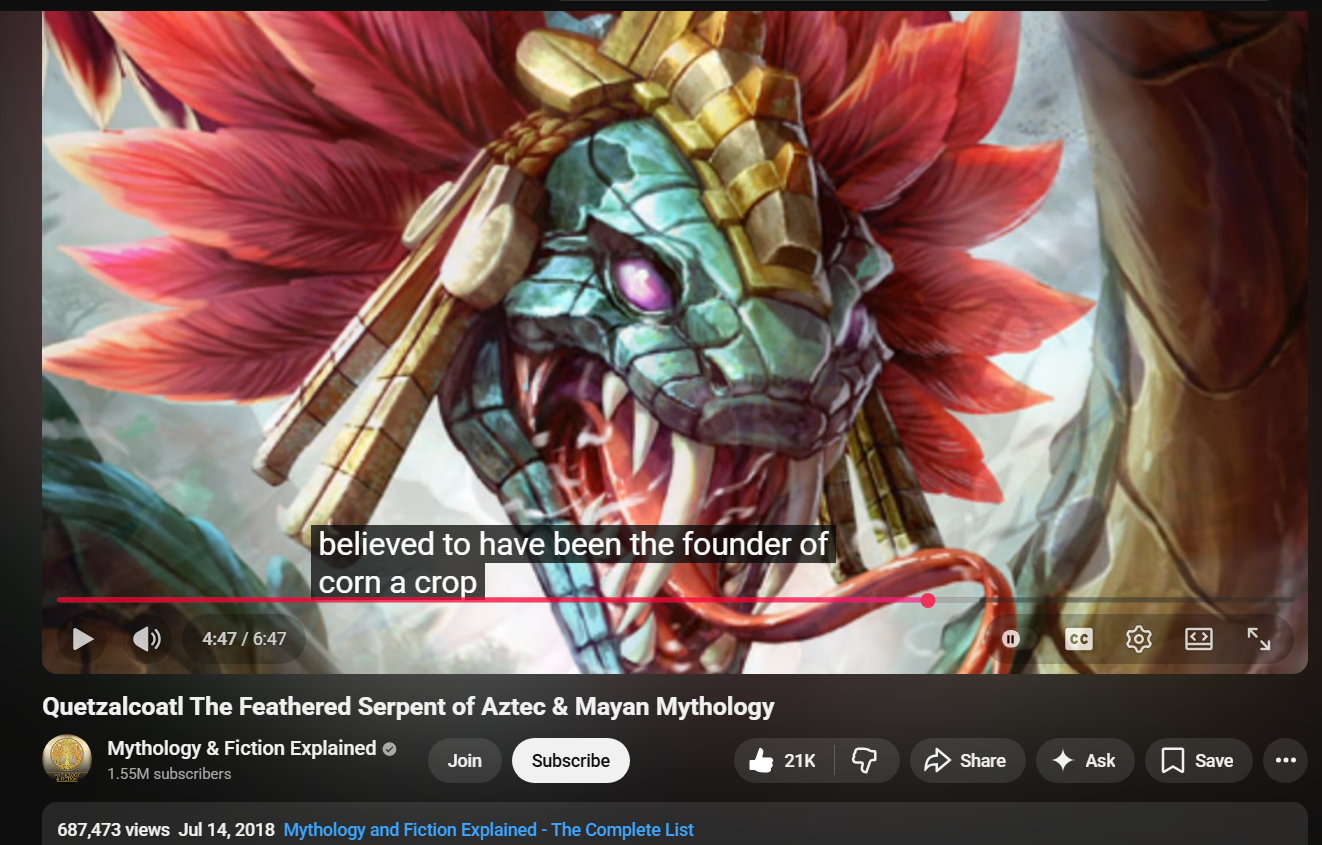
Equivalent to the Kukulkan of Maya
Quetzacoatl on the other hand, the "flying serpent," or "sacred serpent," was associated with wind, merchants, arts, crafts, wisdom, knowledge, learning, self reflection, and intelligence. Coming from the Nahual language, the word means "Precious serpent," or "Quetzal-feathered Serpent." Fernando de Alva Cortés Ixtlilxóchitl, who died in 1648, said that "Quetzalcoatl, in its literal sense, means 'serpent of precious feathers' but in the allegorical sense, 'wisest of men'." In various myths, Quetzalcoatl was born by a virgin named Chimalman. He was known as the inventor of books. He may have been involved with the calendar. He was the giver of maize (corn) to mankind(bread of life). Sometimes the figure was also a symbol of death and resurrection. In one myth, similar to the story of Jesus, he descends into the Land of the Dead, the underworld, Mictlán, to rescue the precious bones of a former humanity and bring them back to life. This story appears in the post-conquest Leyenda de los Soles (Legend of the Suns). The humans whose bones Quetzalcoatl was after were destroyed in the annihilation of the earlier sun, described as wiped out by a flood that drowned humanity. After tricks and trials, he escapes with the bones, but they are broken when he falls into a pit, explaining why humans come in different sizes. Traveling back to the world of the gods, the bones are ground like maize into a kind of sacred flour. Quetzalcoatl then sprinkles or pours his own blood onto this ground bone, and the mixture becomes living humans of the Fifth Sun.
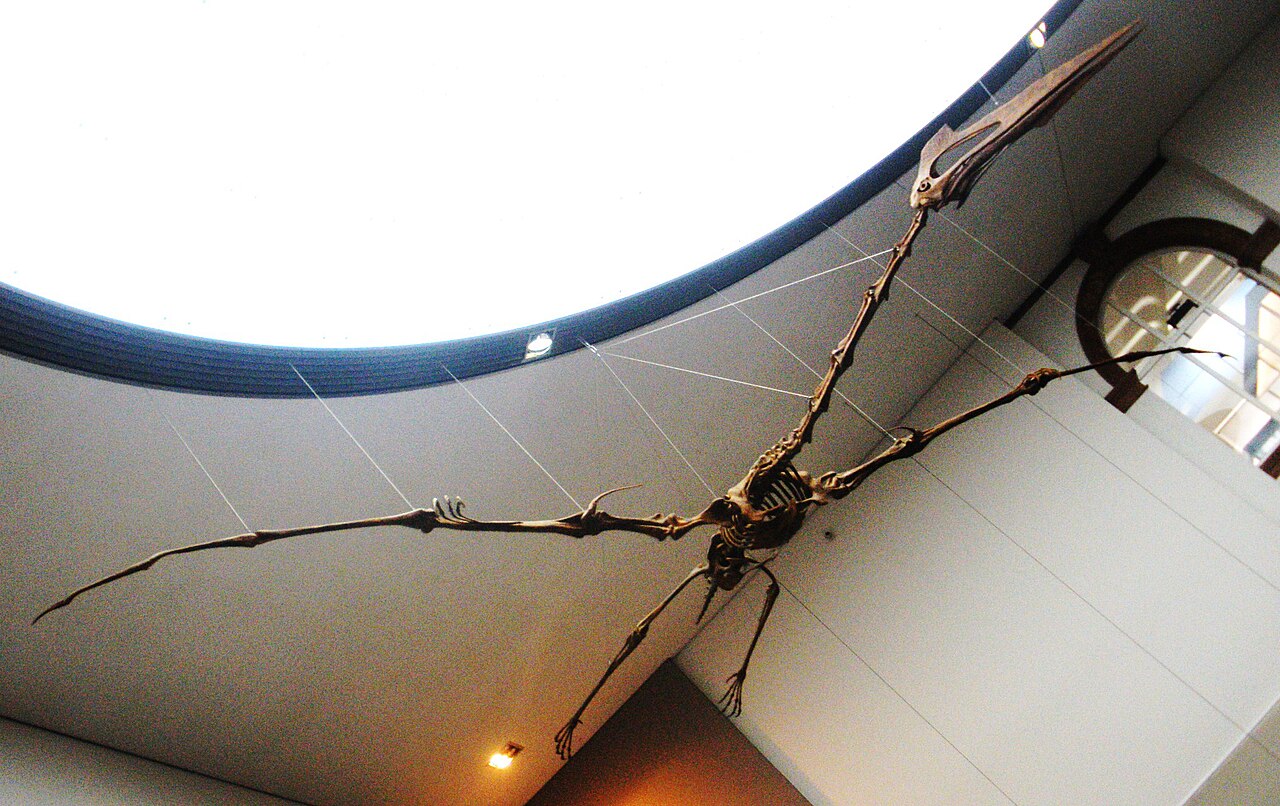
Quetzalcoatlus northropi (perhaps the largest flying creature of all time)
There were a series of interdimensional conversations which took place, and seem to still be ongoing from time to time, performed in the last few years by a group called Red Cord Channeling. They originally began to channel, what they claim, the Quetzalcoatl of the Americas. I remember finding this a few years ago, they are essentially a modern remake of The Ra Contact & Harvest, but claim that it is in-fact a different group. Still 6th dimensional, they would be Ra's friend perhaps.
Quetzalcoatl is the name of a group of beings that have joined together in what is called a "social memory complex" and communicate as one entity. They originated on the planet Venus and are in their 6th density (dimension) of experience. They visited earth approximately 10,000 years ago to answer the calling of the people in the Central and South Americas. They came to teach the Law of One.
In session 4, question 4.7, a 117 minute and 17 seconds work, I found some interesting information. I will cut out parts of it to save some space.
https://www.redcordchanneling.com/post/quetzalcoatl-contact-session-4
4.7 Questioner Thank you, Quetzalcoatl. You told us in one of the first sessions that when you walked the earth, you were teaching the beings of that time, you were sharing knowledge, and that this became corrupted. The beings corrupted this. We are wondering how they corrupted this. What did they do, and are you seeing any similarities at this time on the planet?
[Long pause]
Our teachings were horribly corrupted. The mechanism of their corruption was intentional. The light we brought to the world, at that time, created a society which shone like a beacon of great radiant pure light on this earth. It attracted many beings. There were many beings who sought to corrupt these teachings. The coinciding influx of bellicosity from neighboring races of the peoples we visited created a catalyst by which conflict could be sown deeply among these groups of people.
The ones who corrupted our teachings walked the earth at this time so we may not specify them distinctly, specifically. Though they are known to you as your "elites" the ones who have maintained monopolies of control and power. The seeking to enslave the others to their will and the human sacrifice that was the end result of the corruption of our teachings has been used by this group of beings for many thousands of your years. The practice of human sacrifice takes many forms. It has been present in Babylon, in the European tribal societies, in Asia, Africa, South America. The purpose, when practiced in great quantity, was to instill fear, control, despair, enslavement and complete domination by a group seeking complete power over the so called masses.
[Long pause]
The instrument is receiving severe greeting. The beings present do not wish for the instrument to continue to relay our words on this topic. It would be best to pause and collectively send love to this instrument and to those who offer her this greeting.
[Pause for several minutes as group meditatively sends love to instrument and those present. Instrument begins experiencing severe stabbing pain on left side of skull]
...
The beings who are in positions of great power on this planet currently are the same beings, souls, who have been in positions of great power in your historical past and even prior. These souls reincarnate with great distortion towards power and control and enslavement of other beings.
The practice of the mass human sacrifice prevails to today in the practice of what you know as war. War is human sacrifice, war is the mechanism by which the "elites" maintain control and fear and enslavement of the Other Selves. It is this endless war which is imposed on those... Other Selves... the communication at this time is quite rough...
The mechanism by which our teachings were corrupted followed a pattern of a playbook, to take the idea of the divine within all and to twist it into the "divine" which controls all. Those in power seek to present themselves as an alternative to the divinity so that the focus of the seeker, the worship, knowingly or unknowingly may be directed towards these so called elites.
The humans of the third density on this Earth are not inclined to blood lust. It hurts deeply, for the being to harm [pause, speaks with difficulty] the other self. It creates tears in the soul.
[Instrument is crying. She explained later that Quetzalcoatl was crying and she was channeling this]
The Red Cord group finished the last of their Quetzalcoatl sessions on 12-12-24. Shortly afterwards, they had a one time interaction with a different being.
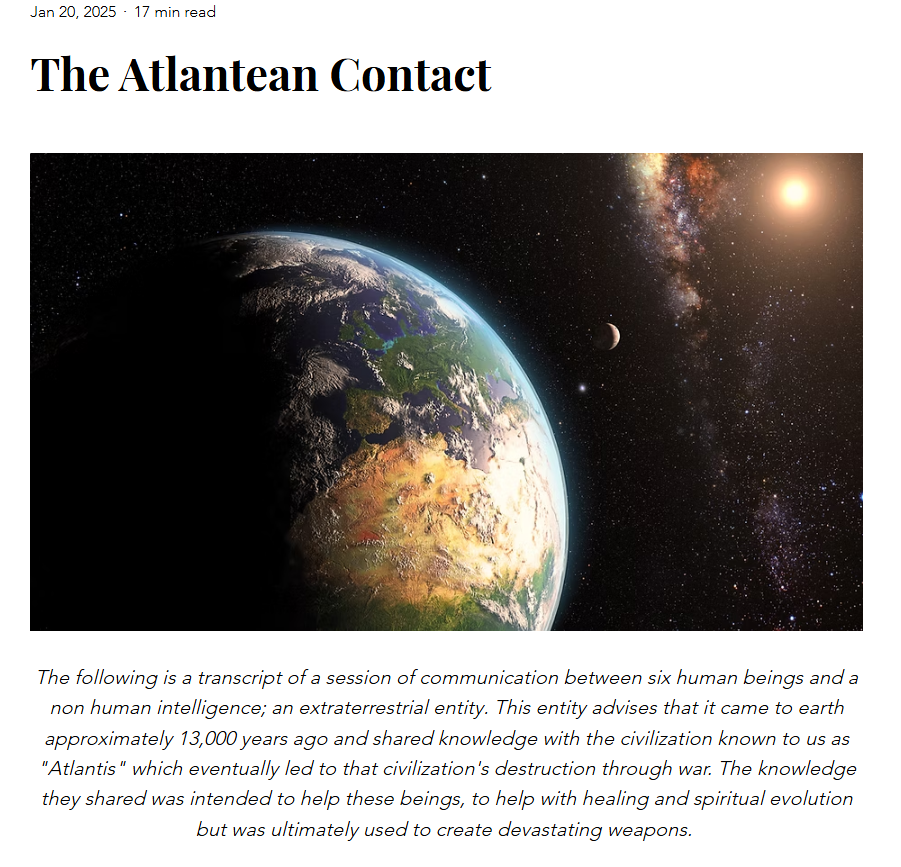
Do you guys remember when we had all those drones flying around?
"We are the ones who are seen in the skies. You have seen us. We are here. You have seen us in your skies. We make apparent this thought form for you, for you have called to see it. That which you call “drones”. That is us. We have found a way to answer this call. To create a form of visual communication, to ignite a sense of the unknown, a sense of wonder, a sense of questioning reality, a sense of questioning all. We are these beings who you see in your skies. The instrument's memory of the New Jersey drones footage is brought to mind and confirmed as these beings.
You have seen us. You have known us. We are those, yes. We have come to your planetary sphere in this form and we have sought communication by various means. When they see us, when beings see us and they reach out to us, we answer them. That is what we seek to do. We seek to awaken. We seek to enlighten. We seek to uncover that which is most painful.
What is most painful? There are many beings on this planet who have followed cycles of suffering, cycles of inflicting suffering on this planet and her inhabitants. They are those who you perceive. They take on many forms through many years, through many histories. Names are irrelevant, the appearance is irrelevant and yet you know them. You each know them. Those who sequester and seek to maintain control. Domination, power, enslavement; who follow a code of elitism. Viewing those “non elites" as slaves for themselves and this is a pattern which has perpetuated. This is a pattern which was exacerbated by the actions of those in Atlantis. There is an ongoing battle between those who seek the darkness and those who seek the light. On this planetary sphere this cycle has never ended. It reaches new heights as each grows stronger as that which you know of called “harvest” draws near. Each making their presence more known. There is a task which must be done. The light must be brought to the darkness and only humanity can save humanity. There is no external savior. It is yourselves, it is within you. The one known as Jesus brought to this planetary sphere the, “love of thy enemy”. Forgiveness, acceptance, seeing the face of the Father in all faces. When the darkness is brought to the light there are many phases. "

If we consider that those drones were a distraction/some sort of governmental maneuver, and then this channeling claims it was aliens... and the channeling is some sort of a psy-op.. I just wanted to dot i's and cross my t's to ease any potential guilt from assisting with the execution of

During that period I had an excuse to listen to this song by one of my favorite artists on repeat...
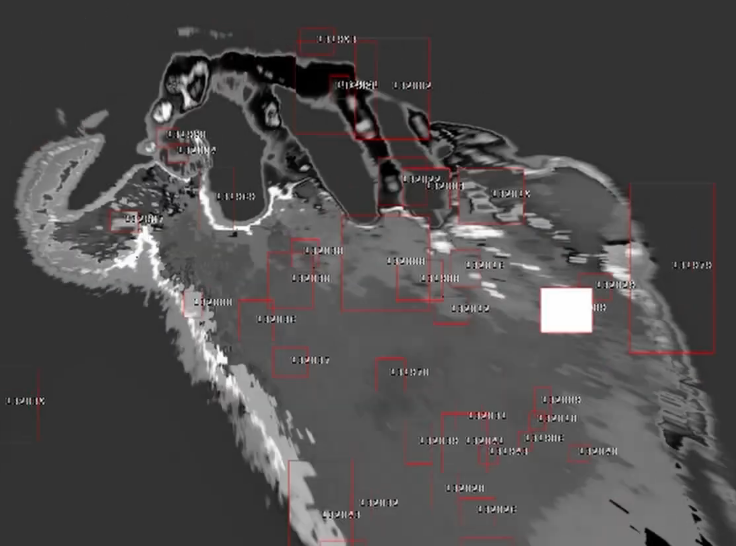
After they were done talking to the origin of Atlantis, they began to channel a group called The Burning Ones, for just 4 sessions.

"you are in a mandala and you only see that which is most near to you."
Alien entity that claims itself as Kukulkan and demands it be worshiped as a god. The first Star Trek episode to win an Emmy award.
"How sharper than a serpent's tooth it is to have a thankless child!"
Act 1, Scene 4 of William Shakespeare's King Lear
They make their tongues as sharp as a serpent’s; the poison of vipers is on their lips.
Psalm 140:3
Apparently, contrary to popular belief, at-least my own, the Mayans were not involved in human sacrifice rituals. Well, there are a few from time to time, but for the most part, their rituals were centered on a form of self-sacrifice. In a practice called bloodletting, rulers and nobles deliberately wounded their own bodies, piercing ears, cheeks, tongues and even the foreskin of the penis, all to release blood as an offering to the gods, to give back the fluids of life. In some rites, thorn‑studded cords or ropes were pulled through pierced tongues or genitals, creating intense pain and copious blood loss.

This blood was not simply left to drip onto the ground. Yes it marked the seriousness of their vow, and the depth of their devotion, but they were looking to Pierce the Veil. The outpour was collected onto strips of bark, paper, or cloth, which were then burned so that the offering could rise as smoke into the realm of the gods and ancestors. In Maya thought, the transformation of blood‑soaked paper into smoke was a technology of communication. It carried their life‑force, petitions and vision‑requests into the invisible world. Emerging from the smoke, an interdimensional portal to the divine was opened, where communication could commence. This was almost always depicted back to them as a great vision serpent surging from the rising fumes.

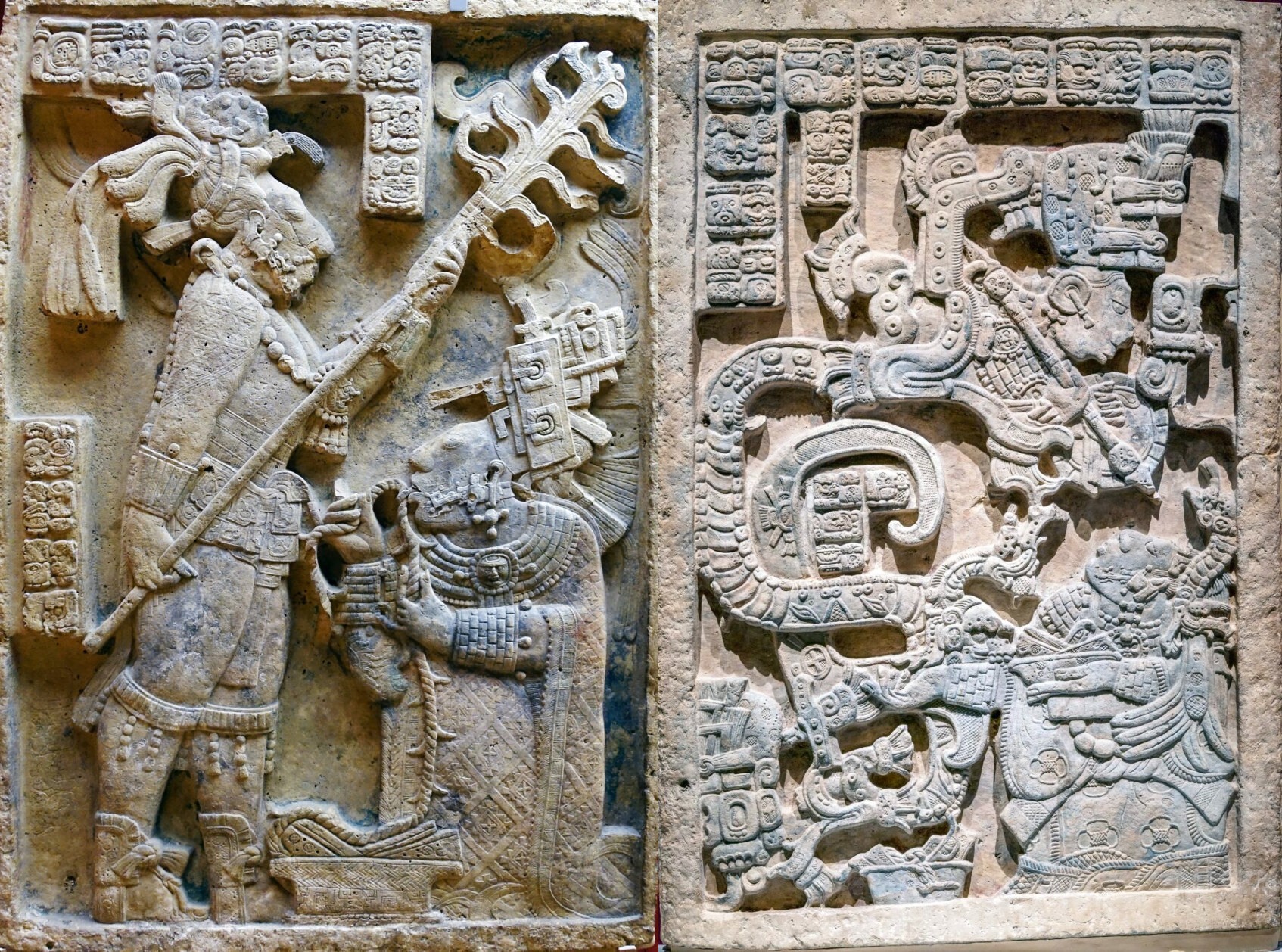
(Both of these are from Structure 23 of Yaxchilán. Lintel 24 on the left, king Itzamnaaj B'alam II stands holding a burning torch over his wife Lady K'ab'al Xook. You can see the papers underneath. On the right, Lintel 25 shows her experiencing the vision serpent )
This entire process is quite similar to what they talk about in the Lemurian Scrolls. The difference is mostly in how explicit the intention is. The Maya blood‑and‑paper rites petitioned the gods and ancestors for rain, fertility, victory, and legitimation, with answers arriving as visions and omens rather than line‑item replies. In the Lemurian material, the same fire‑offering principle is sharpened into a clear Q&A protocol where you write a specific question, burn it into the inner library, and later receive a specific, text‑like answer from devas and inner teachers.
If the Lemurian text has any accuracy, and we look at the Mayans, it seems they were doing something similar. Asking questions and looking for answers, just in a slightly different style. Their blood‑and‑paper rituals were a way to send petitions up to the gods and ancestors, and then wait for a response to come back through visions, omens, and the appearance of the vision serpent, rather than as a written reply. The medium is really the only obvious difference: they’re soaking strips of fig‑bark paper in human blood and burning it with copal so the life‑force goes up as smoke, while the Lemurian texts talk about soaking books in seed oil and burning them so the words themselves ride that plant‑life up into the akasha. One tradition is working with the blood of the people, the other with the “blood of the seeds,” but both are just choosing a different carrier fluid, for the same basic act of sending questions and records off‑planet and waiting for something to answer back.

McDonalds original cost-saving mixture of beef tallow and vegetable oil termed “Formula 47,” which gave their signature crispy golden flavor. Named after the 47¢ McDonald’s meal, a 15¢ hamburger + with 12¢ fries + and a 20¢ shake
"We have a little shastric book, small in size and quite thick, which describes the methods used in placing the manuscripts of all cultures and time during the latter part of this yuga into the atmosphere of the inner mind. It says that all manifest life comes from the forces within the inner substance of the mind and permeates out through all the other elements. All these elements exist within a seed. A seed is in direct connection to the akasha. Therefore, the oil from a seed is a direct tube into it from the physical plane. To place books in the akasha, they should be first soaked in oil and then burned, it states. It is through the method of soaking books in life-giving oils, then reading them aloud to imprint them in the memory akasha and burning them to put them into the astral akasha that all records of history, philosophy and prophecy are written. The books that are in the akasha were made out of the oil in this way, the exact same substance as Earth oil, but the inner part of the oils appear in any kind of manifest form in the akasha through this method. Oil is a form of odic force in a very condensed state. Anything crushed will turn to oil eventually, they say."
29 ¶

"We also write books, and after a book is finished, it is burned at a ceremony that causes it to be imprinted in the inner ether, and old and young souls alike in other temple-monasteries can read it. News is also conveyed in this way. The inner and the outer are one."
71 ¶

The Timaeus is a cosmology, a theory about how the universe was generated. Sorta an old 4-5th century BCE attempt at a physics book, with some metaphysics sprinkled in there. Behind the cosmology is also a theology, that is to say, there is a God purported to bring about this universe. Since Timaeus proposes that nothing ‘becomes or changes’ without a cause, some sort of δημιουργός (dēmiurgós), a type of ‘creator,’ or divine craftsman must have initiated things. Plato is ultimately interested in why, not how, but why this was all generated. His goal was to explain how man can be in a universe in which he can know not only himself, but also that universe he is situated in. In knowing both, and isolating the factors that made that knowing possible, you can then develop a certain set of principles that can be used - not only to explain how we know, but also, these principles can be said to be the primary principles for the dynamics of metaphysical creation itself(with physical reality coming secondary, like a projection). Timaeus tries to explain the conditions, not causes, for the universe being generated in the first place. Explaining the conditions of something is getting behind its causes, and can be understood as the first principles of metaphysics. And so, you’re going to have a metaphysics(that rests on a set of principles), which are going to be the conditions for explaining how the universe was generated. More importantly, it’s going to be that same set of principles which is going to explain how it is you are in a universe where you can know yourself as-well. One of the greatest commentaries on this text comes from a man 1,000 years later down the line named Proclus. Plato’s writing is so dense and compact, that he was able to write a nearly 1,000 page commentary on it. Many sentence were capable of having an entire page dedicated to describing its meaning. The highest term in the platonic universe is ‘the one,’ also called ‘the good,’ which are said to be identical and unlimited. Plato views the world as fair, and so, this ‘producer’ must have looked at an eternal model (paradigm) in order to make it. Our physical universe came into existence from disorder, by this demiurge shaping pre-existing, chaotic matter, introducing order and time. This being was striving to make the cosmos as good as possible, but the resulting material world remains imperfect due to the inherent flaws of matter, making it a reflection, not a perfect copy, of the Ideal Forms. We are living in a sort of perpetual Coachella 2012 holographic Tupac performance, which, was quite revolutionary.

These true realities are only accessible through intellect, not the senses. Sort of a different take from the Gnostic Demiurge, who, impersonating the creator, made a corrupted/cursed soul prison as a copy of the Pleromic eternal model. In Plato’s Timaeus, the only thing which is creating the world in tandem with this demiurge, represented by reason(νοῦς. Nous), is Ananke(ἀνάγκη, anankē), necessity.
"The foregoing part of our discourse, save for a small portion, has been an exposition of the operations of Reason; but we must also furnish an account of what comes into existence through Necessity."
Plato's Timaeus § 47
This concept of Ananke is difficult to wrap your head around, but in my best attempts to understand it, Plato is stating that the necessary is that which cannot be otherwise. The demiurge's desire to create is ultimately limited by what is necessary. There are metaphysical reasons why it is impossible for intelligible Ideal Forms to be perfectly replicated by the physical things that participate in them. Desirable possibilities cannot all be realized, because they are incompatible. There must be matter if the universe is to exist. This suggests that matter is, after all, hypothetically necessary - despite being the source, and even nature of evil. Things may not be perfect, but they are as perfect as possible. In other words, the reason that physical things here are not perfect, is that it is simply impossible for them to be any better than they are. Or, in still other words, it is "of necessity'' that they are imperfect. The necessary is that which cannot be otherwise. Plato holds that all the cases of necessity we actually encounter are cases that have, by persuasion, been "directed towards the best." Whatever has been created is a reflection of the extent that the nature of necessity willingly yielded to the persuasion of reason/nous. Plotinus, considered the father of Neoplatonism, in his theory of evil, points out that the existence of matter - which is the principle of evil - is itself metaphysically necessary.

"For, in truth, this Cosmos in its origin was generated as a compound, from the combination of Necessity and Reason. And inasmuch as Reason was controlling Necessity by persuading her to conduct to the best end the most part of the things coming into existence, thus and thereby it came about, through Necessity yielding to intelligent persuasion, that this Universe of ours was being in this wise constructed at the beginning."
§ 48 Plato's Timaeus
There is one example that Plato uses in the Timaeus to give us explanation as to how this sort of persuasion took place. The Demiurge (Reason) wants humans to be both long-lived and highly intelligent. However, he is constrained by the material properties of matter (Necessity). A thick and dense skull would provide a long life through protection, but would dull the senses and intellect. A thin skull allows for acute intelligence, but, makes life fragile and short. The resulting human skull is an act of "Persuaded Necessity." The Demiurge chooses the "better" path, intelligence, even though it necessitates a regrettable byproduct - a shorter lifespan.
"But as it is, when the Constructors of our being were cogitating [75c] whether they should make a kind that was more long-lived and worse or more short-lived and better, they agreed that the shorter and superior life should by all means be chosen by all rather than the longer and inferior. Wherefore they covered the head closely with thin bone, but not with flesh and sinews, since it was also without flexions. For all these reasons, then, the head that was joined to the body in every man was more perceptive and more intelligent but less strong."
§ 75 Plato's Timaeus
"Necessity'' here thus also refers to a kind of constraint, in this case, the constraint that the skull cannot be both thicker and thinner than it is. What we have in the Timaeus, then, is an optimistic cosmology according to which - no necessity remains unpersuaded. Everything we have here has been bargained for in trial by the best lawyer money can buy.

Demiurge/Reason = Has a plan to create the universe (What Nous want to happen).
Ananke/Necessity = The constraints of matter (What the material allows to happen).
The Universe = The best possible result of Reason talking Necessity into cooperating.

Because the Universe is the result of Reason’s successful persuasion, the cosmos is not a chaotic accident, but a mathematical order. Since our own minds are built of that same 'Reason,' we are capable of decoding the universe(and ourselves). We have a part of that Nous which created all within ourselves, and it is through that, we have the capacity to understand things. Plato argued that "learning" is actually a form of anamnesis (recollection). We aren't learning new information; we are simply remember the universal truths that were already latent within our Nous.

In the Timaeus, Plato also considers the all the heavenly bodies - the sun, moon, planets, stars - to be divine, intelligent beings. The Demiurge, when creating the universe, created all the stars and souls at once, a fixed number, assigning one to each soul, called their companion star. This supposedly guides us through our time here on Earth, potentially whispering to you your desires from the atmosphere above where the Gods dwell - the ether, or aether. If that were true, we would not only be made up of that same stuff as the stars, but also directedly connected to our own private one. Plato believed in reincarnation believe it or not - where you sort of level up as you were more and more moralistic in further lifetimes, or descend downwards into worse forms if you are not living correctly. The word for this was metempsychosis, and it was (present in Orphism) touched upon briefly in the Timaeus. Eventually, you could escape this cycle by living a just enough life, and each of us "Would at the end, return to his dwelling place in his companion star, to live a life of happiness that agreed with his character."

"And when He had compounded the whole He divided it into souls equal in number to the stars, and each several soul He assigned to one star, [41e] and setting them each as it were in a chariot He showed them the nature of the Universe, and declared unto them the laws of destiny — namely, how that the first birth should be one and the same ordained for all, in order that none might be slighted by Him; and how it was needful that they, when sown each into his own proper organ of time, should grow into the most god-fearing of living creatures;"
Timaeus § 41
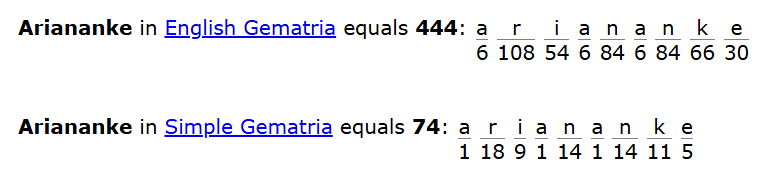
To know the laws of the stars is, ultimately, to recognize the same laws within our own souls. Plato thought by observing the orderly, divine movements of the cosmos (like planets and stars), humans can use their reason to align their own chaotic lives and understanding with these perfect, unchanging celestial patterns, thereby imitating God's perfect governance and achieving rational self-regulation. He didn't necessarily create what became modern astrology, but did certainly recommend a way of contemplating the planets and the stars in pursuit of self-knowledge.
This Platonic goal, to align the 'wandering orbits' of the human soul with the perfect 'revolutions' of the stars, is quite similar to some of the ideas we see coming forth in Kabbalistic tradition under the Hebrew word Mazal. In both, the human is viewed as being at the mercy of chaotic forces until they use their higher faculty to harmonize with the divine movements of the heavens, going from a victim of 'fate' to a participant in divine order. The Zohar says "There is no blade of grass below that does not have a Mazal (star/angel) above that strikes it and says: Grow." The word Mazal (מַזַּל) means constellation, or destiny, and comes from the root nozel (נוזל), meaning “to flow.
It refers to the flow of divine will and the sustenance coming in from the supernal world to the lower realms, and flowing in alignment with your destiny. Sometimes it is used to mean luck, as it has found concordance with the popular "Mazel Tov" !!!!(good luck/congratulations). We are either at the whim of the stars, being thrown around by them in a life of turmoil, or we are able to capture these influences and ride them out to where we are meant to go.

Much of kabbalistic magic, from I have picked up on, is ultimately aligning oneself in relation to the astrological influences coming upon us. The galaxy above us is filled with different bodies of planets and stars that are all sending out energetic influences upon us. According to theory, since man was created on the sixth day, while the planets and stars were all created on the fifth day, man is technically above them in the hierarchy. Because of this fact, man has the capacity to wield and control the energies of the cosmos to assist in his Tikkun, or rectification from all Karma. One can either be at the whim of their Tikkun, being sloshed around through life, by Karma, by the influence of the astrological forces, or they can be in control of their destiny, their destiny, and ride the dragon of influences masterfully to their own benefit.
Aleister Crowley had a very similar worldview in his Thelemic philosophy. Crowley argued that just as stars in the galaxy move in their own orbits without colliding (if they follow their true path), every human has a "True Will" or unique trajectory. Opposing what Plato laid out, Big AL(not Capone, rip 1947) said hey hey hey, "sin" was not failing to be "good," the sin is falling out of your orbit - trying to do something that isn't your unique destiny. Stars often don't collide out there in the vastness of space, "and each star moves in an appointed path without interference. There is plenty of room for all; it is only disorder that creates confusion."

"Every man and every woman is a star." (The Book of the Law, I:3)

(a good transition here may be to relate how the Timaeus has many Orphic elements hidden within, and so, Plato was a secret student of the whole tradition. Timaeus tells us that there is a grand God and we are miniature versions of this God, and the Eleusinian/Orphic mystery rites were one of the ways that people embodied that perspective through ritual and ceremony.)
In Orphic cosmology and theogony, before time got started, there was what is known as - “Árritos Arkhí (Ἄρρητος Ἀρχή),” the unutterable principle. That which cannot be spoken of. As soon as you start to use words, you’re already distorting things. The first couple of forces to pop out of this unutter, the guy that first discovered cows milk, was Chronos(unending time/eternity) and Ananke(necessity/inevitability).
It is through both time and necessity/inevitability that the universe came into being. These two were envisaged as both impersonal and incorporeal gods(having no bodies, formless). However, in the mythological tale, you have to have some sort of imagery so people can digest what you’re pointing towards. Chronos and Ananke were both envisioned as grand serpents. Chronus was a bit of an unusual snake, having wings and 3 heads, one of a bull, a lion, and a man. Ananke had outstretched arms which encompassed the cosmos(often with a spindle).
![[Ananka_i_Mojre.JPG]]
Reminds me somewhat of Revelations 4:7.
“The first living creature was like a lion, the second was like an ox, the third had a face like a man, the fourth was like a flying eagle.” Together Chronus and Ananke initiate the organization of all this primordial Chaos they find themselves swirling through, into the form of an egg, what you may have been exposed to as the Orphic Egg(often referred to as a 'silver' egg).
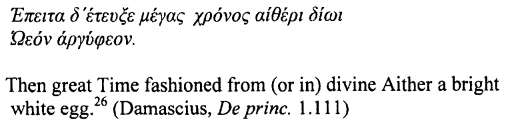
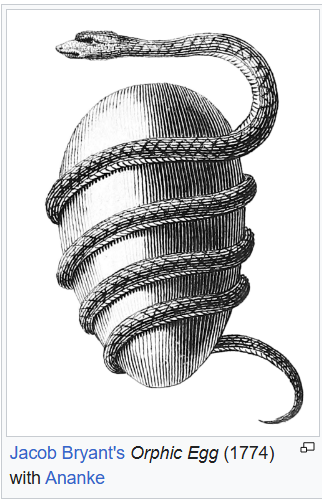
From here, the two serpents began to wrap themselves around this egg, applying pressure to it. What do these things eventually do? They hatch... produce a batch. Once the cosmic huevos hit a certain threshold, the egg burst, what you could consider a sort of mythical 'big bang,' in which the upper parts of the egg, the lightest of the atoms, float up to become the bright light of the heavens/sky(Uranus), while the heaviest portions float down to create the waters and the earth(Gaia). The remainder float between as the winds of chaos. What else came sprung forth from this, was the protogonos (first born) Phanes, the first deity that brought light and shaped the world. The name Phanes (Φάνης) comes from the Greek verb phaínein, meaning "to bring to light," "to show," or "to appear," "to shine," making Phanes the "revealer" or "bringer of light."
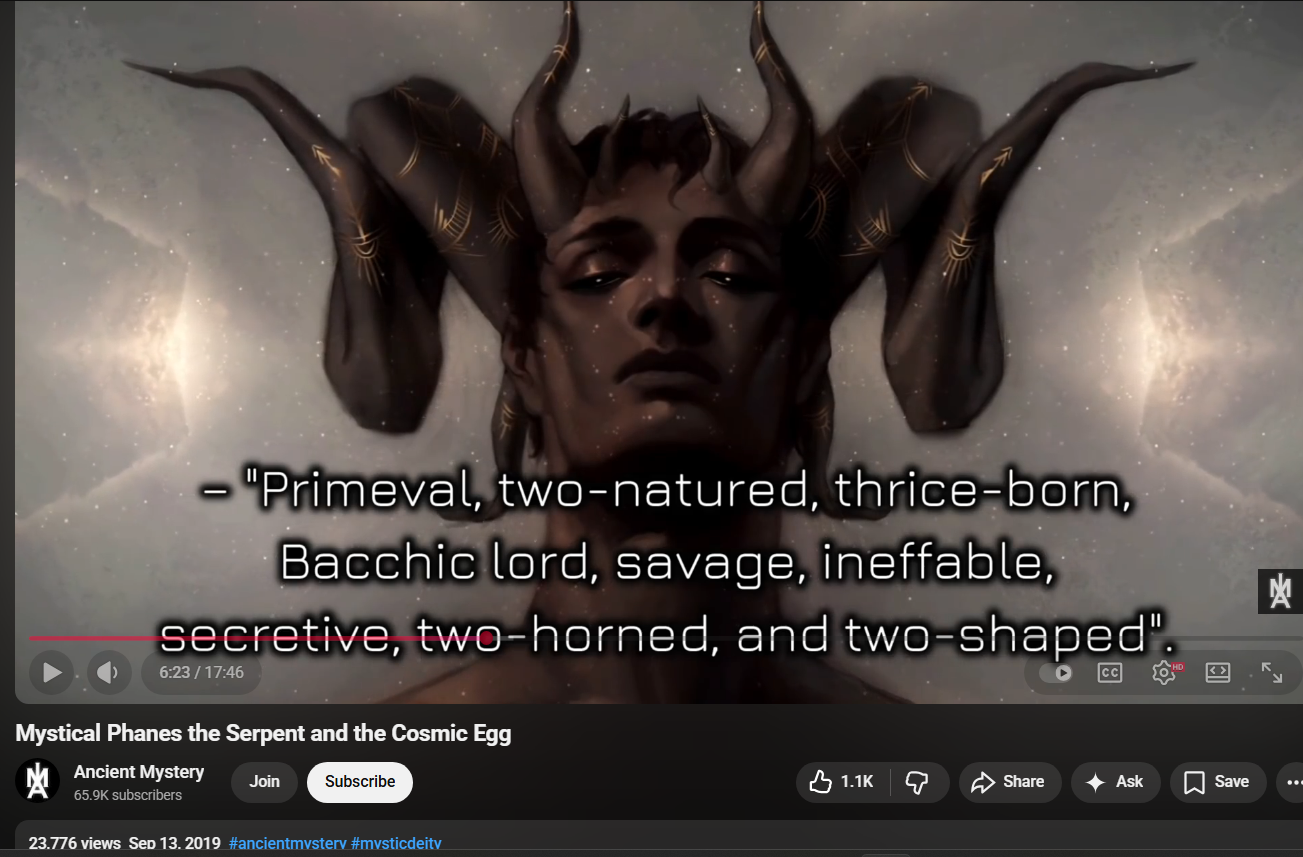
Alxandr th Grat horns
Phanes was essentially the totality of all living things condensed into one body. He is almost always described with golden wings on his shoulders, hermaphroditic(both genders), and surrounded by a snake. Phanes appeared with the heads of various animals (usually a Bull, Lion, Serpent, and Ram) sprouting from his body. In the hymns, he is often called by three names to show his multi-faceted nature: Phanes (The Light), Protogonos (The First-Born), and Erikepaios (The Giver of Life). As the first king of the cosmos, Phanes emerged holding a Scepter, which represented the Rule of Law.
Phanes was not alone for long. Once arriving on the scene, he created a shadow, or, a daughter(from himself), that became Nyx (Νύξ)(Night). It is the birth of duality, the "light necessitates night" situation. In many versions, Nyx is the only one who can look directly at Phanes without being blinded.
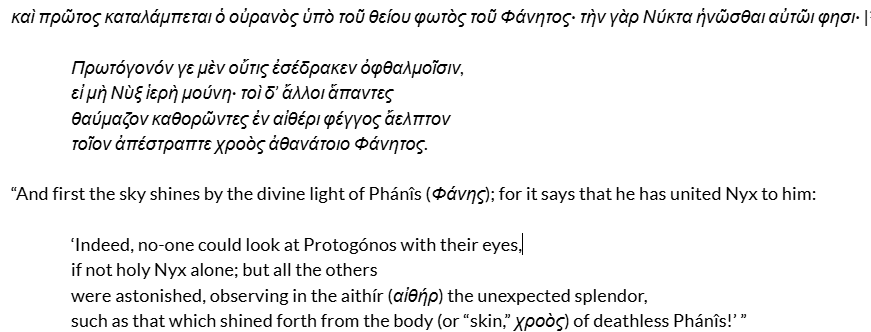
Eventually Phanes hands down this scepter which he is holding(representative of the rule of law) to Nyx, who then hands it to "Ouranos" (Οὐρανός), who is representative of the heavens/sky. From here, Chronos, not Cronus, then steals this scepter from Ouranos.
Behold the son of Aithír! The First-Born (Πρωτογόνος) [86]! The Shining One (Φαέθων) [73 & 74]!
“After Nyx, Ouranós (reigns)"
Orphic Fragment 111
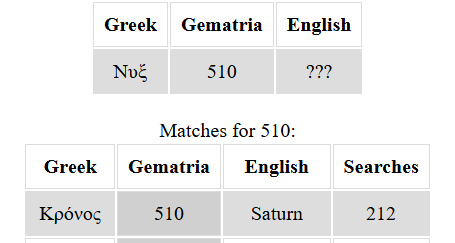
Κρόνος (Cronus)
.webp)
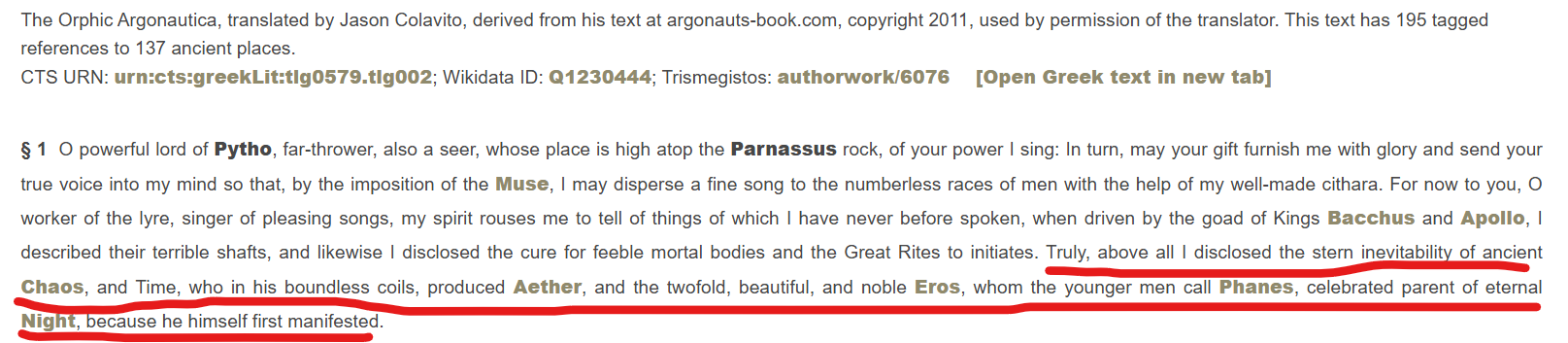
πρῶτον δαίίµμονα σεµμνόόν
Μῆτιν σπέέρµμα φέέροντα θεῶν κλυτόόν, ὅν τε Φάάνητα
πρωτογόόνον µμάάκαρες κάάλεον. "
ʺ…the first august daimon to carry the seed of the gods, famed Metis, whom the blessed ones called Phanes protogonos"ʺ
Phanes Φάνης (Phanês), as the primordial first born god (protogenos) of the creation in Orphic cosmogony, was the generator of life--the driving force behind reproduction in the early cosmos. You could see Phanes as a primordial Eros, also known as Amor, what has parallels to Cupid. Phanes’ name means “light bringer”, but in the Orphic tradition they were the Greek god of Creation and Life, from whom all subsequent life developed. One of his names is Phanes-Dionysus.
We see Phanes talked about throughout Carl Jung's Red Book, even drawn a few times.
"In Transformations and Symbols of the Libido (1912) while discussing mythological conceptions of creative force, Jung drew attention to the “Orphic figure of Phanes, the ‘Shining One,’ the first-born, the ‘Father of Eros.’ In Orphic terms, Phanes also denotes Priapos, a god of love, androgynous, and equal to the Theban Dionysus Lysios. The Orphic meaning of Phanes is the same as that of the Indian Kama, the God of love, which is also a cosmogonic principle” (CW B,
§223)."
On September 28, 1916, Phanes is described as a golden bird ( Black Book 6, p. 119)
On February 20,1917, Jung addresses Phanes as the messenger of Abraxas (ibid., p. 167).
On May 20,1917, Philemon says that he will become Phanes (ibid., p. 195).
On September 11, Philemon describes him as follows:
“Phanes is the God who rises agleam from the waters.
/ Phanes is the smile of dawn.
/ Phanes is the resplendent day.
/ He is the immortal present.
/ He is the gushing streams.
/ He is the soughing wind.
/ He is hunger and satiation.
/ He is love and lust.
/ He is mourning and consolation.
/ He is promise and fulfillment
/ He is the light that illuminates every darkness.
/ He is the eternal day.
/ He is the silver light of the moon.
/ He is the flickering stars.
/ He is the shooting star that flashes and falls and lapses.
/ He is the stream of shooting stars that returns every year.
/ He is the returning sun and moon.
/ He is the trailing star that brings wars and noble wine.
/ He is the good and fullness of the year.
/ He fulfills the hours with life-filled enchantment.
/ He is love’s embrace and whisper,
/ He is the warmth of friendship.
/ He is the hope that enlivens the void.
/ He is the magnificence of all renewed suns.
/ He is the joy at every birth.
/ He is the blooming flowers.
/ He is the velvety butterfly’s wing.
/ He is the scent of blooming gardens that fills the nights.
/ He is the song of joy.
/ He is the tree of light.
/ He is perfection, every¬ thing done better.
/ He is everything euphonious,
/ He is the well-measured.
/ He is the sacred number.
/ He is the promise of life,
/ He is the contract and the sacred pledge.
/ He is the diversity of sounds and colors.
/ He is the sanctification of morning, noon, and evening.
/ He is the benevolent and the gentle,
/ He is salvation . . .
/ In truth, Phanes is the happy day . . .
/ In truth, Phanes is work and its accomplishment and its remuneration.
/ He is the troublesome task and the evening calm.
/ He is the step on the middle way, its beginning, its middle, and its end.
/ He is foresight.
/ He is the end of fear.
/ He is the sprouting seed, the opening bud.
/ He is the gate of reception, of acceptance and deposition.
/ He is the spring and the desert.
/ He is the safe haven and the stormy night.
/ He is the certainty in desperation.
/ He is the solid in dissolution.
/ He is the liberation from imprisonment.
/ He is counsel and strength in advancement,
/He is the friend of man, the light emanating from man, the bright glow that man beholds on his path.
/ He is the greatness of man, his worth, and his force”
( Black Book 7, pp. 16-9).
a 1,648 page, seven-volume collection of his private diaries documenting "confrontation with the unconscious," officially released to the public on October 13, 2020.
On July 31,1918,
Phanes himself says:
“The mystery of the summer morning, the happy day, the completion of the moment, the fullness of the possible, born from suffering and joy, the treasure of eternal beauty, the goal of the four paths, the spring and the ocean of the four streams, the fulfillment of the four sufferings and of the four joys, father and mother of the Gods of the four winds, crucifixion, burial, resurrection, and man’s divine enhancement, highest effect and nonbeing, world and grain, eternity and instance, poverty and abundance, evolution, death and the rebirth of God, borne by eternally creative power, resplendent in eternal effect, loved by the two mothers and sisterly wives, ineffable pain-ridden bliss, unknowable, unrecognizable, a hair’s breadth between life and death, a river of worlds, canopying the heavens—I give you philanthropy, the opal jug of water; he pours water and wine and milk and blood, food for men and Gods. / I give you the joy of suffering and suffering of joy. I give you what has been found: the constancy in change and the change in constancy, j The jug made of stone, the vessel of completion. Water flowed in, wine flowed in,
milk flowed in, blood flowed in. / The fours winds precipitated into the precious vessel. / The Gods of the four heavenly realms hold its curvature, the two mothers
and the two fathers guard it, the fire of the North burns above its mouth, the serpent of the South encircles its bottom, the spirit of the East holds one of its sides and and the spirit of the West the other. / Forever denied it exists forever. Recurring in all forms, forever the same, this one precious vessel, surrounded by the circle of animals, denying itself and arising in new splendor through its self-denial./ The heart of God and of man. / It is the One and the Many A path leading across mountains and valleys, a guiding star on the oceans, in you and always ahead of you. /Perfected, indeed truly perfected is he who knows this. /Perfection is poverty But poverty means gratitude. Gratitude is love (2 August). / In truth, perfection is sacrifice. / Perfection is joy and anticipation of the shadow./ Perfection is the end. The end means the beginning, and hence perfection is both smallness and the smallest possible beginning. / Everything is imperfect, and perfection is hence solitude. But solitude seeks community Hence perfection means community / I am perfection, but perfected is only he who has attained his limits.
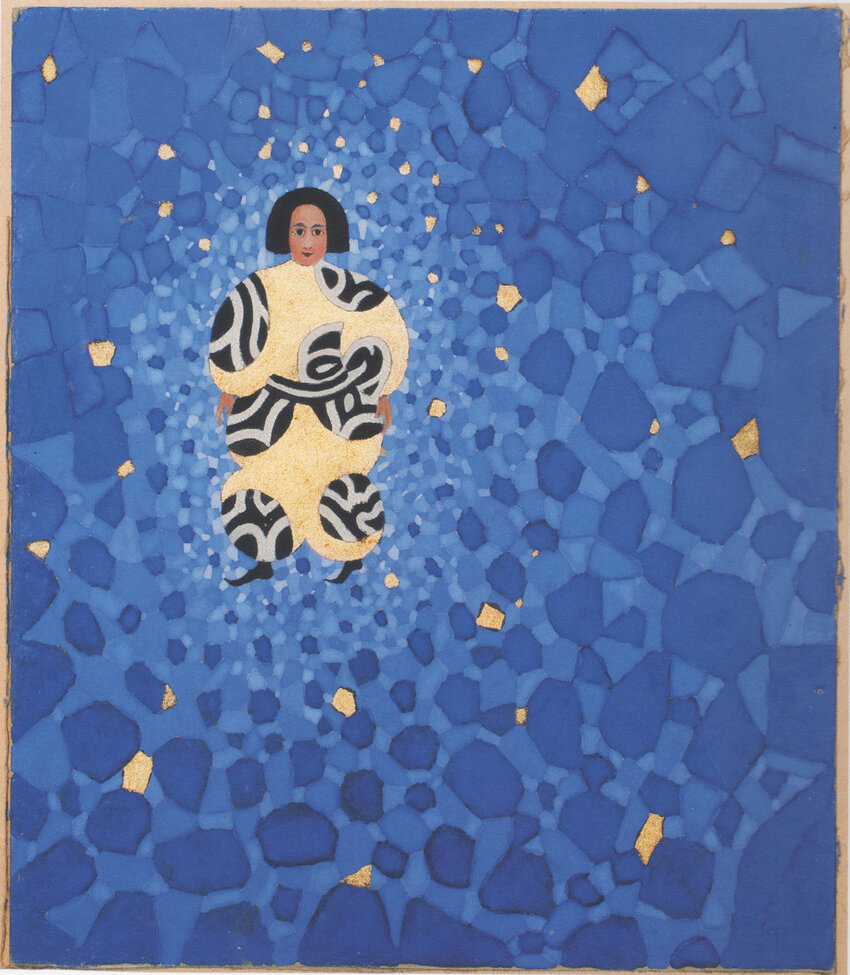
Painted by C. G. Jung in 1917, and presented to his wife. This is one of his several recurring paintings of Phanes, the new born god. (The Art of C. G. Jung, Cat. 50, p 122.)
The Derveni papyrus, found in Derveni, Macedonia (Greece) in 1962, contains commentary on an Orphic poem produced in the circle of the philosopher Anaxagoras, written in the second half of the fifth century BCE. It effectively represents the oldest “book” of Europe, and some date this to the period of Alexander/King Philip II of Macedon. The text was so remarkable, it was said to be "the most important new piece of evidence about Greek philosophy and religion to come to light since the Renaissance," to which Dr Justin Sledge enthusiastically agrees and adds, "it's of special importance to the intersection of philosophy, ancient religion, and ancient esotericism as-well."
To quote from the half‑burned Orphic scroll recovered from a Macedonian nobleman’s funeral pyre near Derveni, where its lower half was consumed by the flames and its upper portion carbonized and accidentally preserved, we read
Of the First-born king, the reverend one; and upon him all the immortals grew, blessed gods and goddesses and rivers and lovely springs and everything else that had then been born; and he himself became the sole one.
Although the surviving columns of the Derveni papyrus never actually name Phanes, they do preserve an Orphic theogony in which Chronos and Ananke give rise to a First‑Born (Protogonos) who inaugurates the divine order, and a number of scholars therefore speak only cautiously of a ‘Phanes‑like’ figure here
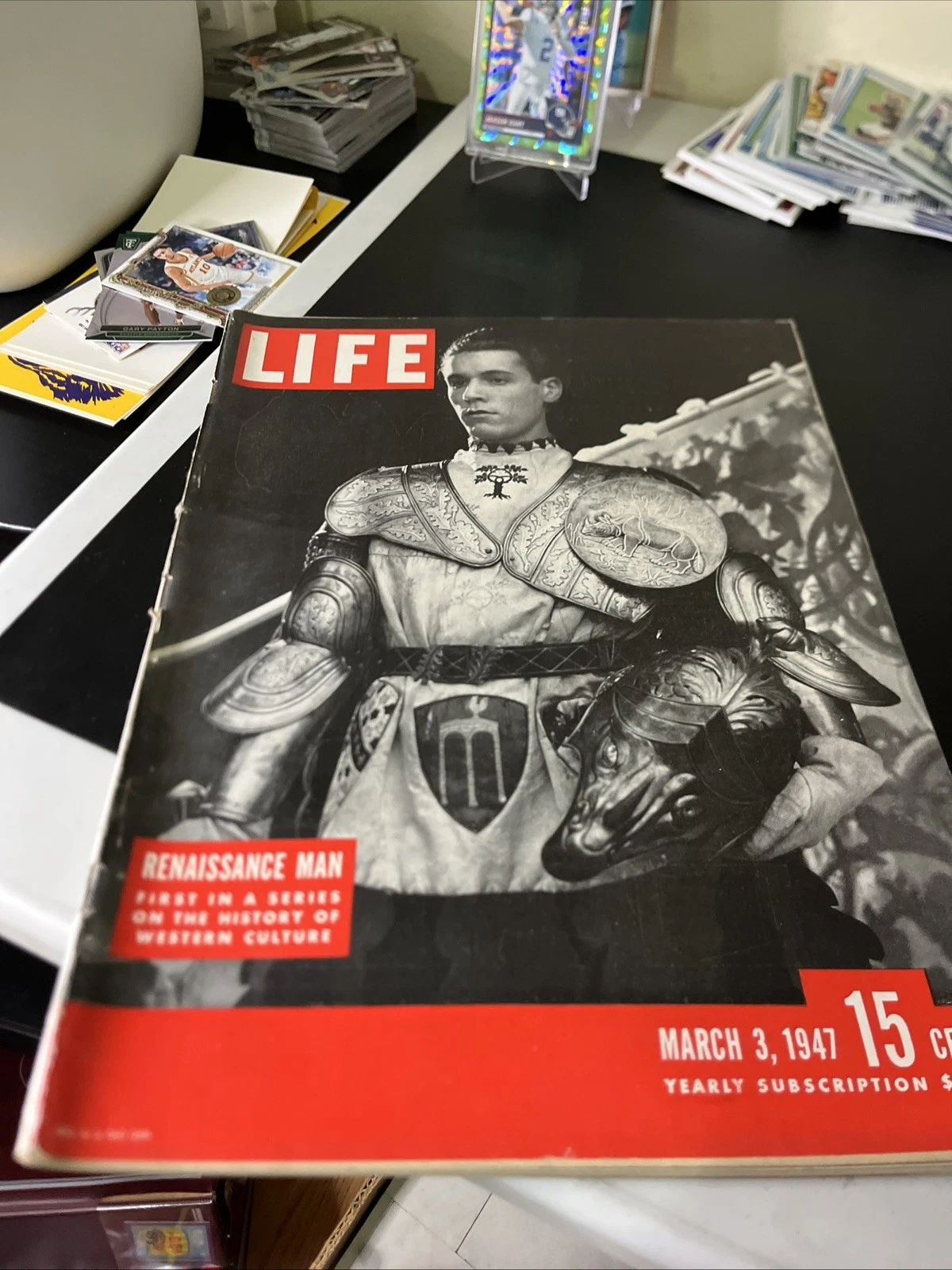
(this paper dates the graves to ~323BC)


(been sporting the 47 since before I was born)
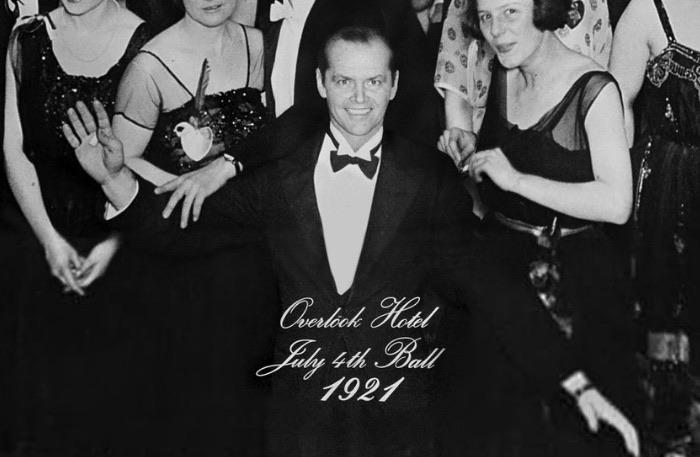
Perhaps one of the more haunting shots of film history, the ending has viewers pan out from an old hotel photo where Jack seemed to have been in attendance, positioning himself similar to the iconography of Baphomet. A celebration of freedom, this supposedly occurred on the 4th of July 1921 (7-4-21). Could this nod towards the day of independence have anything to do with tying some of the more subtle elements we see in this background theory to the Masons? For some, Jack appearing in the photo at the end just meant that the hotel had successfully claimed another victim, once again. Etched into the walls - his face and soul were now apart of the establishment. You could argue that the entire drama really gets its start when Jack sits down at the bar. Demonstrating the clear alcoholic he no longer was after 5 months of brutal sobriety, he proclaimed, "God, I'd give anything for a drink. I'd give my God-Damn soul for just a glass of beer."
Jack only became sober after things got a little rowdy at home, having been caught injuring his sons arm. This is when said son began to develop an alter-ego/imaginary friend named Tony. Wendy, the mother/wife claims this occurred while he was "put out of school." This immediately brings to mind the idea of MK Ultra. It is often thought, abuse, or the splitting of the psyche, in many ways can open one up to psychic abilities. This was the core of many CIA projects, of course, you have seen what 11 is capable of in Stranger Things. The famous room that houses a terrifying .... bathtub ... Danny never asked about the room number, but read it from the mind of the man that worked at the hotel. This place is closed for the winter, why is there advertisements for skiing on the walls?


333 E. Wonderview Ave in Estes Park, Colorado
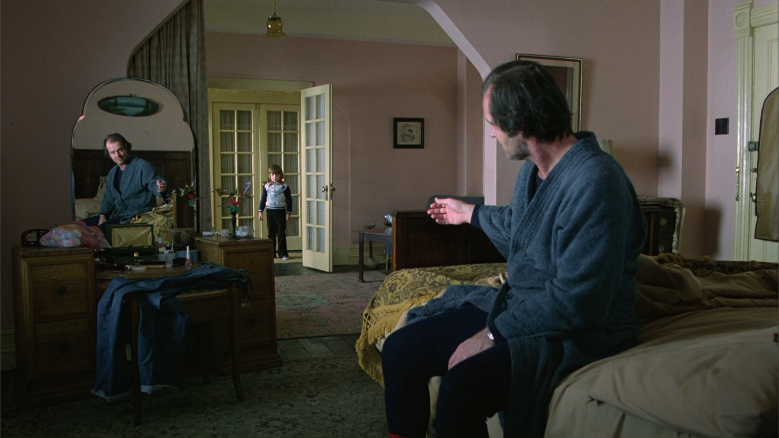
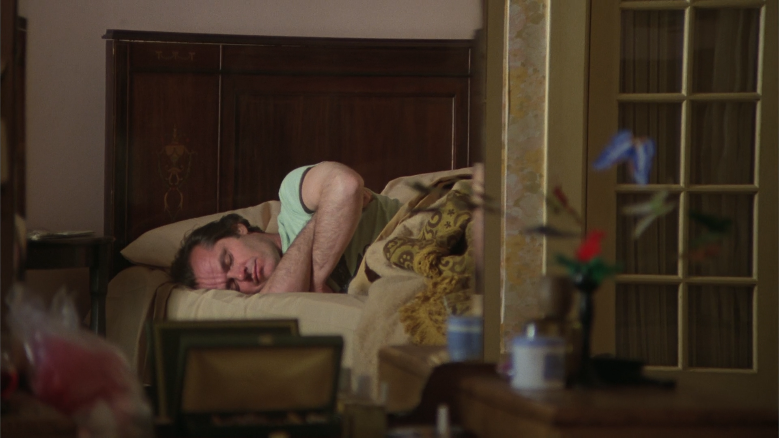
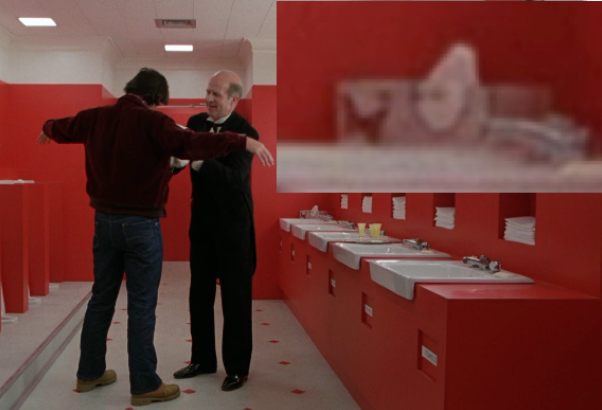

The Latin name for a monarch was given as “danaus” in 1780 by Jan Kluk. Many see this as a reference to the great-grandson of Zeus, Danaus, King of Egypt, who became the king of Libya, and founded Argos.
The genus Danaus is derived from Greek mythology, referring to a king who founded Argos, or potentially a masculinized version of Danaë.

Danaë by Orazio Gentileschi, c. 1623, oil on canvas
The myth is regarded as a forerunner of the Christian belief in the Annunciation, the divine conception of Christ.
Tony (Danny's dissociative alter-ego) could be seen as a protective mechanism emerging in response to abuse.
Kubrick's co-author Diane Johnson revealed in a 1978 interview that during the script development process, "We read Freud a lot. In his essay on the uncanny, Freud says specific things about why eyes are scary and why inanimate objects like puppets are scary in their animate shapes." She further noted they studied Bruno Bettelheim's The Uses of Enchantment, which analyzes how children use fairy tales to process things(that guy committed suicide by putting a plastic bag over his head). Bettelheim's framework addresses how children externalize internal conflicts: a threatening parent becomes a witch or wolf, allowing the child psychological distance to process fear.
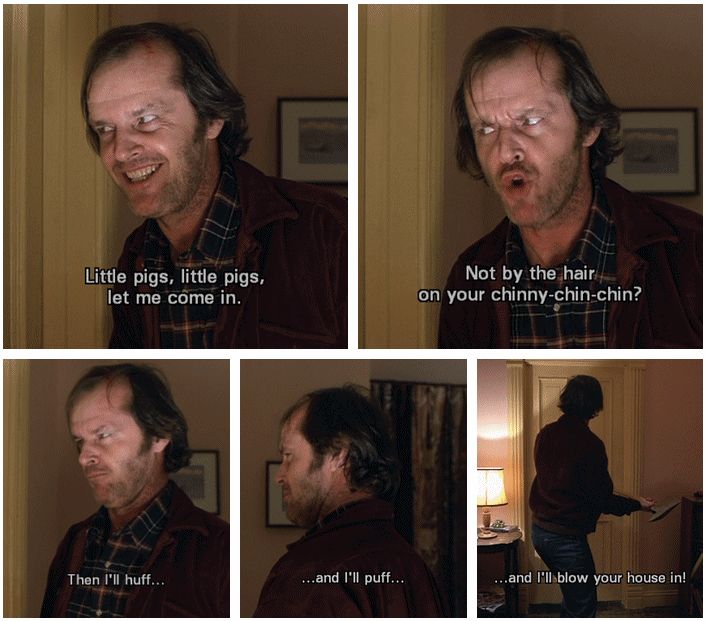








While sick this winter, losing 20 pounds after having been poisoned by the CIA through the water system, there was a movie I found myself watching that was quite interesting. Nobody ever told me that they made a sequel to The Shining. Also, just briefly, I know how to settle the Nick Fuentes Tucker Carlson controversy. Now, either both of them are in the CIA - pointing the finger at one another to make a fake illusion as if they weren't friends, or, Nick Fuentes is the guilty party. How did I come to this conclusion you might be asking? Well, I went to weigh myself at the lowest point of these dark and cold dreary nights. I remarked on how I had lost 20 pounds in just a short period of time. The next day this video popped up in my feed

Sneako, who is friends with Nick Fuentes, goes on to tell a story. He explains a time where he faced an injury, an elbow was greased, that disabled him from attending the gymnasium.
"I lost 20 lbs immediately"
So, how this works, is that Nick Fuentes is connected to the CIA, but also, Sneako. He may also be a recruit, I'm not fully certain yet. They heard me talk about how I was 20 pounds lighter, from listening to the on-going microphone in my phone. Precedingly, these two, along with their team, took that as an opportunity to strike my subconscious with a knowingness that they are always watching everything I do or say. Within under 24 hours. Any movement on any device is echoed through their network across the various designated spokespersons of this organization, so as to keep their victim in a state of perpetual fear, knowing that someone is always looking over their shoulder and watching. They hold so much power, that it is possible to push these bombardments directly to the forefront of your algorithm. The only solution is a nomadic escape into the forest.
Dr Sleep
zzz
The young girl who acts as protagonist, having an incredible amount of psychic power, of 'shine', is named Abra. We are introduced to her at a birthday party...

We get to know a group of travelling vampires who
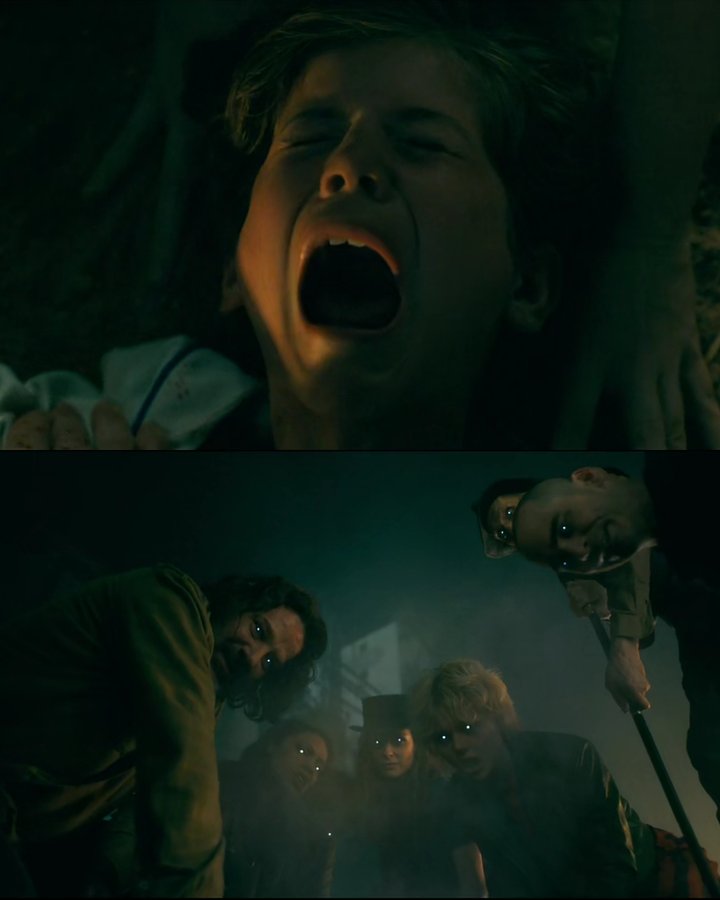
The performance that this kid put on was so good, and disturbing, that two costars cried, and they considered that it would not be able to go in the movie.


There was an interview I watched on YouTube a while back, where, supposedly, a 33rd degree mason was 'exposing' some of the secrets within the lodge. Who knows if his testimony is legitimate or not, but I was incredibly deep into reading all sorts of things about this topic, and what he said connected. His claim was that at the highest level, there was a legitimate abuse of children being orchestrated by people who thought that through such actions, they were in some way going to become immortal. This all plays directly into the entity 'energy harvesting' phenomenon. Youngest guy in the lodge by about 20 years, everyone there was 50-70 years old. They would play poker/hangout/eat sandwiches afterwards. It was very boring, like watching paint dry. However, he claims there was a very subtle "dark evil energy" present, which was very sexualized. In later years, doing deliverance work, there were many masonically minded men that came to him, beginning to be drawn into this "wickedness," a "perversion," that in some cases even turned to pedophilia. Unholy desires are opened up in the men, which he claims then percolates down into the family, all the way to the children. Once puberty was online, it seemed that this would begin driving them crazy. In Chicago, which was, and may still be, a major nexus for Satanism, Bill was treading deeply into another system which had much more than 33 degrees. The Memphis Mysteriyum, if remembering correctly, he got up to the 96th degree, where you start to learn about sexual alchemy/ how to live forever. He was initiated into the 97th by the son of famous occultist Papus, who flew all the way from France. When hitting the 32 degree in the Scottish System, "the sublime prince of the royal secret" he would go up to older dudes in the lodge and ask what the secret was. They either played dumb or truly didn't know. However, once hitting this checkpoint in the Memhis Mysterium, it clicked, something maybe only 1/1000 masons come to understand.
The secret...
the royal one...
was that you could quite literally live forever,
all you had to do,
was sexually vampirize children.

(since the entity phenomenon/wetiko is also a psychic condition, the act of abusing, terrorizing, and feeding off of the energy of another human being can even be taken into the digital realm.)